
Livraison le jour même ou le lendemain

Qualité garantie

Débloquez vos offres de bienvenue: Livraison GRATUITE | Jusqu'à -80 % | 30 jours d'essai gratuits à JoyPlus
Téléchargez l'application
A multi-device USB-C fast charger can power a smartphone, tablet, headphones and sometimes even a laptop from a single wall plug. But the number of ports and the advertised wattage aren't enough to make the right choice. A product listing might show 100 W, yet that power has to be shared between several devices. Similarly, a compact charger might be sold without a compatible cable.
Here are the criteria to consider before choosing a USB-C charger for home, the office, the car or travel.
A 100 W USB-C charger doesn't necessarily deliver 100 W to every device. On a multi-port model, the power is distributed depending on which ports are in use and the requirements of each device. When a laptop and several accessories are plugged in at the same time, it might only receive 65 or 60 W, for example.
Before ordering, check the power distribution table, paying close attention to USB-C + USB-C + USB-A combinations. That way you'll know whether the charger can simultaneously power a MacBook, a tablet and a phone.
Fast charging also depends on the cable you use. A standard USB-C cable doesn't necessarily support 100 W or all charging profiles. With a Power Delivery charger, check the following:
This phrase doesn't always correspond to a specific protocol. For an iPhone, a Samsung or a laptop, look instead for concrete details like Power Delivery, the wattage, supported voltages and built-in protections. The charger should also be used in a dry, well-ventilated area and never covered with fabric or paper.
A 3-port charger may be enough to power a smartphone, a watch and headphones. A 4-port charger will be more practical in a household where several devices need charging, or at a shared workstation.
USB-C ports are generally preferable for newer devices. USB-A ports remain useful for older cables, certain accessories and many headphones. A 2C+2U model, for example, combines two USB-C ports and two USB-A ports.
For a smartphone, power between 20 and 45 W is usually sufficient, depending on the protocol it supports. A tablet or an ultraportable laptop will need more. A MacBook charger must deliver power suited to the specific laptop model and the cable being used.
The advertised wattage doesn't guarantee the same speed with all devices. An iPhone charger or a Samsung charger needs to be compatible with the charging standards your phone supports. The actual power received can also vary depending on the battery level, temperature and what you're doing on the device.
A GaN charger uses gallium nitride to offer, depending on its design, a compact size despite high power output. It's a great choice for travel, carrying in a work bag or fitting a small desk. For the car, a USB car charger must be compatible with a 12-24 V socket and stay securely in place.
Wireless models serve a different purpose. A 3-in-1 wireless charger lets you charge several compatible devices together, but you need to check the charging position and exact compatibility with your phone, watch and headphones.
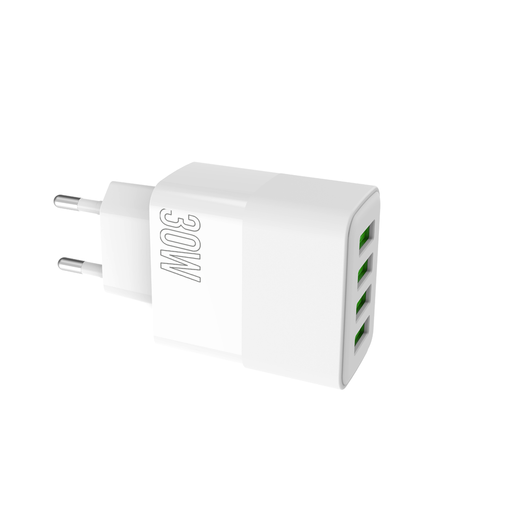
Why this choice suits this profile: With its four USB ports and total advertised power of 30 W, this model is aimed at those who want to charge several phones and accessories without investing in a very powerful charger straight away.
The listing specifies both the total advertised power and the ability to charge four devices. That helps avoid confusing high power per port with the charger's overall power.
110-240 V input, simultaneous charging of four devices and advertised protection against overcharging and excessive discharge.
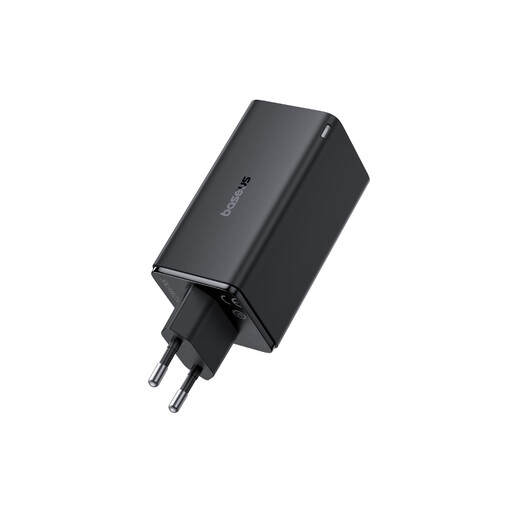
Why this choice suits this profile: This GaN charger is designed for users who juggle between a laptop, phone, tablet and accessories, at home and on the go.
The 2C+2U configuration clearly distinguishes the port types. The total advertised power reaches 100 W, but it must be interpreted based on how many devices are plugged in.
GaN technology, two USB-C ports, two USB-A ports and a design aimed at keeping things compact.
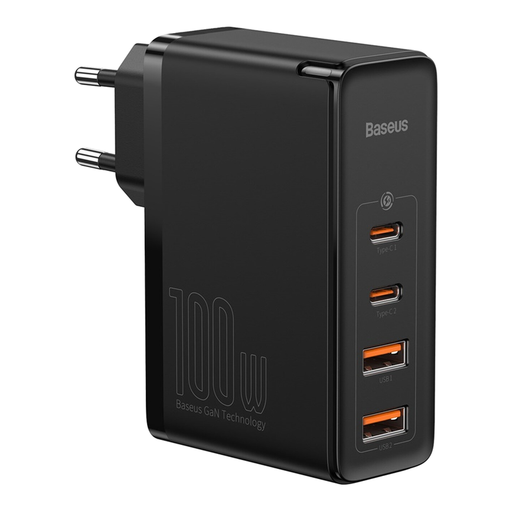
Why this choice suits this profile: Its detailed output profiles suit those who want to power a computer, a phone and several accessories while keeping control over power distribution.
The listing details several distribution scenarios, including 65 W + 30 W and 60 W + 20 W + 15 W. This transparency lets you anticipate performance when multiple devices are in use at the same time.
100-240 V input, four ports and a USB-C output that can reach 100 W depending on the port and configuration used.
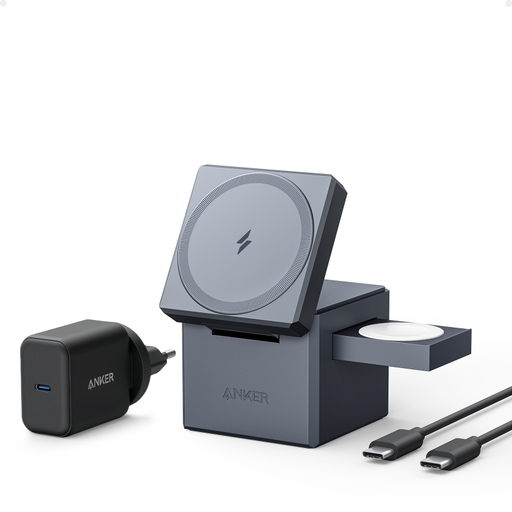
Why this choice suits this profile: This foldable model combines wireless charging for a compatible iPhone, an Apple Watch and AirPods. Its size slips easily into a travel or work bag.
Its compatibility is specifically aimed at the Apple ecosystem: this isn't a universal charger for all watches and all wireless headphones.
3-in-1 wireless charging, MagSafe compatibility advertised up to 15 W with certain iPhones and a foldable design.
We've put together a comprehensive, real-time updated selection of products that meet these demanding criteria and European safety standards.
To keep your charger and devices in good condition, a few simple habits are all you need:
A compact travel charger is particularly handy if its weight, dimensions and plug system suit your habits. In the car, check its compatibility with the vehicle's socket and whether it has a retractable cable.
Its power consumption depends mainly on the power demanded by the devices and how long they stay plugged in. A charger doesn't deliver its maximum power all the time. When possible, unplug it after use, especially if no device is connected.
Its lifespan depends on the quality of its components, how often it's used, the heat it's exposed to and how it's handled. Avoid knocks, moisture and damaged cables. Excessive heat, an unusual noise or a strange smell should lead you to stop using it immediately.
Not necessarily. A phone will often only use part of that power. A 100 W model really makes sense if you're also charging a tablet or a laptop, or if you want to centralise several devices. For use limited to a smartphone and a few accessories, a 30 or 45 W charger will usually be more suitable.