
Livraison le jour même ou le lendemain

Qualité garantie

Débloquez vos offres de bienvenue: Livraison GRATUITE | Jusqu'à -80 % | 30 jours d'essai gratuits à JoyPlus
Téléchargez l'application
The promise of USB-C? One universal connector to simplify our lives. The reality? Drawers overflowing with chargers and cables that rarely live up to their claims. Navigating the difference between advertised wattage and actual charging speed is a constant headache, and disappointment is often the result.
As the head of product selection at Joybuy, my mission is to help you make sense of it all. Together, we'll break down the common pitfalls so you can choose a USB-C fast charger that won't let you down, without falling for marketing gimmicks.
The market is flooded with options, but they are far from equal. Here are the most common mistakes that can turn your new purchase into a high-tech paperweight.
To avoid these pitfalls, three technical criteria make all the difference in performance and safety.
The power output, measured in watts (W), should be tailored to your most power-hungry device.
Next, check for protocol compatibility. Power Delivery (PD) is the de facto standard for most modern devices (Apple, Google, etc.). For the latest Samsung smartphones, the PPS protocol is mandatory to enable "Super Fast Charging."
The GaN charger is a game-changer. By replacing silicon with gallium nitride, these chargers become:
This is the technology to prioritise if you're looking for a portable, efficient, and discreet charger.
A great charger is useless without a great cable. For charging above 60W, a 100W cable (or higher) is a must. These cables contain an electronic chip (E-Marker) that communicates with the charger and device to ensure a safe and optimal power transfer. A standard cable will throttle the charge, regardless of the power of your USB-C power adapter.
Instead of an endless list, we've matched products to specific use cases, ensuring they check all the boxes for performance and safety.
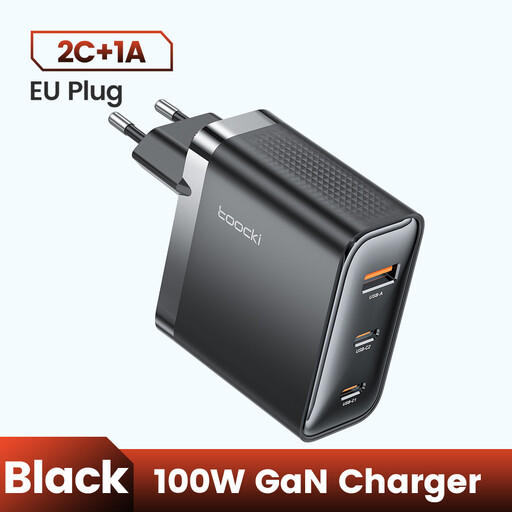
Why we picked it: For those juggling a laptop, smartphone, and tablet, this 100W GaN charger is the all-in-one solution. It replaces three bulky chargers with a single block that's as compact as it is efficient.
Thanks to GaN technology, it handles high wattage in a tiny form factor without overheating. Its smart power distribution bypasses the pitfall of poorly optimised power sharing.
Its 100W output and three ports (2x USB-C, 1x USB-A) let you charge a MacBook Pro, an iPhone, and earbuds simultaneously at full speed.
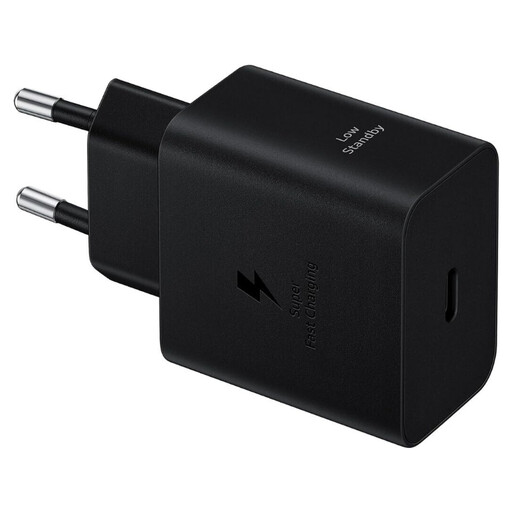
Why we picked it: For owners of recent Galaxy smartphones, this official charger is the only way to guarantee the maximum charging speed promised by the brand, without compromising on safety.
It solves the protocol incompatibility puzzle by integrating the PPS standard (Super Fast Charging 2.0), which is mandatory for Samsung devices. The included 5A cable eliminates the "weak link" problem.
A turnkey solution: the charger and cable are designed to work in tandem to deliver the promised 45W to a compatible Samsung device.
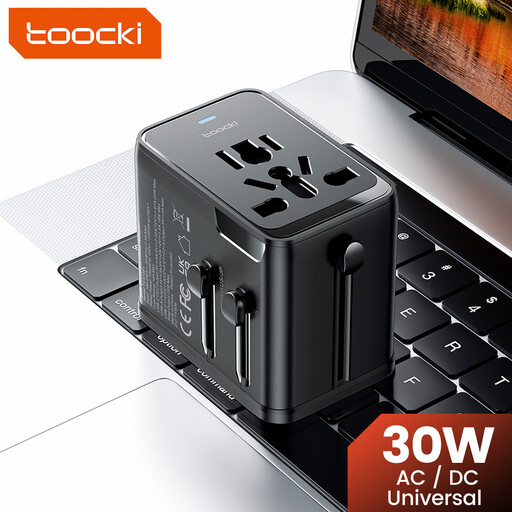
Why we picked it: This all-in-one adapter is the traveller's Swiss Army knife. It combines plug adapters for the EU, UK, US, and Australia with a true USB-C fast charger.
No more stacking a plug adapter on top of a USB-C charger. This model guarantees a true 30W PD fast charge, where most travel adapters only offer a trickle charge.
A single, compact device for all your travels. This universal travel adapter includes 2 USB-C ports and 1 USB-A port for unbeatable versatility.
We've curated a complete, up-to-date selection of products that meet our strict selection criteria and European safety standards.
It all depends on your devices. For a smartphone, 20-30W is sufficient. For an ultra-portable laptop or an iPad Pro, aim for 45-65W. For a more demanding laptop (e.g., a 16-inch MacBook Pro), 96W or more is required. The rule of thumb: always check the maximum power input supported by your device's manufacturer.
Absolutely, if compactness and efficiency are your priorities. A GaN charger is much smaller and runs significantly cooler than a traditional charger of the same wattage. It's a decisive advantage for lightening your bag or for plugging in a multi-port USB charger without turning your power strip into a space heater.
Absolutely. It's crucial. A poor-quality cable can not only throttle the charge but also damage your device's battery in the long run. For any power level over 60W, it is imperative to use a cable certified for 100W or more. These cables, like the Toocki 100W cable with an LED display, are the only way to ensure power is delivered safely and optimally. Never skimp on the cable—it's a rookie mistake.