
Livraison le jour même ou le lendemain

Qualité garantie

Débloquez vos offres de bienvenue: Livraison GRATUITE | Jusqu'à -80 % | 30 jours d'essai gratuits à JoyPlus
Téléchargez l'application
Gone are the days when every device needed its own proprietary charger! However, the transition to USB-C has unleashed a confusing array of specifications, standards, and marketing promises. You're looking for a USB-C fast charger and suddenly find yourself drowning in terms like "GaN," "Power Delivery," and wattage ratings that seem plucked out of thin air. The result? All too often, we end up with a charger that doesn't live up to its promises, overheats, or worse, fails to charge a laptop as advertised.
Before making your choice, watch out for these three common and costly pitfalls:
To navigate this crowded market, focus on a few key technical parameters. These will determine whether a charger is a smart investment or a future disappointment.
Power, measured in watts (W), defines the charging speed. Not all devices have the same needs:
To ensure universal compatibility, check that the charger supports the Power Delivery (PD) standard. This protocol allows the charger and your device to communicate to deliver the optimal power safely. For owners of recent Samsung smartphones, support for PPS (Programmable Power Supply) is a real bonus to benefit from "Super Fast Charging."
A modern wall charger should primarily feature USB-C ports, which have become the standard for fast charging. The inclusion of a USB-A port remains useful for older accessories.
The crucial detail is how the power is distributed. For example, a 100W charger with two USB-C ports might offer 100W on a single port, or split the power into 65W + 30W when both are used. Make sure the configuration matches your primary use case, especially if you plan to charge your laptop and smartphone simultaneously.
A GaN charger uses gallium nitride components instead of traditional silicon. In practice, this translates into three tangible benefits:
Opting for a GaN model is therefore a must-have for anyone seeking performance and portability.
Rather than an endless list, we've matched products to specific user profiles. Each selected model meets our strict criteria for performance and safety.
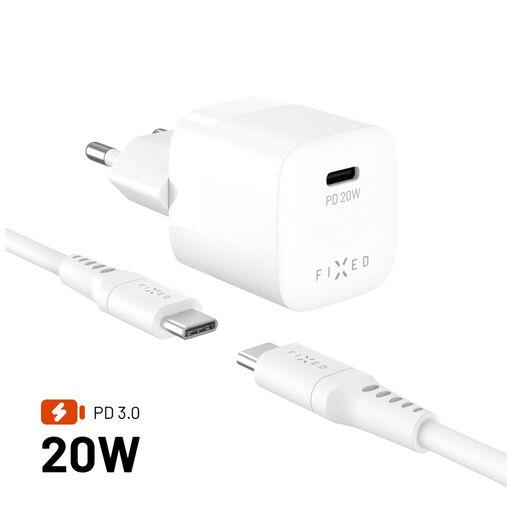
Ideal for: Perfect for those who travel light and only need to quickly charge one device at a time, like a smartphone or earbuds. Its feather-light 44g weight and tiny size make it a perfect companion for travellers.
It doesn't fall for the false versatility trap. It focuses on one job: reliably delivering 20W through its single USB-C port, without making excessive promises.
20W power (PD 3.0) for fast-charging smartphones. Ultra-compact and lightweight design, ideal for travel.
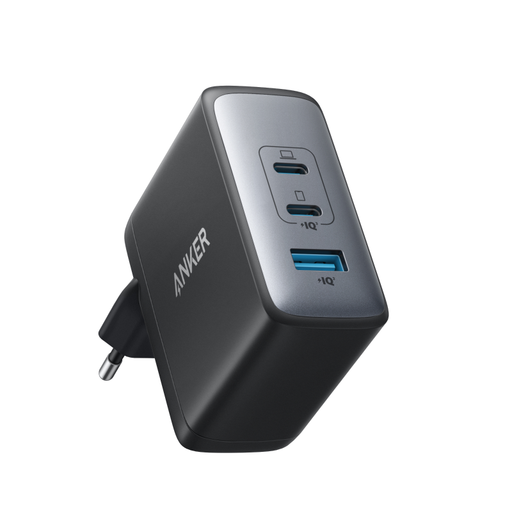
Ideal for: Designed for those who juggle a laptop, smartphone, and other accessories. It allows you to replace three bulky chargers with a single compact and powerful solution, both at the office and on the go.
It sidesteps the misleading "total power" trap by guaranteeing a maximum output of 100W on a single USB-C port, enough for most demanding laptops.
GaN II technology for a smaller size. Three ports (2x USB-C, 1x USB-A) for maximum versatility. High power output to charge a laptop quickly.
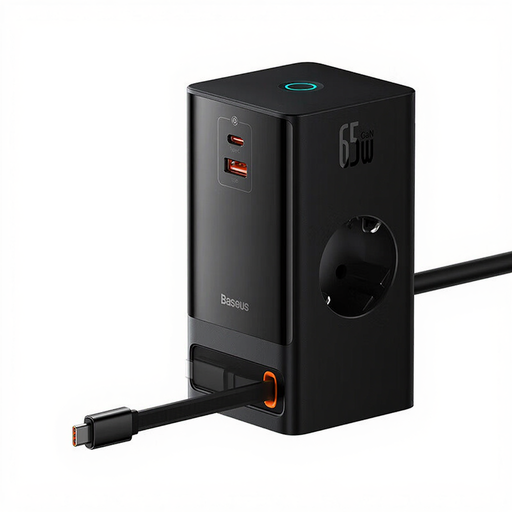
Ideal for: Perfect for those who want to declutter their workspace. This charging station combines AC outlets, USB ports, and even a retractable cable for a pristine setup and centralised power.
It solves the problem of charger clutter by offering an all-in-one solution. Instead of seeking versatility in a small adapter, it integrates it into a smart, well-designed power strip.
6-in-1 solution with 2 AC outlets, 3 USB ports (one retractable), and a wireless charging area. 65W of power, sufficient for a laptop and other devices.
We have curated a complete range of products that meet our strict criteria and European safety regulations.
Yes, in more ways than one. A GaN charger is not only smaller and lighter than a traditional charger of the same wattage, but it's also more energy-efficient. This means it converts power from the outlet more effectively, with less energy lost as heat. As a result, it's cooler to the touch and its lifespan is potentially extended.
Absolutely. This is one of the major benefits of the Power Delivery (PD) standard. The charger and your device communicate to agree on the maximum power the device can safely accept. The charger will only supply the 20W your smartphone needs, with no risk of damage. Using a charger that's more powerful than necessary is perfectly fine.
A charger's lifespan depends on its build quality and how it's used. A high-quality model with built-in protections against overheating, over-voltage, and short circuits will serve you reliably for several years. Because they generate less heat, GaN models have improved longevity, as heat is one of the main factors that degrades electronic components.