
Livraison le jour même ou le lendemain

Qualité garantie

Débloquez vos offres de bienvenue: Livraison GRATUITE | Jusqu'à -80 % | 30 jours d'essai gratuits à JoyPlus
Téléchargez l'application
USB-C promised to simplify our lives with a single connector for all our devices. Yet, our drawers are overflowing with slow, incompatible, or just plain disappointing chargers. Choosing a high-performance USB-C fast charger has become a real minefield, riddled with marketing traps.
Before you make a decision, it's best to understand the two most common pitfalls that lead to buyer's remorse?:
This guide is here to help you navigate these pitfalls and identify the features that truly matter to find the perfect charger for your needs.
To make an informed decision, it's crucial to focus on a few key technical specifications. Understanding them will prevent you from overpaying for useless features or ending up with an ineffective product.
Power, measured in watts (W), determines charging speed. There's no need to go overboard: a charger that's too powerful won't charge your smartphone any faster than what it can accept. Here are a few benchmarks?:
For fast charging to work, the charger and the device must be compatible with the same protocol.
A multi-port charger is an excellent solution for decluttering your desk or travel bag. However, be sure to check how the power is distributed when multiple ports are used simultaneously.
GaN (Gallium Nitride) technology is a major advantage. A GaN charger is smaller, lighter, and generates less heat than a traditional charger of the same wattage. This is what makes it possible to design 65W or 100W chargers that are barely larger than an old phone charger.
Rather than a generic list, we've selected specific products for common user profiles.
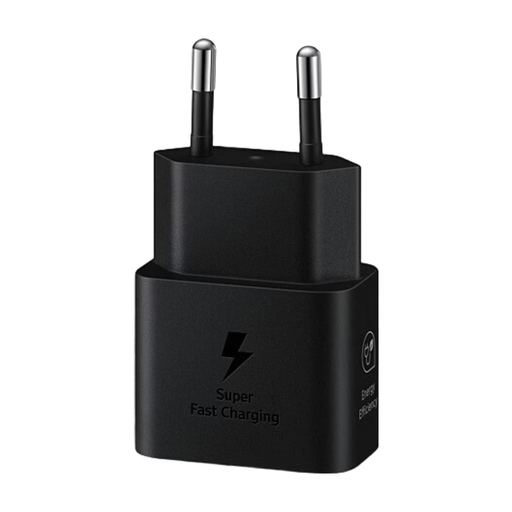
Why we chose it ? For the user seeking a simple, reliable solution for their smartphone. No frills, just efficient fast charging guaranteed by a trusted brand.
This charger has one mission: deliver 25W to a compatible device. No complex power sharing or risk of incompatibility with an official Samsung charger.
A complete, ready-to-use kit with a USB-C to USB-C cable included. Its compact design and manufacturer certification ensure safety and performance.
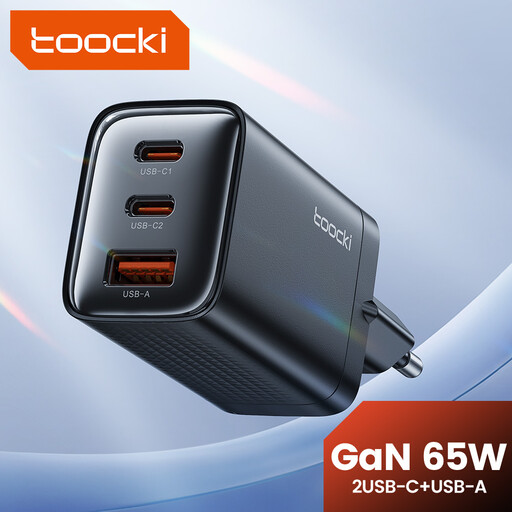
Why we chose it ? For those who juggle a laptop, phone, and tablet. Its 65W output and three ports make it a compact charging hub, perfect for the mobile office.
GaN technology packs high power into a small form factor without overheating. It intelligently manages power distribution between its ports, preventing unpleasant surprises.
A 65W output capable of powering a MacBook Air/Pro. Its 3 ports (2 USB-C, 1 USB-A) offer maximum versatility to replace multiple chargers.
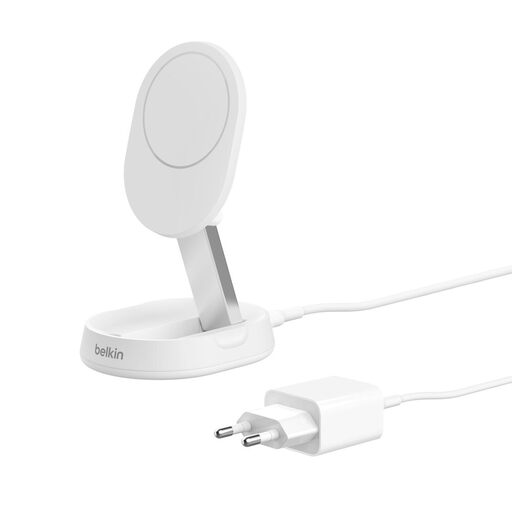
Why we chose it ? For the iPhone user who values convenience and a clean desk setup. This charger doubles as an adjustable stand, perfect for video calls or using Apple's StandBy mode.
It eliminates any compatibility doubts with its Qi2 certification and MagSafe compatibility. This guarantees fast, secure 15W wireless charging for compatible iPhones, with no risk of misalignment.
All-in-one solution: charger, stand, and cable. The 20W power adapter is included, which is increasingly rare. Its foldable design makes it an excellent travel companion for the Apple ecosystem.
We've compiled a comprehensive, up-to-date list of products that meet our strict selection criteria and European safety standards.
It all depends on your primary device. For a smartphone, 25W or 30W is more than enough. For an ultrabook, a 65W model is a versatile choice that can also charge your other devices. Check the label on your original charger or your device's spec sheet to find the maximum power it can accept.
In terms of pure charging speed, a 65W GaN charger and a traditional 65W charger will deliver the same power. The advantage of GaN lies in its energy efficiency (less heat waste) and compactness. It allows for the creation of much smaller and lighter chargers, which is a significant benefit for portability.
Yes, absolutely. Thanks to the Power Delivery standard, a MacBook charger (which is a USB-C PD charger) will communicate with your iPhone to deliver only the power needed for a fast and safe charge. The reverse, however, is not always true: an iPhone charger (20W) will be too weak to power a MacBook while it's in use.
By Joybuy's product experts, August 26, 2026.