
Livraison le jour même ou le lendemain

Qualité garantie

Débloquez vos offres de bienvenue: Livraison GRATUITE | Jusqu'à -80 % | 30 jours d'essai gratuits à JoyPlus
Téléchargez l'application
The days when every device required its own specific charger are long gone. With the widespread adoption of the USB-C port—from the iPhone 15 to the MacBook Air and the latest Samsung Galaxy devices—we're all looking for the same thing: a single, fast, and efficient charging solution. But the market is a confusing maze of options, and it's easy to get lost among the different wattages, technologies, and configurations.
This guide is here to break down the key factors and present a selection of USB-C fast chargers that meet a variety of needs, whether you're a mobile professional, a frequent traveller, or simply looking for a high-performance solution for your home.
Before you jump on the first model you see, it's important to understand a few technical basics. They will make all the difference in your daily use.
Power, measured in watts (W), determines charging speed. A USB-C fast charger worthy of the name must be compatible with the Power Delivery (PD) standard. This intelligent protocol allows the charger to communicate with your device to provide precisely the energy it needs, ensuring a charge that is both fast and perfectly safe.
Rest assured, using a charger that is more powerful than necessary will never damage your device; it will only "draw" the maximum power it is capable of accepting.
Gallium nitride (GaN) is a semiconductor material that is gradually replacing silicon in modern chargers. A GaN charger has several key advantages: it's smaller, lighter, and generates less heat than a traditional charger of the same wattage. This is the trump card of a compact travel charger, as it significantly reduces bulk in your bag.
Need to charge multiple devices at the same time? A multi-port charger is the answer. The most versatile models combine several USB-C ports and sometimes USB-A ports to maintain compatibility with your older devices. This saves you from juggling a power strip full of adapters, whether at your desk or in your suitcase.
To help clarify things, here are a few models that have caught our attention for their performance and versatility.
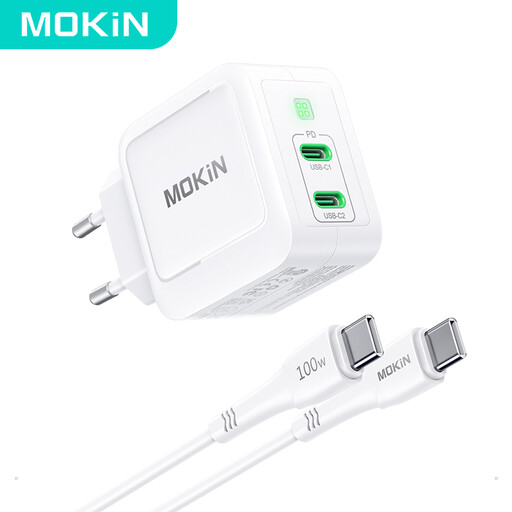
Why it stands out: This model is the perfect blend of power and portability. With its 67W output and GaN technology, it can fast-charge a laptop like a MacBook Air using a single port, or intelligently distribute power to charge a smartphone and a tablet at the same time. Its pocket-sized format makes it the ideal companion for professionals on the go.
Advantages:
Who is it for? Ideal for those who juggle a USB-C laptop and a smartphone and want to carry just one charger. It's the perfect travel companion for mobile professionals.
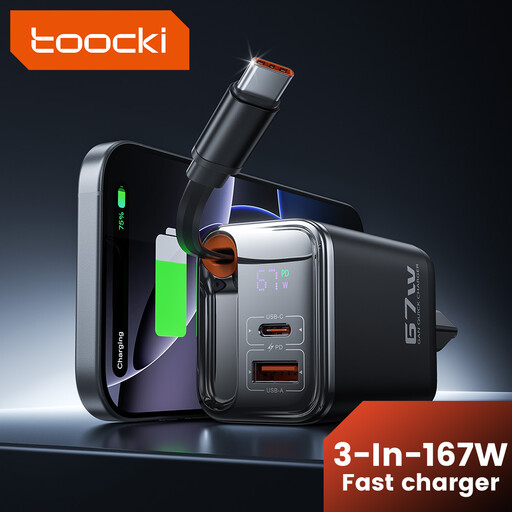
Why it stands out: Its key feature is the ingenious, built-in retractable USB-C cable. No more tangled cables at the bottom of your bag! In addition to this cable, it includes an extra USB-C port and two USB-A ports, transforming it into a true all-in-one charging station.
Advantages:
Who is it for? For those who hate cable spaghetti. It's an incredibly convenient solution for centralising all your device charging, whether at the office, at home, or while travelling.
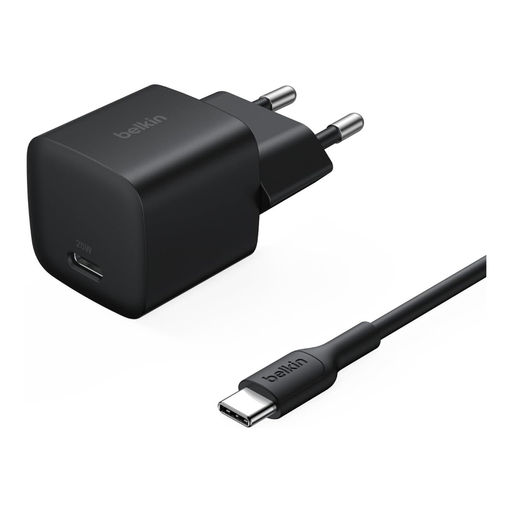
Why it stands out: With Belkin, a trusted brand, the focus is on safety and optimised charging for smartphones. With its 25W output and PPS (Programmable Power Supply) technology, it adjusts voltage and current in real-time for a charge that's not only fast but also perfectly safe, especially for recent Samsung devices and iPhones. The icing on the cake is its eco-friendly commitment.
Advantages:
Who is it for? The sensible choice for smartphone owners (like for a Samsung S24 charger or iPhone 15 charger) who want fast, safe charging with a clear conscience on the environmental front.
Our selection is just a glimpse, and your needs may be unique. If you're looking for higher wattage, a different number of ports, or a specific design, other solutions are available.
? Explore our complete collection of USB chargers to find the perfect one.
Yes, absolutely. Thanks to the Power Delivery (PD) protocol, the charger and your device communicate with each other. A 67W charger, for example, will only deliver the maximum power your smartphone can handle (usually between 20W and 45W). This smart negotiation ensures a charge that is as fast as it is safe.
GaN (gallium nitride) technology allows for the design of chargers that are smaller, lighter, and generate less heat. Is it essential? No. But it's a decisive advantage if portability is your priority, especially for a compact travel charger. For stationary use at the office or at home, a traditional charger will do the job just fine.
The USB-C port is universal, but fast-charging protocols can vary. The good news is that most modern devices (from Apple, Samsung, Google, etc.) have adopted the Power Delivery (PD) standard, which ensures very broad compatibility. To be sure you're getting the maximum speed, just check that your device and the charger "speak the same language" (i.e., support the same fast-charging protocol).