
Livraison le jour même ou le lendemain

Qualité garantie

Débloquez vos offres de bienvenue: Livraison GRATUITE | Jusqu'à -80 % | 30 jours d'essai gratuits à JoyPlus
Téléchargez l'application
The promise of USB-C was simple: one cable and one charger for all our devices. The reality? A drawer overflowing with cables and adapters that rarely keep their promises. Between misleading power ratings and unreliable compatibility, choosing a USB-C fast charger often turns into a headache.
Our mission, as product experts at Joybuy, is to help you cut through the noise. Let's skip the marketing jargon and focus on what really matters. Here are the three most common pitfalls to avoid and the criteria that truly count when making the right choice.
To avoid these pitfalls, there are three things to check. These are the true guarantors of your future USB-C power adapter's performance and safety.
Expressed in watts (W), power determines the charging speed. Underestimate your needs, and you're guaranteed either an endless charge time or an unnecessarily expensive purchase. Here are a few simple benchmarks:
This is the non-negotiable feature. Power Delivery (PD) is a universal charging standard that allows the charger and the device to communicate to negotiate the optimal power output. A PD-certified charger ensures fast, safe charging for a wide range of devices, including Apple products (MacBook charger, iPhone), Samsung, and Google. Without this standard, you can forget the promise of fast charging.
A GaN charger replaces traditional silicon with gallium nitride. What does that mean in practice? Chargers that are significantly more compact, lighter, run cooler, and waste less energy. This technology is particularly valuable for a travel charger or a powerful multi-port charger, as it significantly reduces bulk.
Keeping these criteria in mind, here is our selection of models that meet specific needs, helping you find the perfect charger for your use case.
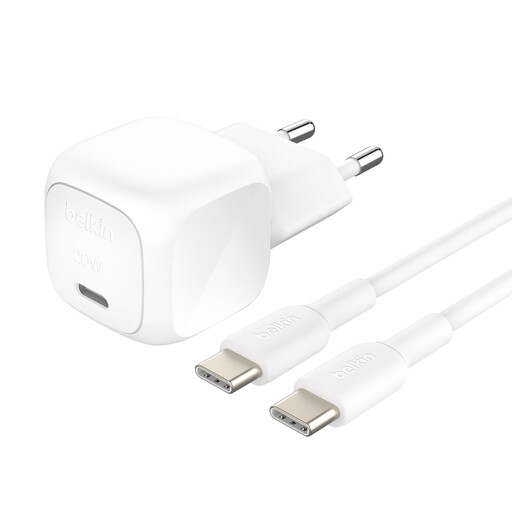
Why we chose it: For those who just want the essentials: fast-charge your smartphone, period. It's a simple, reliable solution from a trusted brand.
It's certified USB-C PD 3.1, which guarantees optimal compatibility and charging speed for compatible devices. No nasty surprises or risks to your battery.
Comes with a 1m USB-C to USB-C cable, so that's one less thing you need to buy. It includes all necessary protections against overcharging and overheating.
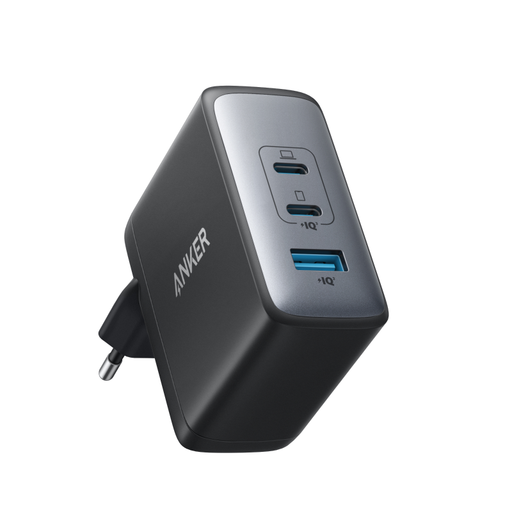
Why we chose it: The ideal solution for professionals, students, or anyone juggling a laptop, smartphone, and tablet. It frees up space on your desk and in your backpack.
With its 100W of total power and intelligent distribution, it can power a MacBook Pro at full speed on one USB-C port while also charging an iPhone and AirPods. This neatly sidesteps the shared power pitfall.
GaN II technology for a compact size and perfectly managed heat. Its three ports (2 USB-C, 1 USB-A) offer maximum versatility.
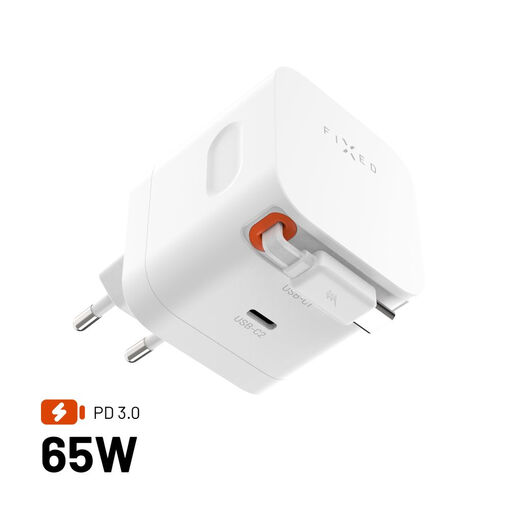
Why we chose it: Designed for digital nomads and travellers who count every gram. Its 65W output is enough for most devices (including ultrabooks) and its design is built entirely for mobility.
Its built-in retractable cable eliminates the need to carry a separate cable, and with it, the risk of forgetting it or finding it in a tangled mess. GaN technology ensures an ultra-compact form factor without sacrificing power or safety.
All-in-one design with an integrated cable. Two USB-C ports to charge two devices at once. CE certified for peace of mind when using it in Europe.
Explore our full selection of tested and approved chargers, all meeting our performance criteria and European safety standards.
It all depends on the most power-hungry device you use. For a smartphone alone, 20-30W is sufficient. To charge a laptop (like a MacBook Air) and a phone at the same time, aim for a 65W model. For a more powerful PC like a 16-inch MacBook Pro, a 100W or higher charger is recommended.
GaN technology primarily affects efficiency and compactness. A GaN charger runs cooler at the same wattage, which is a plus for safety. However, the real guarantee of safety comes from certifications (CE marking, protections against over-voltage, overheating, etc.), whether the charger is GaN or not.
Yes, absolutely. Thanks to the Power Delivery (PD) protocol, the charger and your device "talk" to each other to determine the maximum power the device can safely receive. A 100W charger will therefore only supply the power your smartphone needs (e.g., 25W), with no risk to its battery.