
Livraison le jour même ou le lendemain

Qualité garantie

Débloquez vos offres de bienvenue: Livraison GRATUITE | Jusqu'à -80 % | 30 jours d'essai gratuits à JoyPlus
Téléchargez l'application
Navigating the jungle of USB-C chargers can quickly become a headache. Between promises of "ultra-fast charging" and incomprehensible tech jargon, it's easy to end up with a product that's inefficient, or even dangerous for your devices. As the Head of Product Recommendations at Joybuy, my role is to help you cut through the noise and make the right choice. Here are the three classic mistakes to avoid when buying a USB-C fast charger.
To avoid these pitfalls, a few technical criteria need close attention. These are the true guarantors of your future charger's performance and safety.
The secret to truly fast and safe charging is Power Delivery (PD) fast charging technology. This smart protocol allows the charger and your device to "communicate" to adjust the power to the optimal level.
Always check for the "Power Delivery" logo or the "PD" mention on the product or its packaging.
The cable is often the weakest link in the chain. For maximum longevity, opt for a braided cable. Its nylon or composite material sheath gives it far better resistance to the daily twists and bends.
Also, check for the right connector type for your needs:
A certification isn't just a logo on the box: it's your guarantee of compliance and safety.
To put theory into practice, here is our selection of products that tick all the boxes for different user profiles.
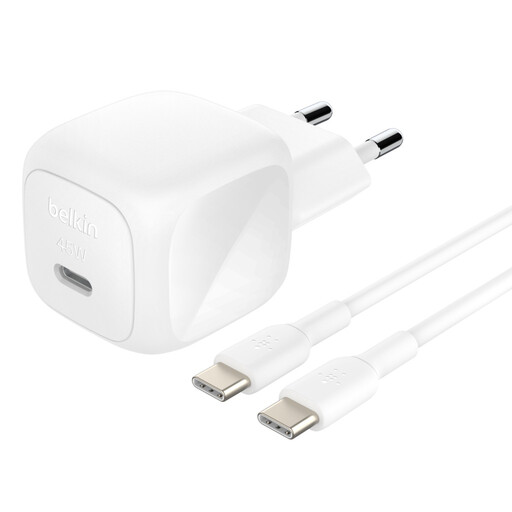
Why we chose it: Ideal for those who juggle a smartphone, tablet, and laptop (like a MacBook Air). This Belkin charger is the all-in-one solution, both powerful and compact, to power all these devices.
With its 45W output and USB-C PD 3.1 standard, it delivers just the right amount of power without falling into the trap of an oversized charger. The included USB-C cable, also certified, ensures flawless compatibility.
Its 45W output is enough to efficiently power a laptop like a MacBook Air, making it an excellent single charger for travel. Its compact form factor is a major asset.
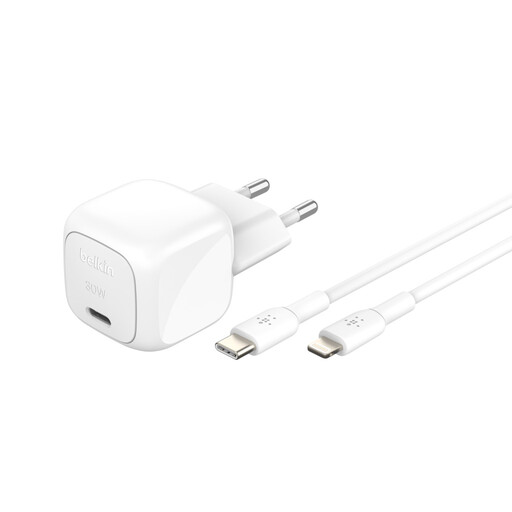
Why we chose it: Designed for users in the Apple ecosystem (iPhone/iPad with a Lightning port) who want to step up their charging speed with complete peace of mind.
The included USB-C to Lightning cable is MFi-certified, completely eliminating the risk of incompatibility or error messages. A turnkey and 100% safe solution.
The 30W power output is perfectly calibrated for fast charging the latest iPhones and iPads, offering spectacular time savings compared to the legacy 5W charger.
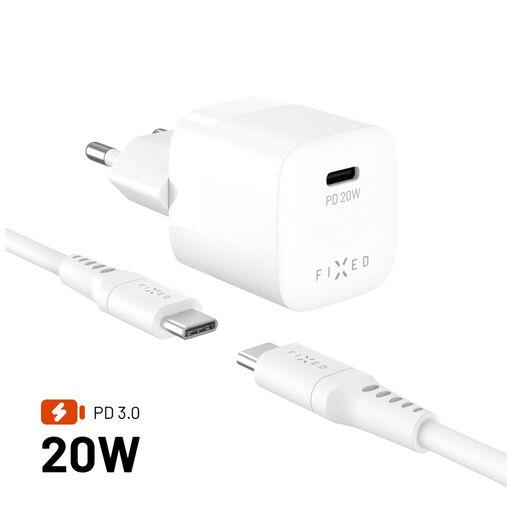
Why we chose it: For those who want a fast-charging solution for their smartphone that takes up minimal space. Its tiny form factor and included cable make it the ideal travel or office companion.
This bundle avoids risky pairings by combining the charger and cable. A complete, Power Delivery 3.0 certified, and above all, very affordable solution.
Its ultra-compact size is its main asset. It slips into any pocket and delivers 20W, an ideal power output for fast charging most smartphones.
Browse our complete selection of chargers and cables that meet our strict performance criteria and European safety standards.
It all depends on the device you want to charge. For a smartphone (like a Samsung S24 charger or iPhone 15), a 20W to 30W charger with the Power Delivery standard is a perfect choice. For a tablet or a compact laptop, look for a 45W model or higher for optimal charging.
Yes, and the difference is dramatic. The braided nylon sheath protects the internal wires from everyday bends and twists. A braided cable is designed to withstand thousands of bend cycles, whereas a standard cable gives out after just a few hundred. It's a small extra cost at purchase, but a true guarantee of longevity.
Absolutely, under two conditions. First, verify that the charger is compatible with Power Delivery (PD) fast charging technology. Second, prioritise reputable brands like Belkin, which clearly display their safety certifications (USB-IF). This ensures your device will receive a safe and optimised charge, without any risk to its battery.