
Livraison le jour même ou le lendemain

Qualité garantie

Débloquez vos offres de bienvenue: Livraison GRATUITE | Jusqu'à -80 % | 30 jours d'essai gratuits à JoyPlus
Téléchargez l'application
USB-C has become the standard for nearly all our devices, from smartphones to laptops. Yet, choosing the right USB-C fast charger often feels like a minefield. Between vague marketing promises and technical jargon, it's easy to end up with a charger that's disappointing or, worse, incompatible with your gear.
As a product expert at Joybuy, I'm here to help you make sense of it all. Together, we'll break down the spec sheets to focus on the criteria that really matter, so you can make an informed choice without falling into the usual traps.
Before you grab the first charger you see, beware of these common mistakes that can cost you dearly in both time and money.
iPhone charger or Samsung charger will only charge at a snail's pace, far from the promised performance.MacBook charger will be excruciatingly slow and may even struggle to maintain the battery level if you're using the device at the same time.USB-C power adapter is useless if the cable isn't up to the task. A poor-quality fast charging cable can not only throttle the speed but also pose a real overheating risk.To make the right choice, there are two fundamental aspects to watch out for. They determine the performance, safety, and lifespan of your charger.
Power, measured in watts (W), determines the charging speed. But be warned, raw power isn't everything. The Power Delivery (PD) protocol is the technology that allows the charger and your device to "negotiate" the optimal and safest power output.
Here are a few simple benchmarks:
For compatible Samsung devices, PPS (Programmable Power Supply) technology, a variant of PD, further refines the charge for greater efficiency and less heat.
You've likely come across the term GaN charger. GaN (Gallium Nitride) is a semiconductor that is replacing silicon in modern chargers. The advantages are tangible:
A GaN wall charger is therefore the smart choice, whether for travelling light or decluttering your desk.
Rather than drowning you in an endless list, we've curated targeted solutions for every need, all validated for their performance and safety.
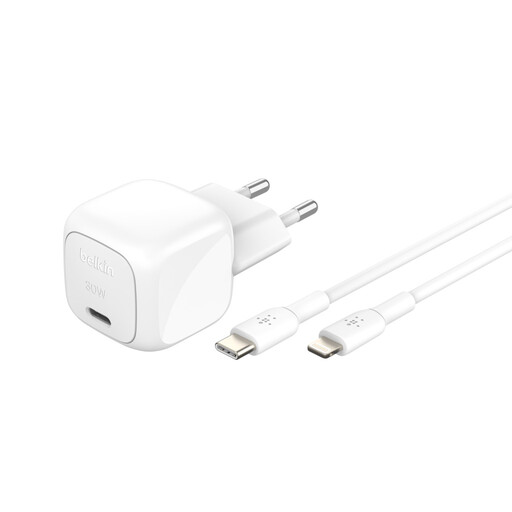
The Editor's Verdict: An all-in-one package, perfect for owners of an iPhone or iPad with a Lightning port. It delivers the 30W needed for fast charging and, most importantly, includes a certified cable. No more compatibility headaches!
By offering a complete bundle (charger + certified USB-C PD 3.1 cable), it eliminates the risk of choosing the wrong cable or falling for a false promise of fast charging. It's ready to use right out of the box.
A compact and reliable all-in-one from a trusted brand. The bonus: it uses recycled materials.
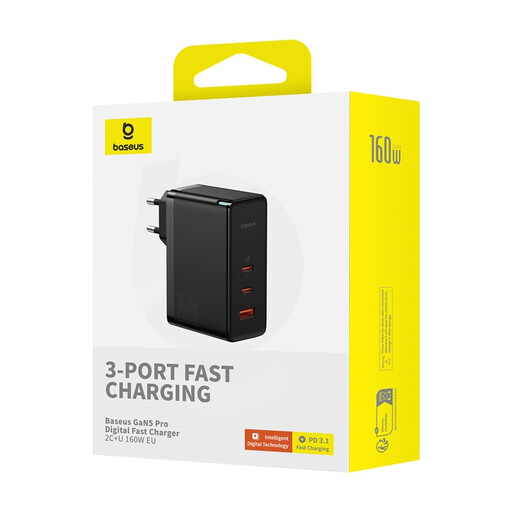
The Editor's Verdict: The ultimate solution for those who constantly juggle a laptop, tablet, and smartphone. With its 160W of total power and three ports (2 USB-C, 1 USB-A), this GaN charger can power a MacBook Pro at full speed while handling the rest.
No more power puzzles. Its massive reserve intelligently adapts to all connected devices, even the most power-hungry ones.
A monstrous 160W of power and 3 ports for absolute versatility, all in a compact form factor thanks to the magic of GaN.
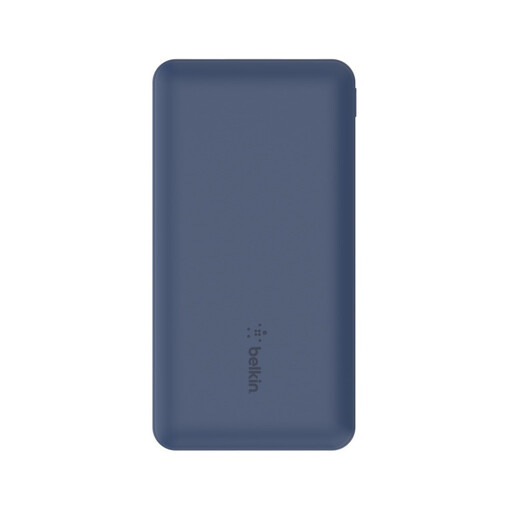
The Editor's Verdict: The survival accessory for globetrotters and professionals on the go. This 10,000 mAh USB-C power bank strikes the perfect balance between capacity (up to 40 extra hours of battery life for a smartphone) and size. Its three ports let you charge multiple devices at the same time.
It frees you from the tyranny of the wall outlet. It's your guarantee to never run out of juice, with a reliable and secure power source thanks to its built-in protections.
Its generous 10,000 mAh capacity, 3 ports for simultaneous charging, and an LED indicator so you're never caught off guard.
Browse our full selection of chargers that meet our performance criteria and European safety standards.
For an iPhone (12 and newer) or a recent Samsung Galaxy, a 20W to 30W charger is ideal to take advantage of fast charging. For a MacBook Air or an iPad Pro, opt for 30W to 67W. For more demanding laptops, 100W or more may be necessary. When in doubt, the easiest thing to do is check the maximum power your device accepts.
Yes, and that's one of its major advantages. GaN charger technology offers much higher energy efficiency. In practical terms, less energy is wasted as heat compared to silicon chargers. This makes them more compact and cooler-running at the same power output, which is a real guarantee of longevity and safety.
Absolutely. It's the weak link that is too often overlooked. A poor-quality or uncertified fast charging cable can not only throttle your charging speed but also pose a risk to your devices. Always check that your USB-C cable is designed to handle the power of your charger (for example, a 100W-certified cable for a 100W charger). A little tip: braided models are often more durable.