
Livraison le jour même ou le lendemain

Qualité garantie

Débloquez vos offres de bienvenue: Livraison GRATUITE | Jusqu'à -80 % | 30 jours d'essai gratuits à JoyPlus
Téléchargez l'application
Navigating the jungle of USB-C chargers is a real headache. Between promises of "ultra-fast charging" and often opaque technical jargon, it's easy to end up with a product that's unsuitable, or even dangerous, for your devices. This guide is here to give you clear benchmarks and help you choose a USB-C fast charger that will truly meet your needs, without falling for the most common marketing traps.
Before we get to our top picks, let's break down the two most common mistakes people make when buying a power adapter:
To avoid these disappointments, a few technical specifications need to be watched closely. These are what truly determine a charger's performance and versatility.
Power, expressed in watts (W), determines charging speed. But be careful, the race for more watts isn't always the answer; the power must be suitable for your devices.
The most important criterion remains compatibility with the Power Delivery (PD) charger protocol. This standard ensures intelligent communication between the charger and the device to deliver optimal power safely. It's the key to broad compatibility across brands.
A GaN charger uses gallium nitride instead of traditional silicon. In practical terms, this allows for the design of chargers that are:
Opting for a USB-C power adapter with GaN technology is a smart and practical choice today, especially if you're often on the go.
A multi-port charger is the ideal solution for simultaneously powering a computer, a phone, and headphones with a single fast charging block. Two things to check:
Rather than an endless list, here are models that perfectly meet specific needs, while respecting our performance and safety criteria.
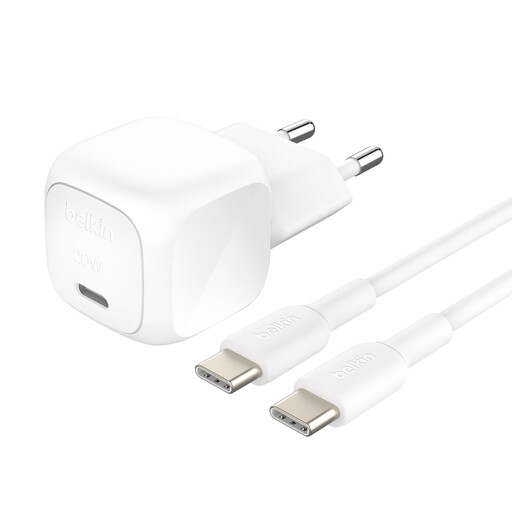
Why we chose it: Perfect for those who mainly want to fast-charge a single device, like a smartphone or tablet. Its compact size and the included cable make it a reliable, ready-to-use solution that's easy to carry.
This single-port charger delivers a clearly defined power output (30W). No unpleasant surprises: the advertised performance is exactly what you get. Its Power Delivery 3.1 certification ensures broad and secure compatibility.
Comes with a USB-C cable and a connected equipment warranty. Everything you need for complete peace of mind.
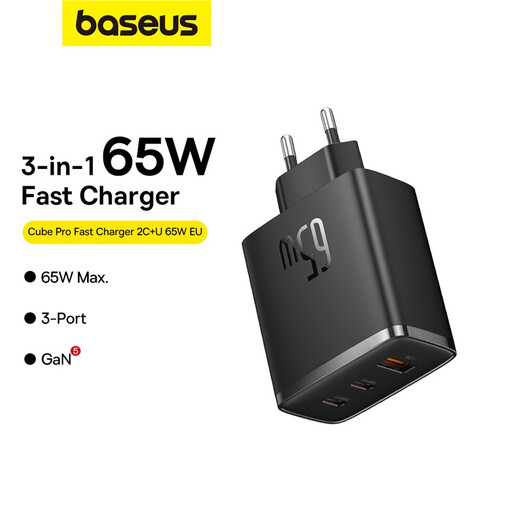
Why we chose it: Perfect for those who juggle a laptop (like a MacBook charger), a smartphone, and other accessories. Its 65W output is enough to power a laptop while charging other devices, all in an ultra-compact form factor thanks to GaN technology.
The spec sheet details the power distribution precisely. For example, when using two USB-C ports, it provides 45W and 20W. This clear information prevents any nasty surprises.
An excellent balance of power, versatility (3 ports), and compactness. It's a formidable ally for travel and at the office.
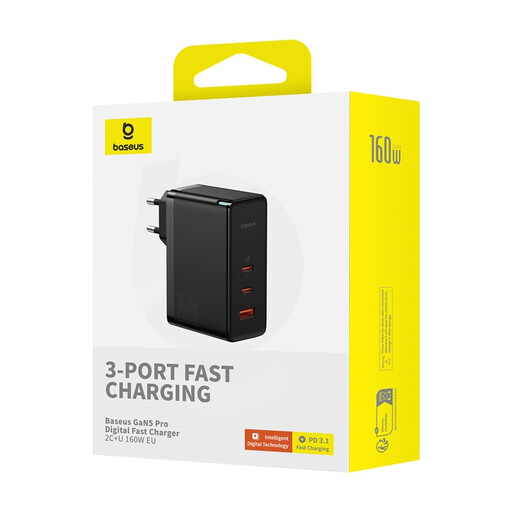
Why we chose it: Designed for the most demanding users who need to simultaneously charge multiple power-hungry devices, like a powerful laptop, a tablet, and a smartphone, without sacrificing speed.
With a total output of 160W, it's built for multi-device charging. GaN5 technology allows it to remain surprisingly compact despite its power, letting you say goodbye to the bulky chargers of the past.
An impressive power output that lets you use just one block to recharge everything, even for the most power-intensive setups.
Discover our full selection of products that meet our performance criteria and current safety standards.
The easiest way is to check your device's specifications. Most recent smartphones (iPhone, Samsung charger for Galaxy) are happy with 20-30W for effective fast charging. Laptops generally require 45W or more. Don't worry, using a charger that's more powerful than necessary won't damage your device: the Power Delivery protocol automatically adjusts the power supplied.
Yes. For the user, the most obvious difference is the size and weight. A 65W GaN charger can be the same size as an old 30W silicon charger. It also tends to heat up less, which is a real plus for durability and safety.
Yes, and that's the whole point of the USB-C standard and the Power Delivery (PD) protocol. You can use a PD-compatible charger to safely power a whole range of devices (laptops, smartphones, tablets) from different brands. Just make sure the charger is certified and comes from a reputable brand to avoid any risks.