
Livraison le jour même ou le lendemain

Qualité garantie

Débloquez vos offres de bienvenue: Livraison GRATUITE | Jusqu'à -80 % | 30 jours d'essai gratuits à JoyPlus
Téléchargez l'application
Tired of juggling cables and underpowered chargers?? Between your laptop, smartphone, and tablet, finding a charging solution that is both powerful and practical can be a real headache. As the Head of Product Recommendations at Joybuy, my mission is to help you make sense of it all. In this guide, we'll break down everything you need to know to choose the USB-C fast charger that's perfectly suited to your needs, without the unnecessary marketing jargon.
We will explore the essential criteria to consider before you buy and present a selection of products designed for specific use cases, whether you're a mobile professional, a student, or a seasoned tech enthusiast.
Before you make a purchase, let's review the key points that will truly change your daily routine.
Power is the name of the game. Expressed in watts (W), it determines how fast your devices charge. A modern USB-C fast charger relies on Power Delivery (PD) technology. This intelligent charging standard allows the charger and the device to "talk" to each other to safely deliver the optimal amount of power.
A quick look at your devices' spec sheets is a must to find out the maximum power they can handle. This is the key to a successful purchase.
Juggling multiple devices?? A multi-port charger is the solution to simplify your life. A 3-in-1 charger or a model with several USB-C and USB-A ports will allow you to charge your computer, phone, and headphones simultaneously.
For those on the go, the form factor is a non-negotiable criterion. A compact USB-C travel charger based on GaN (Gallium Nitride) technology delivers high power in a smaller, lighter package that runs cooler.
Be careful, a good charger isn't everything! The cable is the often-overlooked, yet essential, link to enjoy truly fast charging. For charging speeds above 60W, you will absolutely need a cable specifically designed to handle that level of power, such as a 100W USB-C cable.
Opt for cables with a braided nylon sheath and reinforced alloy connectors. This is the winning combination for rock-solid durability against the wear, twists, and bends of daily use.
Let's get to the specifics with our selection of products that caught our eye.
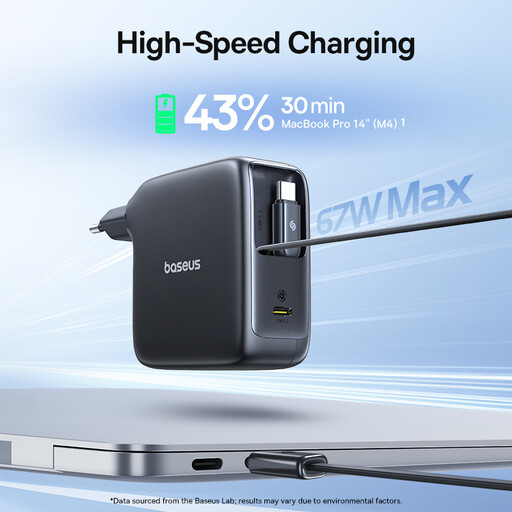
What sets it apart: The mission of the Baseus EnerCore CJ21?? To put an end to the tangled mess of cables. It integrates two retractable cables (one USB-C and one Lightning) as well as an additional USB-C port. No more tangled cables in your bag!
Key Features:
Who is it for?: The perfect travel companion for mobile professionals and travellers looking for a clean, all-in-one, and versatile solution for all their devices (including Apple products, thanks to the Lightning cable).
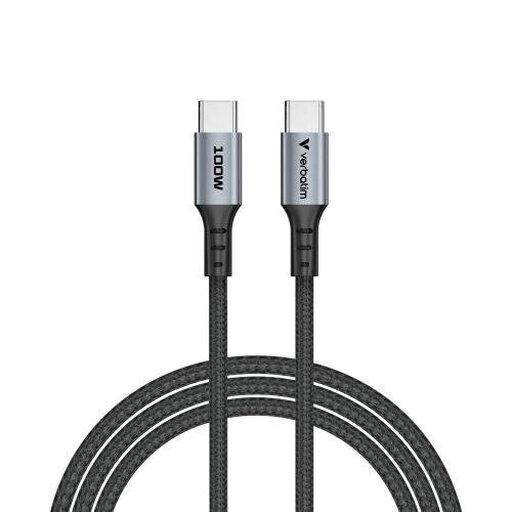
What sets it apart: With this cable, Verbatim goes all-in on durability and performance. It's built to handle high-power charging and withstand heavy use.
Key Features:
Who is it for?: For anyone looking for a reliable and bulletproof 100W USB-C cable to pair with their high-power charger, especially for their laptop.
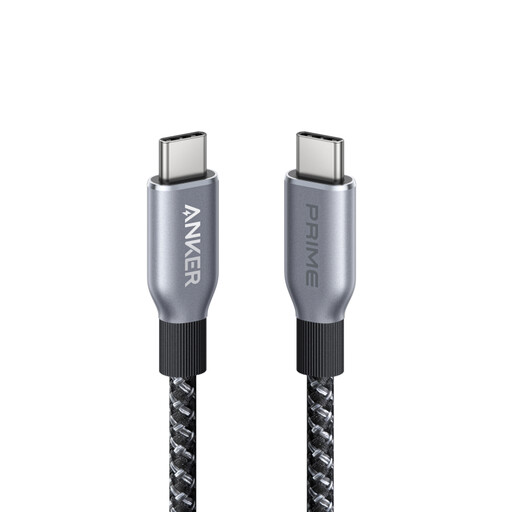
What sets it apart: Anker takes it to the next level with the Prime cable, capable of handling 240W. This makes it ready for tomorrow's ultra-powerful devices. Anker also delivers on durability and eco-friendly design.
Key Features:
Who is it for?: For tech enthusiasts and power users who want a future-proof cable capable of handling the highest charging wattages on the market.
Our selection is, of course, just a preview. To discover an even wider range and find the perfect match for all your needs, feel free to explore our complete USB-C Charging Cable category.
Yes, absolutely. Power Delivery (PD) technology is designed to be universal and safe. The charger "communicates" with the device to provide only the power it can safely accept, without any risk. Plugging a smartphone that only accepts 20W into a 100W charger will not damage it; it will simply charge at its maximum speed of 20W.
The main difference lies in their ability to carry power. A standard cable may be limited to 60W. A fast-charging USB-C cable, like a 100W or 240W model, includes an "E-Marker" chip that informs the charger of its capabilities. Its construction is also more robust to safely handle the power and heat generated.
Not necessarily. The charging speed is always capped by the capability of the phone itself. If your smartphone is designed for a maximum charge of 25W, it won't charge any faster with a 100W charger than with a 30W one. The advantage of a more powerful charger lies in its versatility: it can also charge your other devices, like a laptop, at full speed.