
Livraison le jour même ou le lendemain

Qualité garantie

Débloquez vos offres de bienvenue: Livraison GRATUITE | Jusqu'à -80 % | 30 jours d'essai gratuits à JoyPlus
Téléchargez l'application
A dead smartphone before a meeting, a laptop that won't turn on while you're on the move, a jungle of cables on your desk… We've all been there. USB-C was supposed to make our lives simpler, but choosing a USB-C fast charger has become a real headache.
Between marketing promises and technical jargon, it's easy to get lost and regret your purchase. As a product expert at Joybuy, my mission is to help you cut through the noise. Let's decode the common pitfalls together to find the perfect charger for your needs: one that's reliable, powerful, and built to last.
To avoid these pitfalls, there are a few key points to verify. Far from being marketing jargon, these technical specifications are the true guarantee of your charger's performance and safety.
Wattage, expressed in watts (W), determines charging speed. But be warned, it isn't everything. The Power Delivery (PD) protocol is a smart charging standard that allows the charger and the device to "communicate" to adjust the delivered power in real time. It's the key to charging that is both fast and safe.
The term GaN charger refers to models that use gallium nitride instead of silicon. In practice, this innovation makes it possible to create chargers that are:
To put an end to the proliferation of power bricks, a multi-port charger is the ideal solution. It allows you to simultaneously charge your phone, watch, and computer with a single adapter.
Just make sure the charger can deliver the maximum required wattage on a single port when needed. And most importantly, pair it with a high-quality USB-C to USB-C cable capable of handling the advertised wattage (for example, a 100W-certified cable for a 100W charger).
Rather than a long, drawn-out list, we've chosen to match targeted products with typical user profiles.
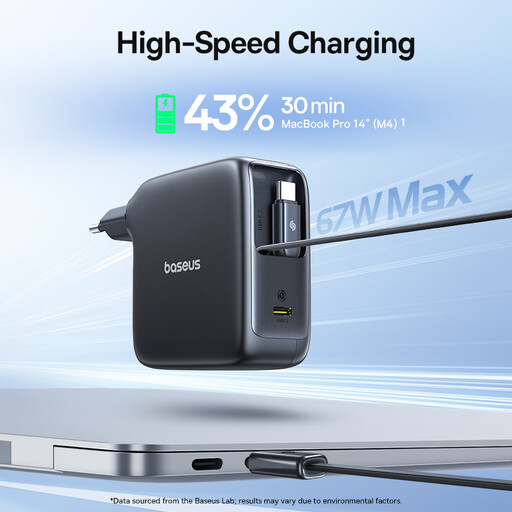
Why this pick? For professionals on the go, cable management is a constant headache. This charger solves the problem by integrating two retractable USB-C cables. No more tangled messes in your bag or forgotten cables at home.
It neutralises the "weak link" pitfall by integrating cables perfectly calibrated for its wattage. No need to worry about compatibility.
An all-in-one solution delivering 67W, enough for an ultrabook and a smartphone. Its compact and highly organised design is a real bonus for travellers.
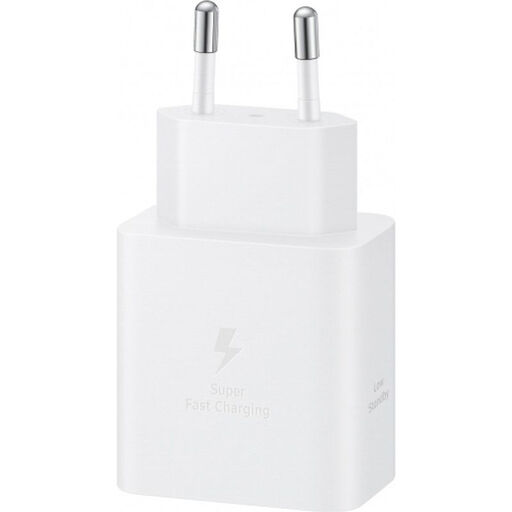
Why this pick? Recent Samsung devices use the "Super Fast Charging 2.0" protocol, a variant of Power Delivery. To take advantage of maximum charging speeds, a compatible charger is essential. This official model is designed specifically for that.
It eliminates any ambiguity about compatibility. With an official charger, you're guaranteed that the fast charging protocol is 100% supported, without any risk to your battery.
Optimised performance for the Samsung Galaxy ecosystem. The charger comes with a 1.8m USB-C to USB-C cable, also built to handle the 45W charge.
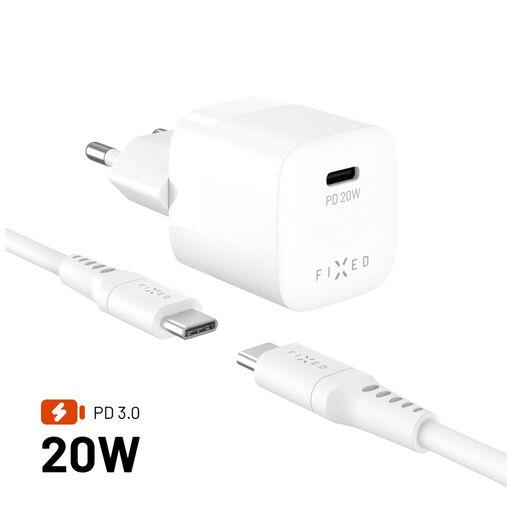
Why this pick? For those who travel light and only need to charge a smartphone or a small tablet, compactness is the number one criterion. This charger is barely larger than a coin but delivers 20W, enough to quickly bring most phones back to life.
It doesn't over-promise on power. It offers a simple, effective, and safe solution for a specific need, and includes the appropriate cable.
Its tiny size makes it the ultimate compact travel charger. It slips into any pocket without being noticed.
We've curated a complete selection of chargers that meet our performance criteria and European safety standards.
It all depends on the most power-hungry device you plan to charge. As a general rule:
Yes, and the advantages are tangible. For the same wattage, GaN technology allows for a much smaller and lighter USB-C power adapter. It generates less heat, which increases its lifespan and safety, all while wasting less electricity. It's a real advantage, especially when travelling.
Yes, absolutely and without any risk. A modern USB-C charger, especially one certified for Power Delivery, is universal. It will "negotiate" with your device, even an older model, to supply only the power it can safely accept. You won't get the maximum charging speed, that's all, but it will charge without any issues.