
Livraison le jour même ou le lendemain

Qualité garantie

Débloquez vos offres de bienvenue: Livraison GRATUITE | Jusqu'à -80 % | 30 jours d'essai gratuits à JoyPlus
Téléchargez l'application
The promise of USB-C was simple: one cable and one charger for all our devices. In reality, replacing a lost charger or buying a more powerful one often turns into a headache. Between the advertised wattages, obscure standards, and marketing jargon, it's easy to make a mistake, resulting in a product that's unsuitable or even dangerous for your equipment.
As a product expert at Joybuy, my mission is to help you cut through the confusion. Let's forget the technical jargon and get straight to the point so you can make the right choice. Here are the most common pitfalls to avoid and the criteria to check before you pull out your credit card.
To choose the right fast USB-C charger, you don't need a degree in electronics. You just need to master three key concepts that match your needs.
Power, expressed in watts (W), is the engine behind charging speed. The Power Delivery (PD) protocol, on the other hand, is the brain: it's the standard that allows the charger and the device to "talk" to each other to deliver just the right amount of power, safely.
Rest assured, a charger that's more powerful than necessary will never damage your device. Thanks to the PD protocol, it will automatically adapt to the maximum power your smartphone or computer can accept.
Behind the acronym GaN is gallium nitride, a next-generation semiconductor that is replacing traditional silicon. For the user, the advantages of a GaN charger are very tangible:
Tired of juggling chargers for your phone, computer, and headphones? The multi-port charger is the obvious solution. It combines several adapters into a single, compact block, freeing up wall outlets and space in your bag. However, be sure to check how the power is distributed when multiple ports are used at the same time.
To illustrate these criteria in practice, here is our selection of chargers that caught our eye, each meeting a specific need.
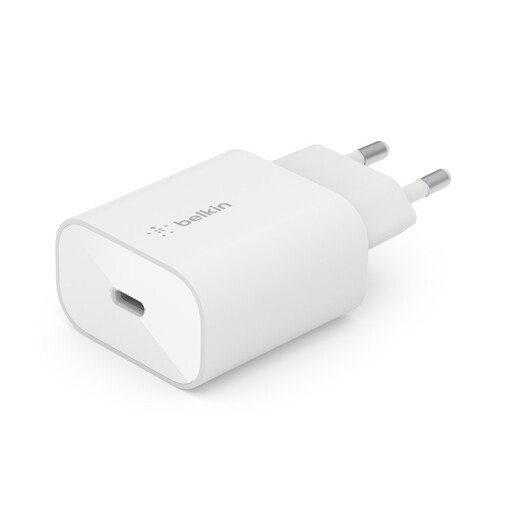
Why we chose it: It's the ideal replacement for the original charger for an iPhone or a Samsung smartphone. Its compact size and 25W output are perfectly calibrated for fast charging a modern phone, with no unnecessary frills.
It includes PPS (Programmable Power Supply) technology, which is essential for Samsung smartphones. This allows it to dynamically adjust the voltage to deliver a truly optimised, ultra-fast charge. It thus avoids the "false universal compatibility" trap.
Certified USB-C PD 3.0 and made by a trusted brand, it guarantees a safe and reliable charge. Bonus: its compact design won't block adjacent outlets on a power strip.
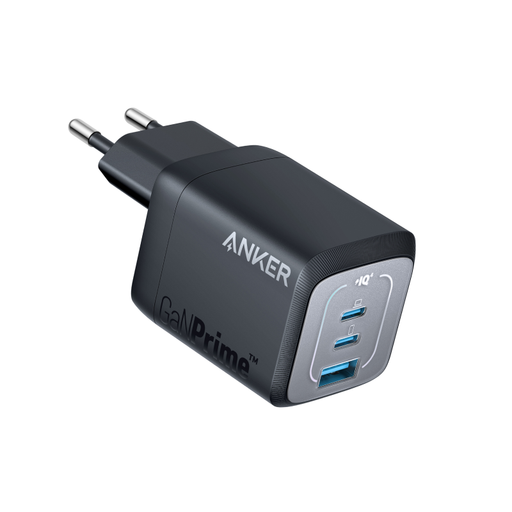
Why we chose it: The perfect ally for those who travel with a MacBook Air/Pro and a smartphone. Its 67W output and 3 ports (2 USB-C, 1 USB-A) let you charge everything with a single, ultra-compact block, thanks to GaN technology.
It bypasses the poorly distributed power trap. Its intelligent power distribution technology ensures a fast and efficient charge even with multiple devices plugged in, delivering up to 67W on a single port. Its foldable plug is the icing on the cake for travellers.
An unbeatable power-to-size ratio. The manufacturer claims it's 51% smaller than the original 67W Apple charger. It's the ultimate travel charger.
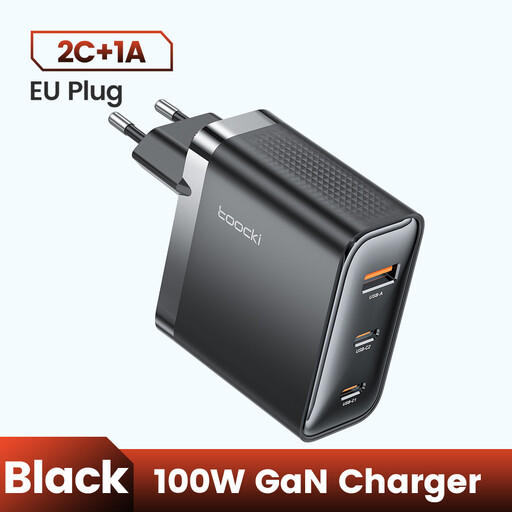
Why we chose it: For those who need maximum power to simultaneously charge a power-hungry laptop, a tablet, and a smartphone. This 100W PD charger block becomes a true charging station, whether at the office or at home.
It shatters the "false power" trap. This model can genuinely deliver 100W from a single USB-C port, a non-negotiable requirement for the most power-hungry laptops. The power is then intelligently distributed when other devices are plugged in.
Maximum versatility: 3 ports and colossal power in a compact GaN charger format. It's an excellent replacement for three bulky chargers, offering a single, high-performance solution.
We have curated a complete selection of chargers that meet our selection criteria and European safety standards.
A little warmth is normal during fast charging; it's a sign of energy transfer. However, if the charger becomes too hot to touch or emits a smell of hot plastic, unplug it immediately. This is a symptom of a poor-quality or defective product. Note that GaN chargers have the advantage of generally running cooler than silicon-based models.
Yes, absolutely and without any risk. The USB Power Delivery (PD) protocol was designed for this. The charger and your phone will "negotiate" the optimal power: if your phone can only accept 25W, the charger will automatically limit itself to 25W, even if it can deliver 100W. The reverse, however, is problematic: a 25W charger will struggle, or may not charge at all, a laptop that requires 100W.
Absolutely. Using a low-quality cable with an excellent charger is like putting budget tires on a Ferrari: the potential is wasted. For any charge over 60W, you absolutely need a USB-C cable certified for 100W (look for the "E-Marker" chip mention). Without it, the cable will act as a bottleneck and throttle the charging speed, even with the best charger in the world.