
Livraison le jour même ou le lendemain

Qualité garantie

Débloquez vos offres de bienvenue: Livraison GRATUITE | Jusqu'à -80 % | 30 jours d'essai gratuits à JoyPlus
Téléchargez l'application
By Joybuy, your high-tech expert
Is your smartphone battery dead and your original charger taking forever to recharge it? Are you juggling multiple adapters for your phone, tablet, and laptop? The arrival of USB-C was supposed to make our lives easier, but it has made choosing a good USB-C power adapter more complex than ever.
Between different power ratings, standards like Power Delivery, and new technologies like GaN, it's easy to get lost. This guide is here to separate fact from fiction and help you find THE right USB-C fast charger for your needs, without the marketing fluff.
Before diving into our top picks, here are the key criteria to help you see clearly and make the right choice.
Power, measured in watts (W), determines the charging speed. But be careful: higher wattage doesn't always mean faster charging. Your device also needs to be able to handle it!
The key technology here is the Power Delivery (PD) charger standard. It's a smart charging protocol that allows the charger and the device to communicate to deliver the optimal amount of power safely. Most modern devices (from Apple, Samsung, Google) are compatible with this standard.
You've probably come across the term "GaN charger". Gallium nitride (GaN) is a semiconductor material that is replacing silicon in next-generation chargers. Its advantages are very real:
This is a real bonus for those who travel or want to free up space on their power strip.
If you're juggling multiple devices, a dual-port or multi-port charger is the perfect solution to reduce clutter. These chargers distribute the total power across the ports in use. For example, a 45W charger can deliver 45W to a single port, or split it into 25W and 20W when two devices are plugged in.
We have reviewed several models to bring you a selection that meets different needs and budgets.
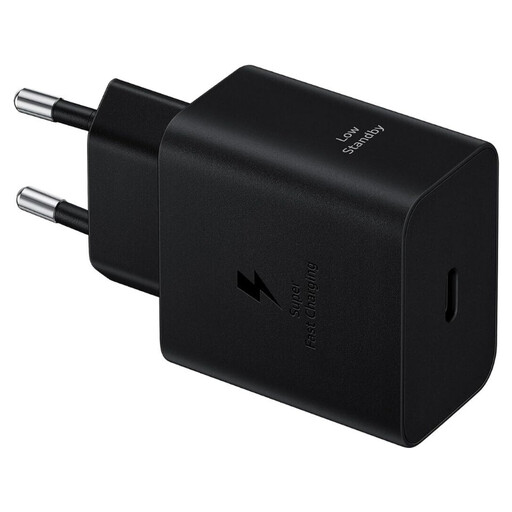
Why it stands out: This official Samsung charger is tailor-made to take full advantage of the Super Fast Charging 2.0 technology on compatible Galaxy devices. It comes with a 5A cable, ensuring the maximum power of 45W is delivered to the device losslessly and safely.
Pros:
Who is it for? This is the obvious choice for owners of recent Samsung Galaxy smartphones and tablets who want to enjoy the maximum charging speed offered by the manufacturer.
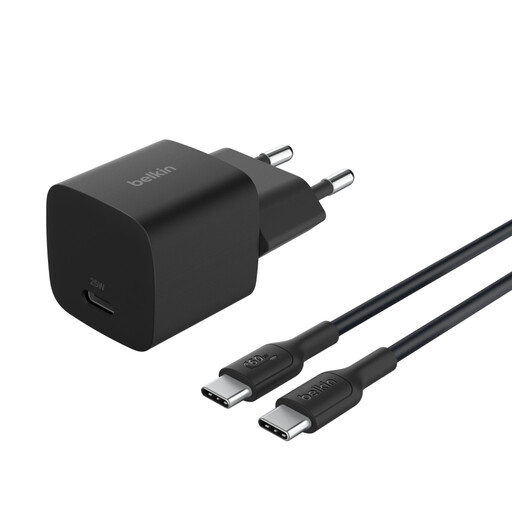
Why it stands out: This model from Belkin is a powerhouse of efficiency: it combines 45W of power, the compactness of GaN technology, and the versatility of a dual-port USB-C charger. It can fast-charge a MacBook Air on its own, or an iPhone and an iPad simultaneously thanks to its smart power sharing.
Pros:
Who is it for? For digital nomads and professionals looking for a single, powerful, and compact charger to power both their laptop and smartphone.
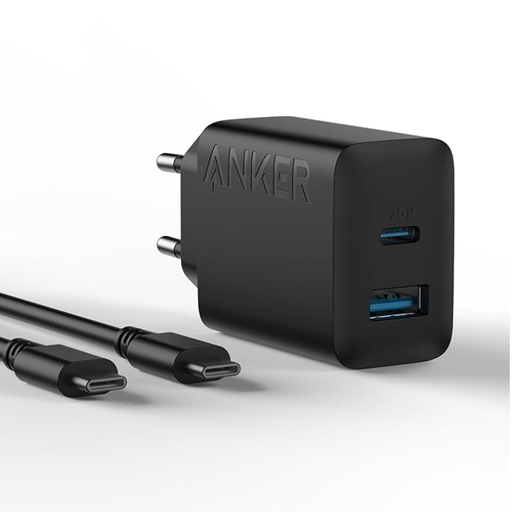
Why it stands out: Anker delivers a strong offering with this solution that is as affordable as it is versatile. With 20W of power from its USB-C port, it provides a fast charge for the latest iPhones and many Android smartphones. The additional USB-A port is a real bonus for charging accessories or older devices.
Pros:
Who is it for? For those looking for an affordable and compact replacement or second charger for their smartphone, with the flexibility to plug in another device via USB-A.
A good charger is useless without a quality cable to go with it. If the model you choose doesn't include one, or if you need a different length, it's crucial to select a cable that is rated for the power.
? Discover our selection of USB Type-C Charging Cables to complete your setup.
It all depends on your primary device. For a smartphone (iPhone, Samsung, Pixel), 20W to 30W is enough for fast charging. For a tablet or a compact laptop, aim for a 45W charger or higher. When in doubt, always check the maximum charging power your device supports on its spec sheet.
No, there's no risk with modern, certified chargers. Thanks to the Power Delivery (PD) standard, the charger communicates with your device to provide only the power it can safely accept. Using a 65W charger for a phone that only accepts 25W won't damage it; it will simply charge at 25W.
A GaN charger uses gallium nitride instead of silicon. In practical terms, this allows for the creation of chargers that are much smaller, lighter, and generate less heat than a traditional charger of the same wattage. This is a key advantage if portability and a small footprint are priorities for you.