
Livraison le jour même ou le lendemain

Qualité garantie

Débloquez vos offres de bienvenue: Livraison GRATUITE | Jusqu'à -80 % | 30 jours d'essai gratuits à JoyPlus
Téléchargez l'application
Today, we're taking a closer look at an accessory that has become essential: the USB-C fast charger.
With chargers gradually disappearing from our smartphone boxes and the number of our devices multiplying, finding the right model can sometimes be a headache. Power, number of ports, GaN technology... it's easy to get lost. This guide is here to give you clear guidelines and help you make the right choice, whether you're looking for an ultra-compact travel charger or a charging station for the whole family.
Before diving into our selection, let's review the key points to check to find the charger that will perfectly meet your needs.
Expressed in watts (W), power dictates the charging speed of your devices. A 20W charger is now a solid baseline for fast charging a recent smartphone, like an iPhone 16/15 or a Samsung S25/S24. For more power-hungry devices (tablet, laptop) or to power multiple devices at the same time, aim for 45W, 67W, or more. Rest assured: most modern chargers integrate the USB Power Delivery (PD) standard, which intelligently adjusts the power delivered to protect each device's battery.
You've likely seen the term "GaN charger" before. But what is it? Gallium nitride is a semiconductor that replaces traditional silicon. In practical terms, the benefits for you are clear:
A multi-port charger is the ideal solution to lighten your bag and free up outlets. The most common configurations are:
We have selected three models for you that stand out for their design and practicality, each meeting a specific need.
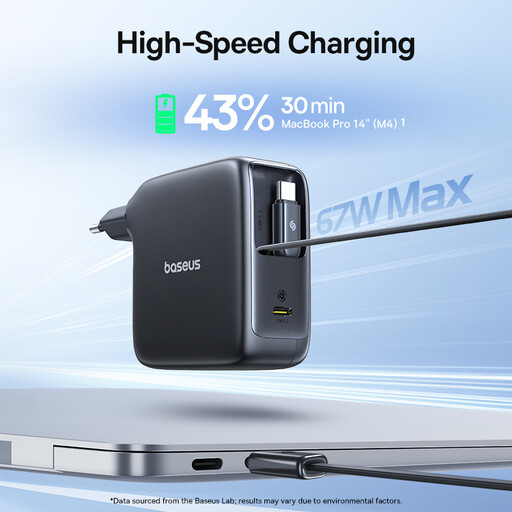
Its standout feature: This model tackles a universal problem: forgotten or tangled cables. With its two integrated, retractable cables (one USB-C and one Lightning) and a free USB-C port, it offers a remarkably effective all-in-one solution.
The Pros:
Who is it for? For nomads, whether they're professionals or travellers, who are looking for a complete, powerful, and perfectly organized charging solution without the clutter of extra cables.
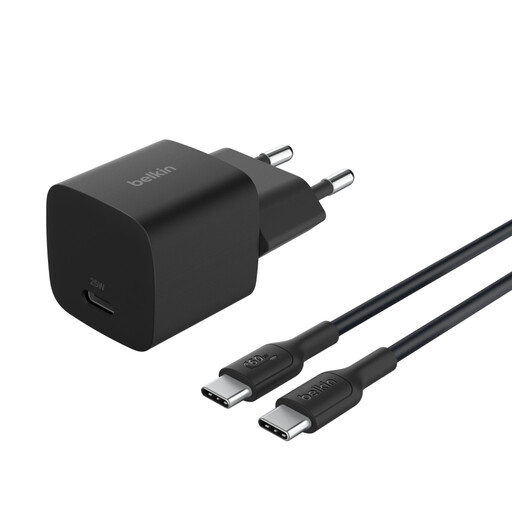
Its standout feature: Belkin focuses on the efficiency and compactness of GaN technology. Its dual USB-C port format makes it an excellent ally for users of recent devices.
The Pros:
Who is it for? Those who want a compact and high-performance charger to power their smartphone and another USB-C device (tablet, earbuds) simultaneously, both at home and at the office.
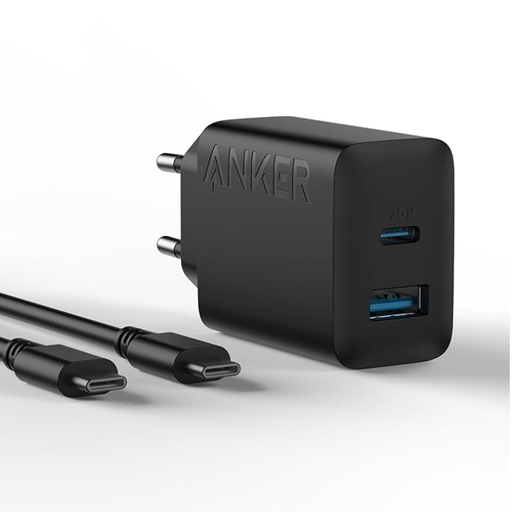
Its standout feature: Anker gets straight to the point with a simple, effective, and affordable solution. It's the ideal replacement for the missing charger in your smartphone's box, with the added versatility of a second port.
The Pros:
Who is it for? Users who primarily want to charge their smartphone quickly but appreciate the flexibility of an additional port for a second device, all in an ultra-portable format.
This selection is just a snapshot, and the world of chargers is vast. For more specific needs or to explore other models and power levels, feel free to browse our full catalogue.
? Explore our selection of USB-C charging cables and other accessories.
1. Can a USB-C fast charger damage my phone's battery? No. Modern devices (smartphones, tablets, etc.) and certified chargers communicate constantly. The charger only delivers the power that the device can safely accept. Your phone's battery management system manages the process to prevent any overcharging or overheating.
2. What is GaN technology, and is it really essential? GaN (gallium nitride) technology allows for the creation of smaller, lighter chargers that generate less heat. It's not essential; a traditional silicon charger works perfectly well. However, if compactness and light weight are key criteria for you, a GaN charger is clearly the best choice.
3. Can I use a 67W charger for a device that only requires 20W? Yes, absolutely. Thanks to the USB Power Delivery (PD) protocol, the charger and your device will "negotiate" so that the device only receives the 20W it needs. Using a charger that is more powerful than necessary is not only safe but also a smart investment for your future devices, which may be more power-hungry.