
Livraison le jour même ou le lendemain

Qualité garantie

Débloquez vos offres de bienvenue: Livraison GRATUITE | Jusqu'à -80 % | 30 jours d'essai gratuits à JoyPlus
Téléchargez l'application
Choosing a USB-C charger has become incredibly confusing. Between power promises and technical acronyms, it's easy to make a mistake and throw your money down the drain. Far more than a simple accessory, the charger has become the cornerstone of our digital lives.
To avoid falling into the trap, let's review the most common mistakes.
To get a clearer picture, focus on a few key technical points. These will determine the performance, safety, and versatility of your future charger.
Power, expressed in watts (W), defines the charging speed. But be careful, raw power isn't everything: it must be paired with the right protocol to be effective.
A 65W charger with PD compatibility often proves to be the ideal Swiss Army knife, capable of reviving a laptop, tablet, or smartphone with equal ease.
If you see the term GaN charger, that's an excellent sign. This technology, which replaces traditional silicon, offers several major advantages:
Gone are the days when every device had its own charger. A multi-port charger is the common-sense solution to declutter your desk or nightstand.
The best USB wall charger models often combine these two port types for unbeatable versatility.
Rather than aiming for a one-size-fits-all model, it's better to choose a charger tailored to your needs.
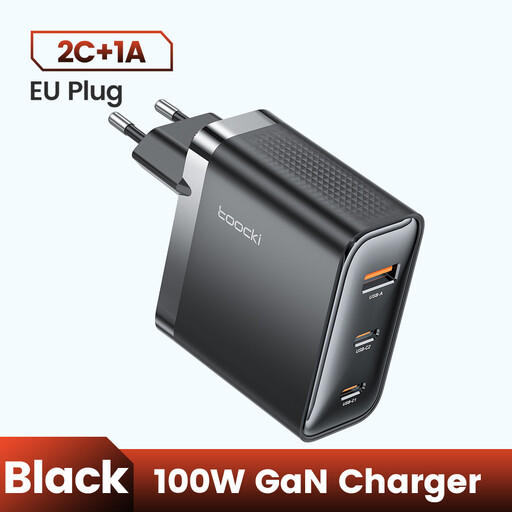
Why it's the right choice: Perfect for replacing the trio of adapters cluttering your bag. A single block for your laptop, smartphone, and tablet, whether at the office, at home, or on the go.
No more headaches over shared power. Its 100W output and smart power management can fuel a laptop (via PD) while simultaneously boosting a phone, without compromise.
GaN technology gives it a slim profile despite its power. Its three ports (2x USB-C, 1x USB-A) ensure maximum versatility.
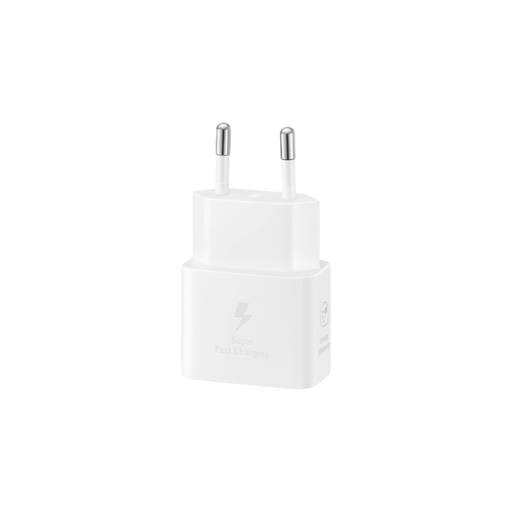
Why it's the right choice: The perfect ally for those who travel light with just a smartphone. Ultra-compact thanks to GaN, it slips unnoticed into a pocket or bag.
It eliminates any doubt about compatibility. By supporting both PD 3.0 and PPS protocols, it guarantees the fastest charge for Samsung Galaxy devices, as well as iPhones and other smartphones.
Its GaN technology allows for a tiny form factor and controlled heat. You also get the reliability and safety features of a major brand.
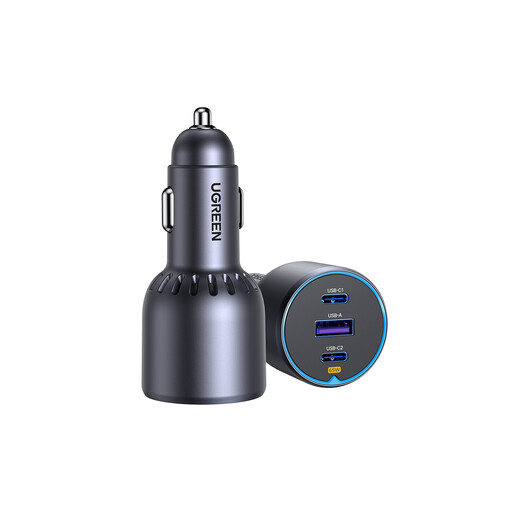
Why it's the right choice: Essential for those who use their car as a mobile office. This **cigarette lighter car charger** transforms the 12V socket into a true high-performance charging station for both the driver and passengers.
Goodbye to anemic car chargers. With 75W total output and three ports, it can recharge a laptop (up to 65W on one USB-C port) and multiple phones simultaneously, without breaking a sweat.
Its incredible versatility with two USB-C ports and one USB-A port. Its robust design ensures a flawless connection, even on bumpy roads.
Discover our complete selection of chargers that meet our performance criteria and European safety standards.
It all depends on what you want to charge:
Absolutely. For the same power output, a GaN charger is a featherweight: smaller, lighter, and it heats up much less than a classic silicon model. This efficiency translates to more stable charging and a longer lifespan for both the charger and your devices.
Yes, and it's actually a good idea. The device decides how much power it accepts; the charger doesn't force it. Plugging a smartphone limited to 25W into a 65W charger poses no risk: it will simply charge at its maximum speed of 25W. The advantage? Your charger is already future-proofed for your next, more power-hungry devices.