
Livraison le jour même ou le lendemain

Qualité garantie

Débloquez vos offres de bienvenue: Livraison GRATUITE | Jusqu'à -80 % | 30 jours d'essai gratuits à JoyPlus
Téléchargez l'application
With the proliferation of electronic devices in our daily lives, the USB-C fast charger has become essential. Yet, choosing the right model often feels like a daunting task. Between marketing promises and opaque technical jargon, it's easy to make a mistake and invest in an unsuitable, or even dangerous, product. As the Head of Product Recommendations at Joybuy, my mission is to help you make sense of it all. This guide breaks down the common pitfalls and gives you all the keys to find the charger that's truly right for you.
The charger market is saturated with options that, at first glance, all look the same. But be warned?: certain technical details, often omitted from product descriptions, can make all the difference. Here are the most common mistakes to avoid.
A 100W charger might seem incredibly powerful, but this value often represents the total power the block can deliver across all its ports. If you plug in multiple devices, this power is divided. A 100W multi-port USB charger might, for example, only provide 65W on one port and 30W on another. If your laptop, like a MacBook Pro, requires 85W for optimal charging, it will charge at a slower rate. Therefore, always check the maximum power per port and the power distribution.
An unusually low price often hides dangerous compromises on safety. A poor-quality USB-C power adapter can overheat, damage your devices' batteries, or, in the worst-case scenario, cause a short circuit and a fire hazard. The CE certification is the bare minimum in Europe. It guarantees that the product meets essential safety standards. Chargers from reputable brands go a step further by integrating additional protections against overvoltage, overheating, and short circuits.
Not all fast chargers are created equal. For a device to charge at its maximum speed, the charger and the device must "speak the same language"—that is, support the same fast-charging protocol. The most common are:
A charger without the right protocol will still work, but at a standard charging speed, falling far short of its fast-charging promises.
To avoid making the wrong choice, focus on these three criteria before you check out.
Power, expressed in watts (W), determines the charging speed. Here are some benchmarks:
GaN charger (Gallium Nitride) technology is a major advantage today. GaN chargers are more compact, lighter, and more energy-efficient than their silicon-based counterparts. They generate less heat, which contributes to their durability and the safety of your devices.
A multi-port USB charger is a practical solution to declutter your workspace or nightstand. Analyse your needs: how many devices do you charge simultaneously? Opt for models with at least two USB-C ports to be future-proof, as this connector has become the standard. An additional USB-A port can still be useful for older devices or accessories.
Your needs don't stop at your desk.
Rather than drowning you in an endless list, we've selected products tailored to specific user profiles. The goal is to help you find the right one for you in a snap.
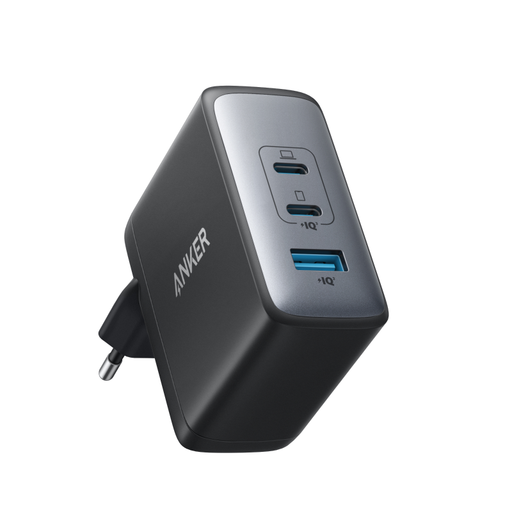
Why we chose it: Ideal for the user who juggles a powerful laptop, a smartphone, and earbuds. It replaces three bulky chargers with a single, compact, and high-performance solution, both at home and on the go.
It delivers a maximum power of 100 W on a single USB-C port, enough for most laptops. The power distribution is clearly indicated, preventing any unpleasant surprises.
The GaN II technology packs 100 W of power into a form factor that's 34% smaller than an original 96W MacBook charger, according to Anker's data.
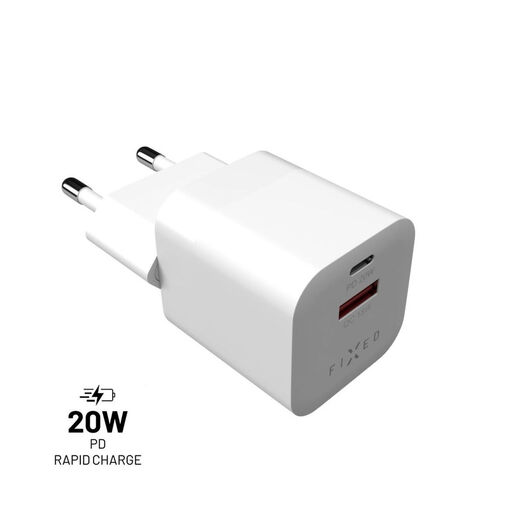
Why we chose it: Perfect for those looking for a simple and effective solution to charge their smartphone and an accessory (earbuds, smartwatch). Its ultra-compact size is a plus for travel or for hard-to-reach outlets.
It supports both Power Delivery 3.0 and Quick Charge 3.0 protocols, ensuring fast-charging compatibility with a wide range of Apple and Android devices, instead of settling for a slow charge.
Its dual-port design (USB-C and USB-A) and 20 W power make it a versatile and affordable charger that includes essential safety protections against overvoltage and overheating.
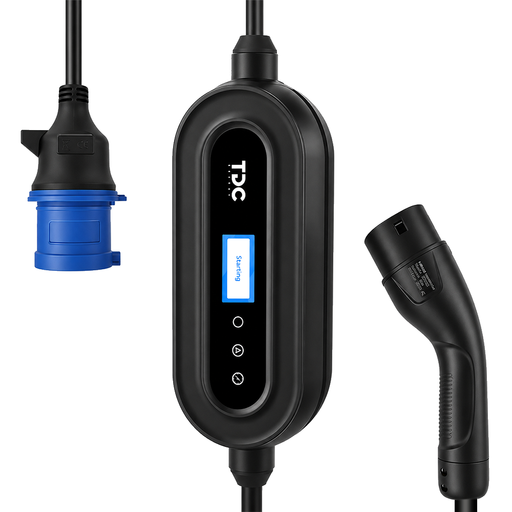
Why we chose it: A flexible charging solution for EV drivers who don't have a fixed wall-mounted station or who need a backup option when travelling. It plugs into an industrial CEE socket for safe charging.
It avoids the risk of overloading a standard home circuit by allowing you to adjust the charging current (16A, 20A, 24A, 32A) to match the electrical system's capacity, a crucial safety feature.
Its portability and Wi-Fi/Bluetooth connectivity for scheduling via an app make it both a smart and versatile EV charger.
We've compiled a complete, up-to-date list of products that meet our selection criteria and European safety standards.
The required wattage depends on the device you need to charge. For a modern smartphone, a 20W to 30W charger is more than enough for fast charging. For an ultrabook-style laptop (e.g., MacBook Air), aim for 45W to 65W. For more power-hungry laptops or for charging multiple devices at once, a power output of 100W or more is recommended.
Yes, and the advantages are tangible. GaN (Gallium Nitride) technology allows a GaN charger to handle high power in a much more compact form factor, with better energy efficiency. In practical terms, it runs cooler and wastes less energy than a traditional silicon charger of the same wattage. It's a true mark of performance and portability.
Yes, absolutely and without any risk. Apple's USB-C chargers, like those for MacBooks, use the Power Delivery (PD) protocol. Your iPhone, which is also PD-compatible, will "negotiate" with the charger to only draw the power it needs. Using a more powerful charger will never damage your phone; on the contrary, it will allow it to charge at its maximum possible speed.