
Livraison le jour même ou le lendemain

Qualité garantie

Débloquez vos offres de bienvenue: Livraison GRATUITE | Jusqu'à -80 % | 30 jours d'essai gratuits à JoyPlus
Téléchargez l'application
The promise of a USB-C fast charger is tempting: bringing your smartphone, tablet, or laptop battery back to life in record time. However, the market is saturated with products making vague marketing claims, often leading to disappointing purchases. As a product expert for Joybuy, my mission is to guide you through this jungle.
Navigating your options shouldn't be a headache. Here’s how to avoid the most common pitfalls and choose a charger that truly delivers on its promises.
Before you check out, beware of these common mistakes that can cost you time and money.
To ensure you're investing in high-performance, durable equipment, focus on these three key points.
Power output determines charging speed. Here are a few guidelines:
Beyond watts, the protocol is fundamental. The universal standard is USB Power Delivery (PD). Make sure your charger supports it. For recent devices, especially certain Samsung smartphones or Google Pixel phones, support for PPS (Programmable Power Supply) is a significant advantage. This protocol adjusts the power in real-time for a more efficient charge that's also gentler on the battery. An official 45?W Samsung charger, for example, incorporates this technology.
You'll often come across the term GaN charger. GaN (Gallium Nitride) is a semiconductor that replaces traditional silicon. For the user, the benefits are tangible:
A fast charging cable must match the adapter's capabilities. A quality USB-C to USB-C cable should clearly state the maximum power it can handle (e.g., 60?W, 100?W, or even 240?W). For Apple users, the same principle applies to a certified Lightning cable. A good data cable not only ensures safe charging but also stable and fast file transfers.
Rather than drowning you in technical specs, here are concrete solutions for different user profiles, all selected for meeting our criteria.
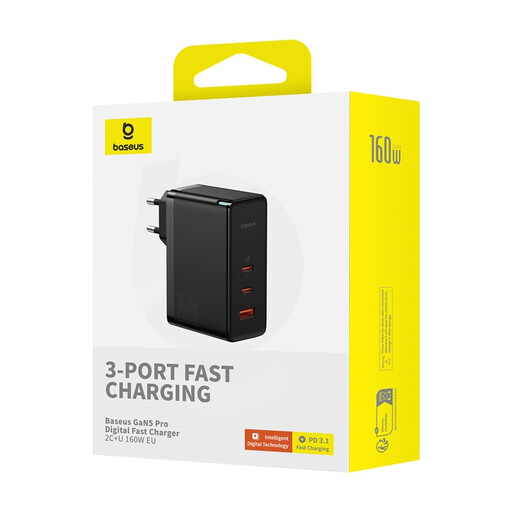
Why we chose it: Perfect for those who juggle a laptop, smartphone, and tablet. This single charger centralises power for your entire digital ecosystem, whether at the office or on the go.
With its 160 W total output and GaN technology, it delivers truly fast and efficient charging for multiple devices without overheating or making false promises.
Two USB-C ports and one USB-A port offer maximum versatility. The included 240 W USB-C cable is ready for the most power-hungry devices.
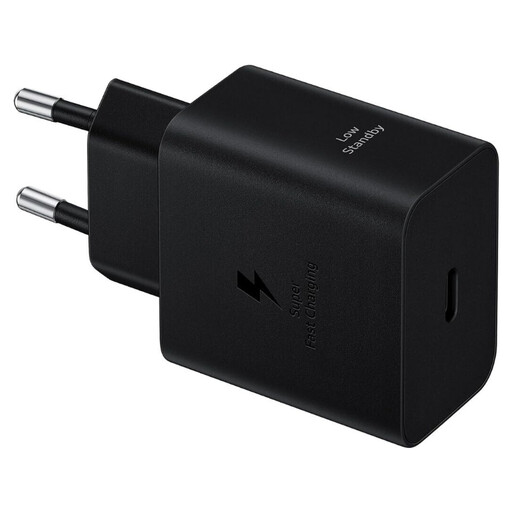
Why we chose it: For owners of Samsung Galaxy smartphones compatible with Super Fast Charging 2.0, this official adapter is the guaranteed way to achieve the maximum speed promised by the manufacturer.
It bypasses the incompatibility trap by integrating the PPS protocol (Super Fast Charging 2.0), ensuring perfect communication with the smartphone.
An optimised, turnkey solution that comes with the original Samsung 5A cable for maximum safety and performance right out of the box.
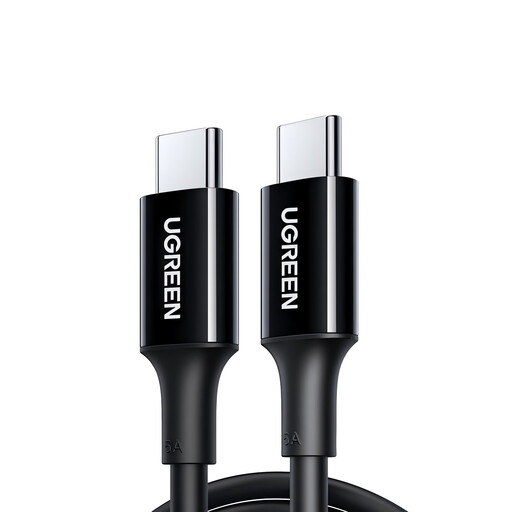
Why we chose it: To replace a worn-out cable or get a spare, this model is a safe bet for everyday charging and data transfer without breaking the bank.
It tackles the 'weak link' pitfall. Its robust design and tinned copper core are built to handle a high current (5A), ensuring a safe charge.
An excellent balance of durability, charging performance (up to 5A), and transfer speed (480 Mbps).
We have curated a complete and up-to-date selection of products that meet our selection criteria and safety standards.
In theory, yes, thanks to the standardisation of USB-C. However, for optimal speed, it's crucial to choose a charger whose power output and protocols (PD, PPS) match your device's specifications. An underpowered charger will be slow, while an overpowered model poses no safety risk but won't charge any faster than what your device can accept.
No. A compliant USB-C charger and device communicate to negotiate the ideal charging power. The charger will only deliver the maximum power the phone can safely accept, which is 25?W in this example. Therefore, there is no risk to your battery.
A quality cable is essential for two reasons. First, safety: it's designed to handle high current without overheating. Second, performance: a low-quality cable can throttle the speed by being unable to carry your charger's full power output. It acts as a bottleneck.