
Livraison le jour même ou le lendemain

Qualité garantie

Débloquez vos offres de bienvenue: Livraison GRATUITE | Jusqu'à -80 % | 30 jours d'essai gratuits à JoyPlus
Téléchargez l'application
The days of waiting hours for a full charge are long gone, thanks to USB-C. Yet, choosing the right USB-C fast charger for your iPhone 16, Samsung S25, or MacBook can still be a real headache. Between the marketing jargon and a jungle of technical standards, it's easy to get lost. The risk? Ending up with a charger that doesn't live up to its promises.
Before you buy, watch out for these common pitfalls. They can not only cost you money but also damage your valuable devices:
You don't need to be an engineer to make the right choice. You just need to focus on a few key points and know what to look for.
Power, measured in watts (W), is the name of the game: it determines charging speed. The Power Delivery (PD) standard, meanwhile, allows the charger and device to communicate to intelligently adjust the power output.
You've likely come across the term GaN charger. Gallium nitride (GaN) is a semiconductor that is replacing silicon. In practice, a GaN USB-C power adapter is much smaller, lighter, and runs cooler than a traditional charger of the same wattage. A decisive advantage for anyone who travels light.
Even the best charger is nothing without a good cable. Your USB-C to USB-C cable must be able to handle the power output. Always check its maximum capacity (indicated in watts on the packaging or product page). Investing in a 100W or 240W cable is a future-proof choice that will ensure compatibility with your future devices.
Instead of a random list, here are concrete solutions tailored to specific user profiles.
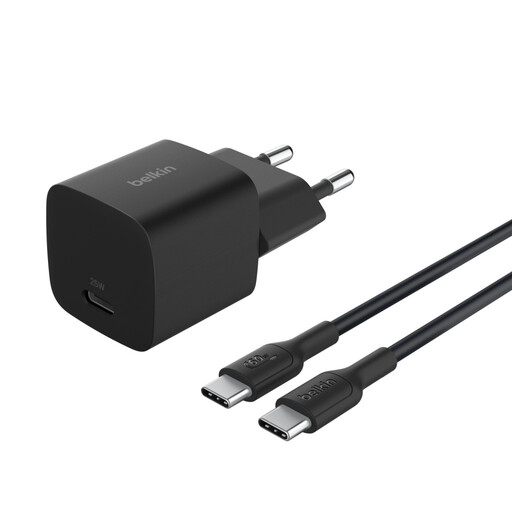
Why we love it: This is the ultimate turnkey solution—simple and reliable for quickly charging your smartphone and tablet. Its 45W output hits the perfect sweet spot, and its compact size makes it just as practical at home as it is in the office.
The USB-C cable is included and perfectly rated for the charger's power. No more risk of incompatibility. The USB-C PD 3.1 certification is a guarantee of safety and performance.
An all-in-one, ready-to-use bundle from a brand known for its reliability.
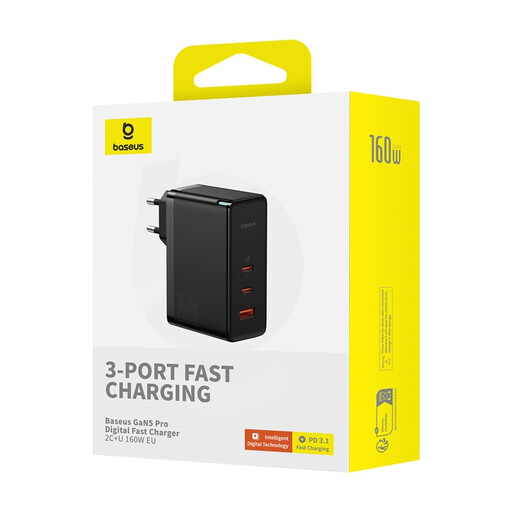
Why we love it: For those who never travel without their digital arsenal (laptop, smartphone, tablet...). Its colossal 160W output and three ports (2 USB-C, 1 USB-A) can power this entire ecosystem simultaneously from a single outlet.
Thanks to GaN technology, the headache of carrying multiple chargers is over. This single, compact block replaces everything else. The included 240W cable is ready for the most power-hungry devices of today and tomorrow.
A massive 160W of power and 3 ports to charge everything at once, in a design optimized for globetrotters.
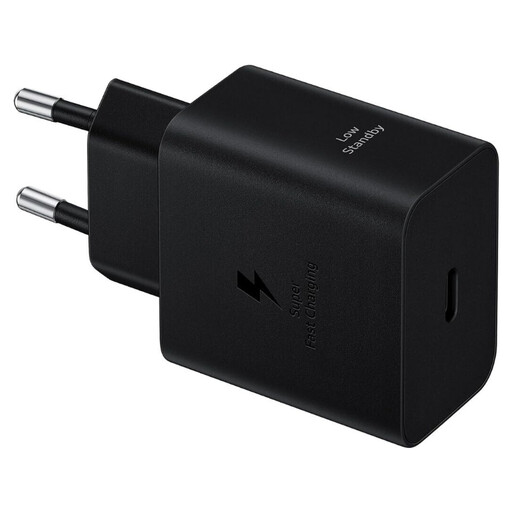
Why we love it: For owners of a recent Samsung Galaxy smartphone, this is the guaranteed way to unlock maximum charging speed, the renowned "Super Fast Charging 2.0".
It avoids the "universal" compatibility trap. With native support for the PPS protocol, it's the only way to guarantee true 45W ultra-fast charging on compatible Samsung models. The included 5A cable is built for this performance.
The perfect synergy: maximum speed and guaranteed safety for the Samsung Galaxy ecosystem.
Explore our full selection of products that meet our quality criteria and European safety standards.
It all depends on the most power-hungry device you need to charge.
Yes, and the difference is tangible. For the same wattage, a GaN charger is much more compact and lightweight than a traditional model. It also runs cooler, which is a sign of efficiency and longevity. A real bonus for lightening your travel bag.
Absolutely not, and this is a point you should never overlook. The cable is often the weakest link. Using a low-quality or underrated cable will throttle your charging speed and can even be dangerous (overheating). The golden rule: choose a USB-C to USB-C cable with a supported wattage (W) that is at least equal to that of your charger.