
Livraison le jour même ou le lendemain

Qualité garantie

Débloquez vos offres de bienvenue: Livraison GRATUITE | Jusqu'à -80 % | 30 jours d'essai gratuits à JoyPlus
Téléchargez l'application
USB-C is now everywhere, but finding the right charger remains a minefield. Between promises of "ultra-fast" charging and technical jargon like "GaN" or "Power Delivery," it's easy to make a mistake. Yet, an unsuitable charger isn't just slow: it can also prematurely damage the batteries of your valuable devices.
Before you buy, watch out for these two common pitfalls:
To avoid disappointment, focus on these three features. They are what determine the performance and versatility of your next USB-C charger.
Wattage (W) determines charging speed. But on its own, it guarantees nothing. The Power Delivery (PD) protocol acts as the conductor: it's an intelligent standard that allows the charger and the device to communicate, safely delivering the precise amount of power needed.
Gone are the days of charging just one device at a time. A good USB-C power adapter must meet your needs for today and tomorrow.
GaN chargers are a game-changer. Gallium nitride is a semiconductor that replaces traditional silicon. The advantages are immediate:
Be aware, GaN isn't a magic label that automatically makes a charger superior. But at the same wattage, a GaN model will always be more compact and run cooler.
To help you choose, we've selected three models that meet specific needs, applying our criteria to the letter.
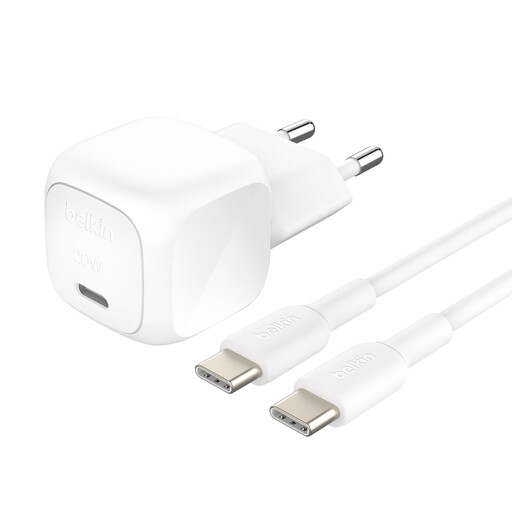
Why it's the right choice: Perfect for quickly charging your smartphone, and only your smartphone. A simple, reliable, no-frills solution without paying for features you don't need.
With its 20W output and PD protocol, it's tailor-made for fast-charging smartphones. No overblown marketing promises, and the cable is included: it just works.
Power Delivery 3.1 certification for safe and optimised charging. 1m USB-C to USB-C cable included, a great bonus so you don't have to pay extra.
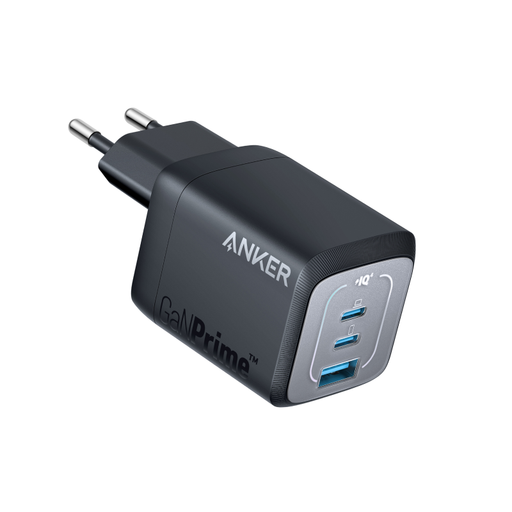
Why it's the right choice: The go-to for professionals on the move. It lets you simultaneously charge a laptop, smartphone, and headphones with a single, ultra-compact block. No more bags overflowing with chargers.
It avoids the shared-power pitfall by guaranteeing 67W on a single port, enough to effortlessly power a MacBook Air. Thanks to GaN technology, it replaces three chargers while taking up no more space than one.
GaN technology makes it 51% smaller than an equivalent Apple charger. Its 3 ports (2 USB-C, 1 USB-A) offer maximum versatility with a minimal footprint.
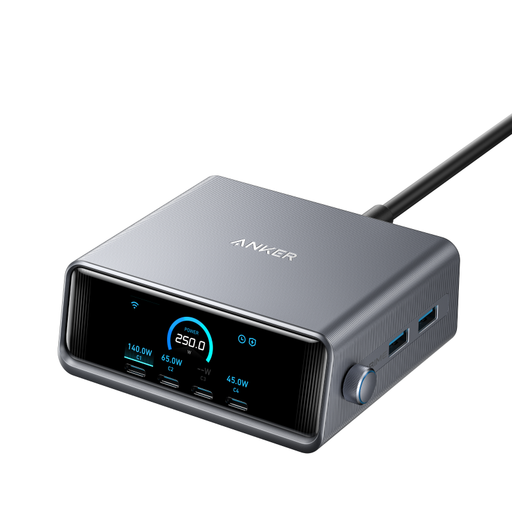
Why it's the right choice: The ultimate solution for those juggling an arsenal of devices. Laptop, tablet, smartphone, watch... this single station powers everything at once, and at full speed.
With a colossal power reserve of 250W, sharing is no longer an issue. It can deliver up to 140W on a single port (enough to power a 16-inch MacBook Pro) while charging 5 other devices. No compromises.
A massive 250W output distributed across 6 ports for a finally organised desk. The bonus feature: its LCD screen displays the power delivered to each device in real time.
Discover our full selection of chargers that meet our performance criteria and European safety standards.
Absolutely not. That's the magic of the Power Delivery (PD) protocol: the charger and your device "negotiate" to agree on the ideal wattage. Plugging a 20W smartphone into a 100W charger is therefore completely safe. The charger will automatically limit itself to 20W.
USB-C is the new standard: it's smaller, reversible (no more fumbling to plug it in!), and most importantly, it's the only one capable of handling powerful fast-charging protocols like Power Delivery. USB-A, its larger predecessor, is much more limited in power. For truly fast charging, USB-C isn't an option—it's a requirement.
Yes, and this is a crucial detail. For fast charging above 60W, a basic cable won't cut it. You need a USB-C cable specifically rated to handle 100W (or more). Without it, even the best charger will be throttled, and your charge will be as slow as with an old model. Always remember to check the cable's specifications before buying.