
Livraison le jour même ou le lendemain

Qualité garantie

Débloquez vos offres de bienvenue: Livraison GRATUITE | Jusqu'à -80 % | 30 jours d'essai gratuits à JoyPlus
Téléchargez l'application
Gone are the days when every device had its own charger. USB-C has established itself as the universal connector, synonymous with simplicity and efficiency. Yet, faced with a jungle of models making sometimes misleading claims, it's easy to make a mistake and end up with a slow, bulky, or even dangerous charger.
As a product expert for Joybuy, my mission is to guide you through this maze. Before you jump on the first model you see, let's review the common mistakes that turn a good deal into a headache.
To make an informed choice, it's essential to understand a few technical terms. You don't need to be an engineer—you just need to know what to look for.
Power, measured in watts (W), determines charging speed. But it's not the whole story. The communication protocol between the charger and your device is just as crucial. Today, the gold standard is Power Delivery (PD).
A Power Delivery charger communicates with your device to provide the precise voltage and current it needs.
Make sure the charger clearly states Power Delivery or PD 3.0.
See the term "GaN charger"? That's an excellent sign. Gallium nitride (GaN) is a next-generation semiconductor that is replacing traditional silicon. For the user, the benefits are immediate:
A multi-port charger is perfect for lightening your bag. Be aware, the total advertised power is almost always shared between the different ports once they are used simultaneously. A good model should detail the power distribution. For example, a 65W charger with two USB-C ports might offer 65W on a single port, but switch to 45W + 20W when both are in use. Check the technical specifications for this detail to avoid disappointment.
To put theory into practice, here are models that perfectly illustrate these criteria, each tailored to a specific need.
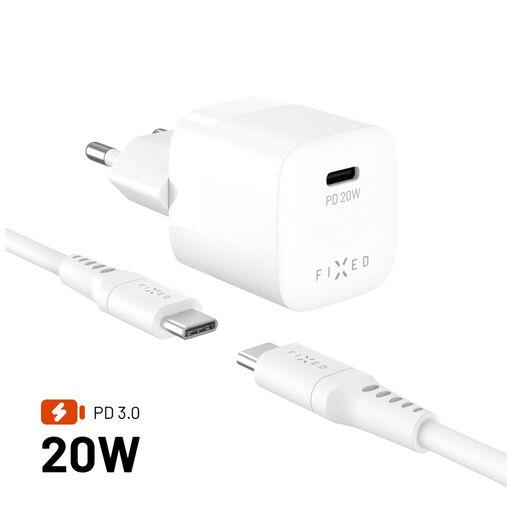
The Verdict: Perfect for those who travel light. Its pocket-sized form factor and included cable make it a ready-to-go solution for quickly charging a smartphone without weighing down your bag.
It sidesteps the risk of low-end chargers thanks to its comprehensive protections (overheating, overvoltage) and its construction from GRS-certified recycled materials—a true mark of quality.
Fast 20W Power Delivery charging in a pocket-sized format; includes a USB-C cable for an all-in-one solution.
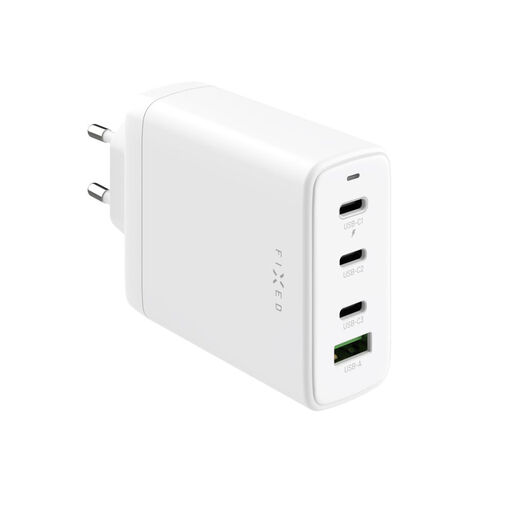
The Verdict: The solution for anyone juggling a laptop, smartphone, and other devices. It single-handedly replaces a bulky power strip of chargers.
It solves the problem of collapsing shared power. With 120W total and a main port capable of delivering 100W, it can charge a laptop at full speed, even with other devices connected.
GaN technology for a compact size and controlled heat; 120W of total power and 4 ports for ultimate versatility.
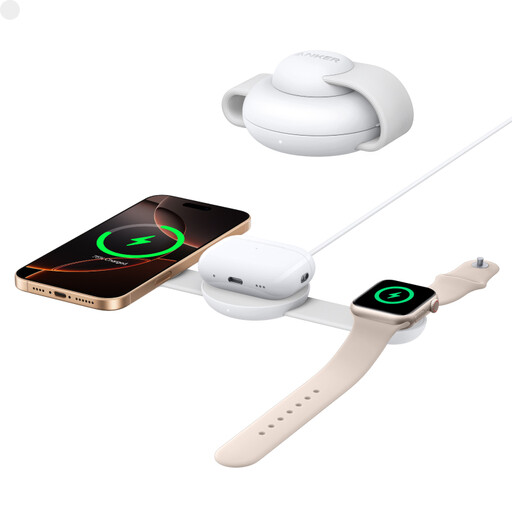
The Verdict: Designed to simplify life for iPhone, Apple Watch, and AirPods users. Its foldable design and MagSafe compatibility make it the ideal desk or travel companion for charging everything wirelessly.
No more tangled mess of three separate chargers and cables. Its official Qi2 certification guarantees fast (15W) and safe wireless charging, unlike unreliable generic solutions.
3-in-1 Wireless Charging Station with Qi2 certification (15W); compact, foldable design, perfect for iPhone's StandBy mode.
We have selected a full range of products that meet our quality criteria and European safety standards.
USB-C is the connector format. Power Delivery (PD) is the smart charging technology that runs through that connector. A basic USB-C charger will be limited to a slow charge (5W, for example). A USB-C PD charger, however, communicates with your device to deliver the maximum power it can handle (20W, 65W, 100W…), ensuring a fast and optimised charge.
Absolutely, and for very practical reasons. A GaN charger is significantly smaller and lighter than a silicon charger of the same wattage. It's also more energy-efficient, which means it heats up much less. For travel, where every gram counts, it's a true game-changer.
Yes, without any risk. Thanks to the Power Delivery protocol, the charger and the smartphone "talk" to each other. The 65W charger will detect that the phone only needs 20W and will adjust its power output accordingly. So, using an overpowered charger will never damage your device. It just won't charge it any faster than its maximum allowed speed.