
Livraison le jour même ou le lendemain

Qualité garantie

Débloquez vos offres de bienvenue: Livraison GRATUITE | Jusqu'à -80 % | 30 jours d'essai gratuits à JoyPlus
Téléchargez l'application
Ever had your smartphone battery die mid-trip while using Waze? Or had passengers fighting over the only available charging port? Between tablets, GPS units, and even laptops, a single charger just isn't enough anymore. Finding a reliable, high-performance USB-C car charger has become essential to stay connected with peace of mind.
This guide is here to demystify the topic. We'll break down the key criteria to consider and present our top picks for 2026, so you can make an informed choice that's perfectly suited to your needs.
Before you jump on the first model you see, a few technical details are crucial to avoid buyer's remorse.
Power, measured in watts (W), is the most critical factor: it determines how fast your devices will charge. A fast car charger worthy of the name should deliver at least 20-30W per USB-C port to efficiently power a modern smartphone. If you plan on charging a laptop or multiple devices at once, aim for a total output of 60W or more. Also, check for compatibility with fast-charging protocols like Power Delivery (PD) or Quick Charge (QC), which ensure optimised and safe power for your valuable devices.
The era of the single USB-A port is long gone. Today, a good multi-port car charger must combine USB-C and USB-A ports for maximum versatility. USB-C has become the standard for fast-charging modern devices, while USB-A remains useful for older equipment or cables you already own. Think about how many devices you and your passengers will need to plug in simultaneously. A model with two or three ports is often the sensible choice for families or professionals on the go.
A quality USB cigarette lighter adapter must include multiple safety features: protection against overheating, overvoltage, short circuits, and overcharging. These safeguards protect not only your precious devices but also your vehicle's electrical system. Also, ensure the charger fits snugly into the socket to prevent accidental disconnections on bumpy roads or over speed bumps.
To guide you, here are a few of our favourite models that cater to different needs and budgets.
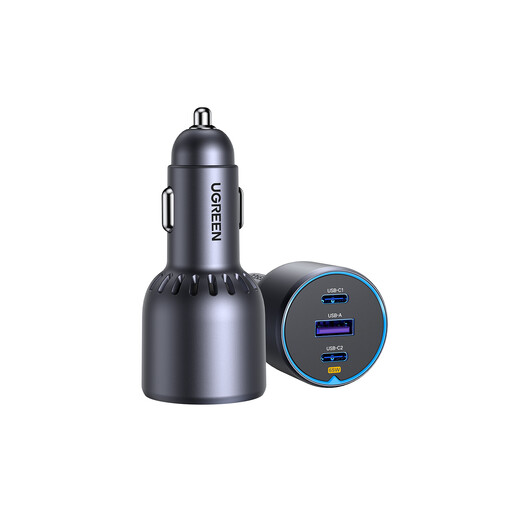
Why we love it: This model is a true powerhouse of performance and versatility. With its 75W output and three ports, it's ready for the most demanding needs, including charging a laptop.
Highlights:
Who is it for? Ideal for mobile professionals who need to charge their laptops, as well as for hyper-connected families travelling with a host of devices (smartphones, tablets, portable consoles...).
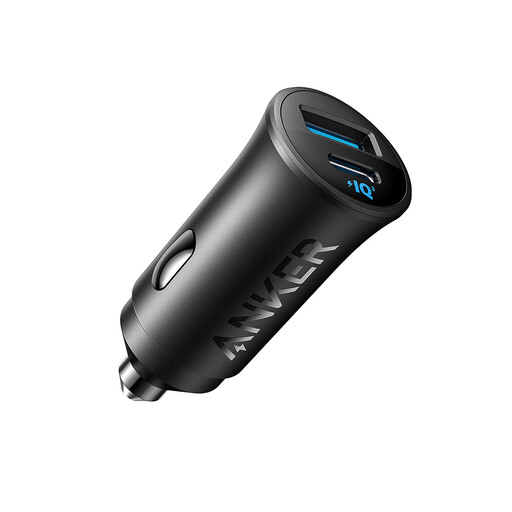
Why we love it: Anker delivers an ultra-compact solution that doesn't sacrifice efficiency. Its miniature size allows it to blend seamlessly into any car interior.
Highlights:
Who is it for? Perfect for daily commutes and for those looking for a minimalist yet powerful solution to keep their smartphone and a second device fully charged.
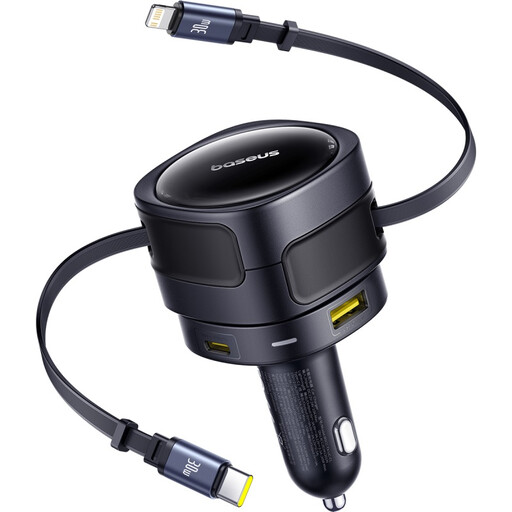
Why we love it: This Baseus model is a true mobile charging station. Its key advantage? Two integrated retractable cables that put an end to the mess of tangled wires in your car.
Highlights:
Who is it for? The top choice for rideshare drivers, large families, or anyone who wants a complete and clean charging setup without getting tangled up in cables.
Our selection covers the most common use cases, but the car accessories market is vast. If these models don't check all your boxes, or if you're looking for a different power output or port configuration, many other solutions are available.
? Explore our full range of car chargers and adapters to find the perfect model.
It all depends on your devices. For a modern smartphone, a 20-30W port is ideal for fast charging. For a tablet, aim for 30W or more. If you plan to charge a laptop, you'll need a port that delivers at least 45-65W and is compatible with the Power Delivery (PD) standard.
In most modern vehicles, the cigarette lighter socket's power cuts off with the ignition, so there's no risk of draining your car battery. However, in some older models, the socket may remain powered. When in doubt, and as a precaution, it's best to unplug the charger when parking for an extended period.
No, a quality, certified (e.g., CE standard) fast car charger poses no danger to your battery. Technologies like USB Power Delivery (PD) allow the charger and the device to "communicate" to adjust the power in real-time. The charger will never deliver more power than your device can safely accept.