
Livraison le jour même ou le lendemain

Qualité garantie

Débloquez vos offres de bienvenue: Livraison GRATUITE | Jusqu'à -80 % | 30 jours d'essai gratuits à JoyPlus
Téléchargez l'application
Juggling an iPhone, an Android tablet, and a laptop with three different cables is a headache we know all too well. The promise of a USB-C cable with a Lightning adapter is appealing: one single accessory to rule them all. Yet, the market is flooded with products that look identical but whose performance can vary wildly.
Before you make a decision, it's crucial to know the common pitfalls that lead to serious buyer's remorse. Many users end up with cables that stop working after an update, charge at a snail's pace, or fray after just a few weeks. Here’s how to avoid these disappointments.
To avoid making a mistake, focus on a few non-negotiable technical features. These are the true guarantors of your cable's quality and lifespan.
MFi is Apple's licensing program for accessory manufacturers. A certified cable includes an authentication chip that ensures perfect communication with your iPhone or iPad. It's your only guarantee that the cable will continue to work after every iOS update and that it meets Apple's strict safety standards.
For truly efficient charging, power is the name of the game. A cable compatible with 60W PD fast charging is an excellent sign of versatility. It can not only charge your iPhone at top speed (which will only draw the maximum power it can accept, around 27W for recent models) but also power much more power-hungry devices like an iPad Pro or a MacBook Air. This makes it a true universal iPhone and Android cable.
A cable's durability comes down to its materials. Opt for a durable braided cable made of nylon: it offers much better protection against abrasion and twisting than a simple plastic sheath. Also, check that the cable ends, at the connector joint, are equipped with flexible reinforcements. This is the most fragile area and the first part to fail. A comfortable length, like a 3m long cable, can also be very practical at home or in the office.
Rather than an endless list, we've selected options that cater to specific user profiles, always keeping our quality and safety criteria in mind.
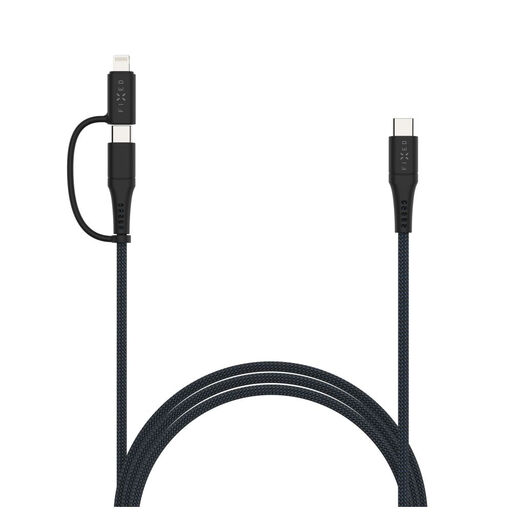
Why we chose it: Perfect for a fixed workstation, both at the office and at home. Its long length offers maximum freedom of movement, and its 60W power makes it an ideal all-in-one solution for an iPhone, iPad Pro, or even a MacBook.
This cable checks all the boxes: it's MFi certified, supports 60W PD charging, and has a braided sheath with reinforced ends for rock-solid durability.
The 3m long cable is its main advantage, eliminating distance constraints from the outlet. It comes with a cable tie and an adhesive holder for neat storage.
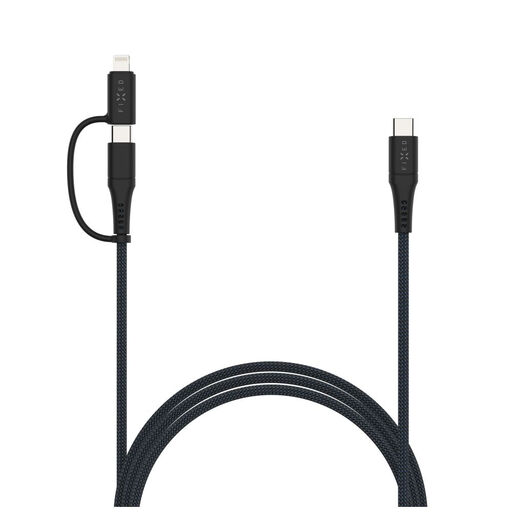
Why we chose it: For those who travel or move around often, this 2-metre cable offers an excellent compromise between reach and portability. It's long enough to be practical in a hotel or café, while still being easy to pack in a bag without getting tangled.
It shares the same qualities as its 3m big brother: MFi certification, 60W PD fast charging support, and a robust braided design to withstand the rigours of travel.
Its 2-metre length is highly versatile. The included cable tie is a handy extra for keeping it coiled on the go, and the Lightning adapter is tethered to the cable so you'll never lose it.
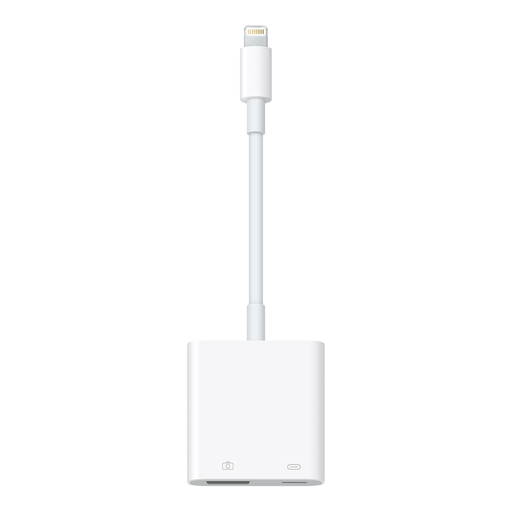
Why we chose it: For those who swear by official solutions and need more than just charging. This adapter is perfect for photographers or users who want to connect various USB peripherals (drives, card readers, audio interfaces) to their iPad or iPhone.
As an official Apple product, it guarantees flawless compatibility and reliability, completely eliminating any risks related to MFi certification. It's designed for seamless integration into the ecosystem.
It offers USB 3 data transfer speeds (on compatible iPad Pro models) and, most importantly, it has a Lightning port for simultaneous charging—a feature that 2-in-1 cables don't offer.
We've put together a complete, up-to-date selection of products that meet our strict selection criteria and current safety standards.
Yes, absolutely. A non-certified cable might work at first, but it's likely to become unusable with the next iOS update. More seriously, it offers no guarantee that it meets safety standards, which can cause overheating or damage your device's charging port in the long run.
A 2-in-1 USB-C Lightning cable is an all-in-one solution where the Lightning adapter is tethered to the USB-C connector. This is convenient for not losing the small tip. A separate adapter, like Apple's, offers more flexibility: it allows you to use any standard USB cable and may offer additional features, such as higher data transfer speeds.
No, and this is a crucial point. Even if the cable can handle 60W, your iPhone will only "draw" the maximum power it can accept (usually between 20W and 27W). The benefit of a 60W cable is its versatility: you can safely use it to charge your iPhone at its optimal speed, then switch to your iPad Pro or USB-C laptop, which can take advantage of that higher power.