
Livraison le jour même ou le lendemain

Qualité garantie

Débloquez vos offres de bienvenue: Livraison GRATUITE | Jusqu'à -80 % | 30 jours d'essai gratuits à JoyPlus
Téléchargez l'application
Navigating the jungle of USB-C cables can feel like an obstacle course. Between the different standards, power ratings, and speeds, it's easy to get lost. Yet, the wrong cable can not only bottleneck your transfers but also struggle to charge your most power-hungry devices, like a MacBook Pro.
This guide is here to demystify it all. We'll break down the criteria that truly matter to help you make the right choice, whether for simple daily charging or for an ultra-fast connection for professional use.
Choosing a USB-C cable isn't just about its length or colour. Three technical specifications must be closely monitored to ensure optimal compatibility and performance with your devices.
A cable's ability to deliver power is a crucial factor, especially for laptops and tablets. This power is measured in watts (W).
Not all USB-C cables are created equal when it comes to file transfers. The performance gap between different standards is simply abysmal.
A cable is an accessory that endures daily wear and tear. Its design has a direct impact on its lifespan. A braided USB-C cable made of nylon or a composite material will offer much better resistance to fraying and twisting than a standard plastic model. Similarly, reinforced connectors are a guarantee of longevity, preventing loose connections from developing after a few months of use.
To help you make an informed decision, here is our selection of three models that meet distinct needs, from everyday charging to pure performance.
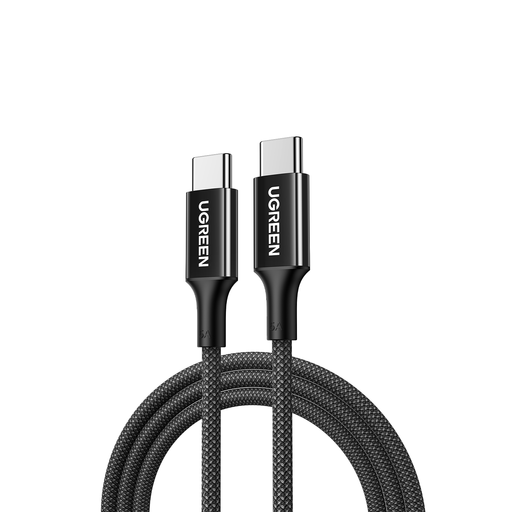
Why We Love It
This UGREEN cable offers an excellent balance of charging power, durability, and an affordable price. It combines 100W of power, capable of powering most laptops, with a rugged braided design for heavy use.
Pros
Who Is It For?
This is the smart choice for those looking for a reliable and durable MacBook Pro charging cable (or for other PC laptops) without needing stratospheric transfer speeds. It's perfect as a primary or secondary cable for the office and home.
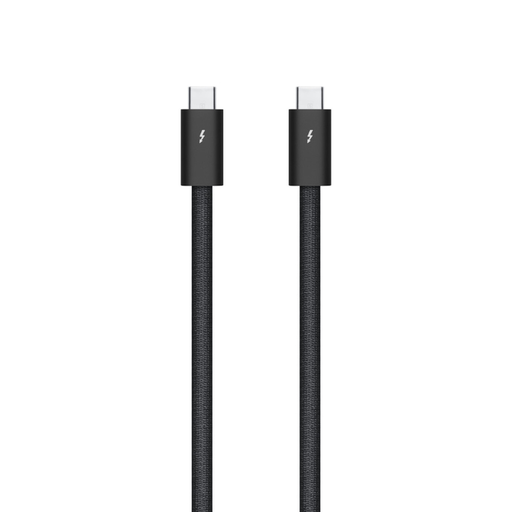
Why We Love It
This cable is simply the best available today. The Thunderbolt 5 cable delivers speeds and charging power that already anticipate the needs of tomorrow's most demanding professional setups.
Pros
Who Is It For?
It's aimed at creatives (videographers, 3D animators, photographers) and tech enthusiasts with cutting-edge equipment who accept no compromises on speed and power.
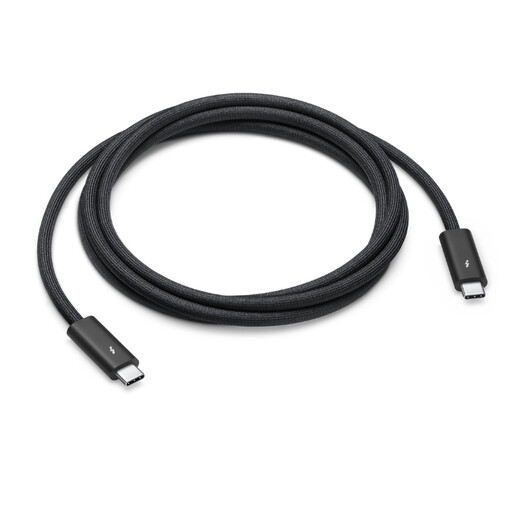
Why We Love It
Apple's Thunderbolt 4 Pro cable has established itself as the benchmark for users in the Mac ecosystem. It offers a perfect balance of very high speed, comfortable charging power, and broad compatibility with current professional peripherals.
Pros
Who Is It For?
It's the top choice for Mac or iPad owners who want to get the most out of their Thunderbolt/USB4 ports. It's perfect for connecting external displays, fast storage drives, or multi-function docks.
Every user has specific needs. If our selection doesn't exactly match what you're looking for (length, brand, specifications...), don't worry.
Feel free to explore our full catalogue to find the cable that's right for you.
? Discover Our Full Selection of USB Cables
1. What's the difference between a USB-C cable and a Thunderbolt cable?
Although they share the same physical, reversible connector, their capabilities are radically different. A standard USB-C cable is primarily designed for charging and basic data transfers (often at 480 Mbps). A Thunderbolt 3, 4, or 5 cable is a supercharged version that uses the same connector to offer far superior speeds and video capabilities. In short?: all Thunderbolt cables are USB-C cables, but not all USB-C cables are Thunderbolt cables.
2. Can I use any USB-C cable to charge my MacBook Pro?
In theory, yes. In practice, the charging speed will depend entirely on the cable's power rating. For an efficient charge, especially while in use, it is highly recommended to use a cable certified for at least 96W or 100W. A low-power cable (e.g., 30W) will charge your MacBook Pro very slowly and may not be enough to maintain the charge if you are performing resource-intensive tasks.
3. Is a more expensive cable always better quality?
Not always. The price is often linked to the embedded technology (a Thunderbolt 5 cable is structurally more complex and therefore more expensive than a USB 2.0 cable) and certifications. For daily use focused on charging, a braided USB-C cable from a reputable brand can offer excellent durability at a reasonable price. The key is to choose a cable that is suited to your devices and actual needs, without overpaying for features you won't use.