
Livraison le jour même ou le lendemain

Qualité garantie

Débloquez vos offres de bienvenue: Livraison GRATUITE | Jusqu'à -80 % | 30 jours d'essai gratuits à JoyPlus
Téléchargez l'application
Getting around the city by bike or electric scooter is now part of daily life for many of us. It's convenient, eco-friendly, and good for your health. But one essential question remains: how do you combine crucial safety with your personal style? Finding an urban bike helmet that offers effective protection without making you look like you're competing in the Tour de France can quickly become a challenge.
This guide is here to help. Our mission: to give you all the key information, objective facts, and practical advice you need to choose the best gear for your daily commutes. We'll break down the criteria that truly matter and present a selection of models that tick all the boxes for today's cyclists and scooter riders.
Before diving into our top picks, let's review the three essential criteria for making the right choice: certified safety, everyday comfort, and features that make your life easier.
This is the non-negotiable criterion. A helmet, whether for cycling, skateboarding, or an electric scooter, must comply with the European CE EN 1078 standard. This certification guarantees that the helmet has passed a series of tests validating its shock absorption capability, structural strength, and the effectiveness of its retention system (the straps). A key habit to adopt: always check for this label inside the helmet before making a purchase.
An uncomfortable helmet is one that will end up gathering dust. For daily use, opt for a lightweight bike helmet (typically between 250 and 450g) to avoid neck strain. Ventilation is also crucial, especially in the summer. Well-designed vents allow air to circulate, wicking away sweat and keeping your head cool.
Finally, the fit must be perfect. Most modern helmets feature an occipital adjustment system (often a dial at the back) that allows for precise tightening. The straps should form a "Y" shape just below your ears, and the buckle should be easy to operate.
A modern city helmet does more than just protect; it integrates smart features designed for urban commuters.
Here are three models that stand out for their design, features, and perfect suitability for city commutes.
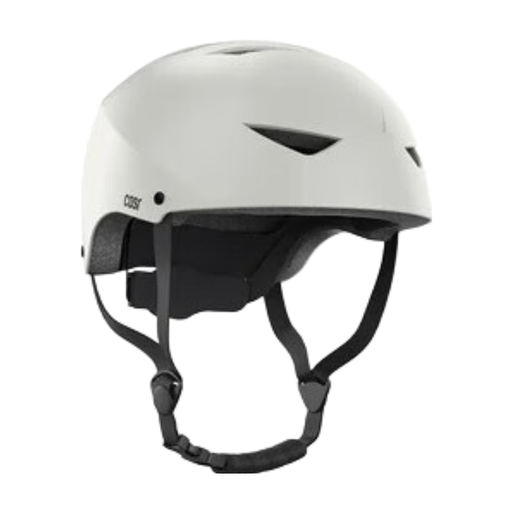
Why it stands out: This helmet embodies functional simplicity. Its understated design and matte light grey finish make it a discreet and elegant choice that's easy to pair with any outfit. It gets straight to the essentials: protection, ventilation, and a lightweight feel.
Key Features:
Who is it for? The cyclist or scooter rider who values simplicity, a lightweight design, and a clean aesthetic that focuses on the essentials.
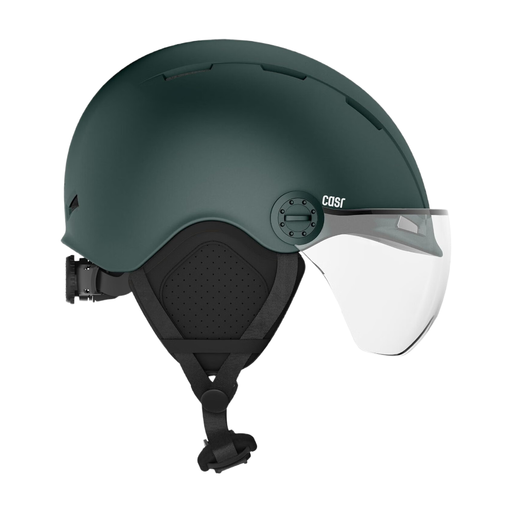
Why it stands out: Its versatility is its main strength. Equipped with a protective visor and removable ear covers, it adapts to the seasons and weather, offering an all-in-one solution.
Key Features:
Who is it for? The versatile commuter looking for an adaptable city helmet that can comfortably see them through from spring to winter without sacrificing style.
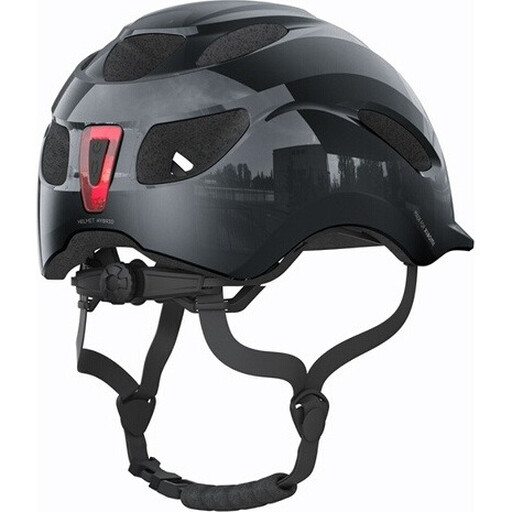
Why it stands out: This model leverages technology to boost safety and comfort. Its integrated LED lighting and hybrid construction make it a comprehensive option for dense urban environments.
Key Features:
Who is it for? The visibility-conscious cyclist or electric scooter rider looking for gear that is both high-tech and high-performance.
Our selection covers several needs, but every cyclist is unique. If you want to explore a wider variety of models, colours, or features, feel free to browse our full category.
? Discover our full range of Protective Helmets
In France, wearing a bike helmet is mandatory for children under 12, whether they are riding or are a passenger. For adults, it is not mandatory but remains highly recommended. For users of Personal Light Electric Vehicles (PLEVs) like electric scooters, helmets are mandatory outside of built-up areas and, again, highly recommended in the city.
It is imperative to replace your helmet after any impact or shock, even if no damage is visible. The internal EPS foam structure is designed to deform to absorb the energy of an impact, but it can only do so once. Even without a crash, it is advisable to replace your helmet every 3 to 5 years, as the materials degrade over time due to exposure to UV rays, sweat, and temperature changes.
Yes, as long as the helmet meets the CE EN 1078 standard. This certification covers use for bicycles, skateboards, roller skates, and by extension, PLEVs with a speed limited to 25 km/h. All the helmets featured in this guide comply with this standard and are therefore perfectly suited for these different uses.