Keep your existing freezer compartment if it holds your prepared meals and frozen food, and you can still find everything easily. If you’re short of space, an upright freezer with drawers is handy for frequent access, while a chest freezer is better suited to storing larger quantities, provided you have a suitable spot for its climate class. A larger fridge freezer is worth considering mainly if you’re replacing your fridge as well: check the capacity set aside for freezing, not just the total capacity.
Who is each type best suited to?
Households that freeze meals in portions
If you often take a particular container out of the freezer, an upright model with drawers makes it easier to organise and access your food. However, compare its usable capacity with the space you’re currently short of in your fridge freezer.
Households building up a large stock of food
A chest freezer can hold bulk buys or bulky packs, as long as you have enough floor space and can reach food stored at the bottom. If you’re planning to put it in a cellar, pantry or garage, also check the room temperature and the appliance’s climate class.
People replacing their fridge as well
A larger fridge freezer lets you replace both functions with a single appliance. However, check its freezer capacity separately: a high total capacity doesn’t necessarily mean there’s plenty of room for frozen food.
What should you check before choosing?
Existing compartment
Worth keeping if: it holds your usual portions and shopping, and everything is easy to reach.
Limitation: it won’t give you more room for larger stocks of food.
Larger fridge freezer
Consider this if: you’re replacing your fridge as well and want to keep everything in one appliance.
Limitation: only part of its total capacity is for freezing.
Upright freezer
Consider this for: organising portions and accessing them frequently in drawers.
Limitation: according to UFC-Que Choisir, upright freezers generally have less capacity than chest freezers.
Chest freezer
Consider this for: storing larger quantities or bulky packaging.
Limitation: allow for the floor space it needs and make sure you can reach food at the bottom.
Once you’ve chosen a type, compare each model’s features with your containers, where you’ll put it and how you like to store food.
| Criteria |
What to check |
Think about your needs |
| Capacity and access |
Compare the usable freezer capacity in litres, then check there’s room for your containers and packaging. See whether drawers, shelves or baskets will help you find what you need. |
I often take out individual portions, so how well they’re organised matters as much as the space available. If I’m storing larger quantities, I also need to be able to reach the food at the bottom. |
| Location |
Measure the appliance, the doorway it needs to pass through and the clearance required to open it. Compare the room’s minimum and maximum temperatures with the range specified for the model. For example, Electrolux France gives 10–32 °C for climate class SN and 10–38 °C for SN/T. |
If I’m putting it in a cellar, pantry or garage, I want to make sure the appliance is suitable for the room’s actual temperatures, rather than assuming that every model in the same category has the same temperature range. |
| Energy use |
Look at the energy class, kWh/year and freezer capacity together. According to the European Commission, domestic refrigeration appliances have used an A to G scale on their energy labels since 1 March 2021. |
For an appliance that runs continuously, I compare the annual energy use of models that can hold the amount of food I need to store, rather than looking at the energy rating letter alone. |
| Power cuts and freezing capacity |
Check each model’s stated power-cut storage time in hours and its freezing capacity in kg/24 h. In its 2025 test protocol, UFC-Que Choisir measures, among other things, how long food stays below −9 °C during a simulated power cut. |
If I store a lot of food or freeze large batches, these two figures answer different questions: how long the freezer stays cold without power, and how much food it can freeze in 24 hours. |
What mistakes should you avoid?
-
Choosing the largest capacity without considering access
A large chest freezer can hold bulky items, but portions stored underneath may be harder to find than they would be in drawers.
Make a note of the types of food you store most often and how frequently you take them out. Then check the layout of the baskets, drawers or shelves.
-
Assuming a chest freezer will suit any garage
The permitted room temperature depends on the model, and a garage can fall outside that range in winter or summer.
Check the room’s temperature and the appliance’s climate class, along with any specific information about its suitability for your chosen location.
-
Relying on the energy rating letter alone
The letter doesn’t tell you how much space is available for your food or the appliance’s annual energy use in kWh.
Compare kWh/year, freezer capacity in litres and dimensions across appliances that genuinely meet the same storage needs.
-
Confusing storage time with freezing capacity
Storage time tells you how long the freezer stays cold without power; freezing capacity tells you how much food it can freeze in 24 hours.
Check both figures separately if power cuts and large batches are important to your decision.
What guidance do manufacturers offer?
Whirlpool
Whirlpool France features large-capacity chest freezers and built-in fridge freezers. The capacity available for freezing varies by type.
- The W3RHS37EW1 chest freezer’s specifications state a capacity of 371 L and 36 hours of storage time in the event of a power cut.
- For a chest freezer, weigh up these model-specific figures against the floor space available and how the interior is organised.
Bosch
Bosch upright freezers offer a point of comparison if you’re looking for drawer storage, with capacity varying by model.
- According to Bosch Électroménager France, the GSN33VWEP has 225 L of usable freezer capacity and a stated storage time of 9 hours.
- These figures don’t apply to every Bosch upright freezer: check the capacity, dimensions and storage time of the model you’re considering.
Electrolux
Electrolux France’s support information gives temperature ranges to help you understand climate classes before installing an appliance outside the kitchen.
- It gives 10–32 °C for climate class SN and 10–38 °C for SN/T, among other examples.
- Whatever the brand, the relevant temperature range is the one stated for the model you choose.
Chest freezers and a fridge freezer available from Joybuy
These options include a fridge freezer to consider when replacing your existing fridge, as well as chest freezers in different capacities for extra storage. Start by choosing the type that suits your meals and the space available.
 Image unavailable
Haier HTW5618ENMG, 3-door fridge freezer, 360 L
Worth considering if you’re replacing your fridge as well: this fridge freezer features Total No Frost, an E energy rating, Wi-Fi and My Zone. Check how much space is actually available for freezing your meals, along with the ambient temperature range suitable for its location.
View on Joybuy
 Image unavailable
AUCMA, convertible 291 L chest freezer
For extra storage, this E-rated chest freezer can switch between freezer and fridge modes. It has a removable basket and a 5-level digital control. Measure the floor space and clearance needed to open the lid, then check the climate class if you’re planning to put it in a garage.
View on Joybuy
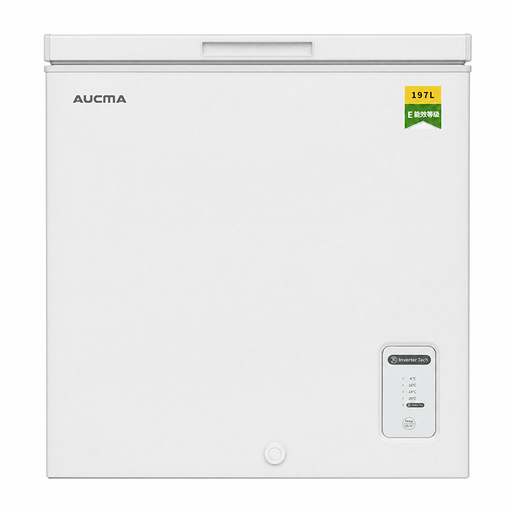 Image unavailable
AUCMA, convertible 197 L chest freezer
This 197 L chest freezer adds a medium-sized amount of storage, with a removable basket to keep smaller items separate. Its product description lists an E rating, a 5-level digital control and fridge/freezer modes. Check the clearance needed to open it and the climate class for the room you have in mind.
View on Joybuy
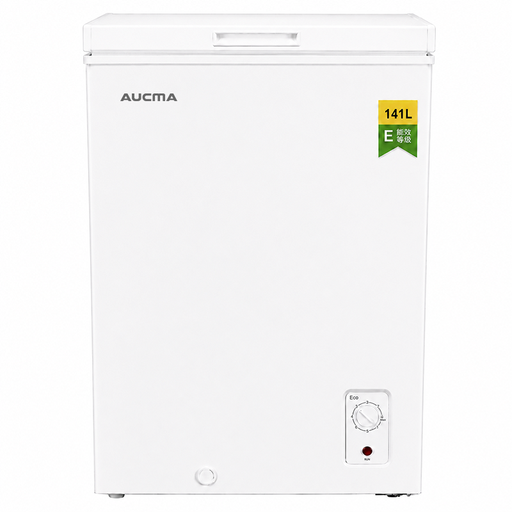 Image unavailable
AUCMA, convertible 141 L chest freezer
If you want to add extra space to an already full freezer compartment without opting for a very large chest, compare the 141 L capacity with the containers you usually use. This model is listed with a removable basket, an E rating, a 7-level thermostat and fridge/freezer modes. Check its ambient temperature range before choosing where to put it.
View on Joybuy
 Image unavailable
AUCMA, convertible 95 L chest freezer
For extra storage, compare its 95 L capacity with the number and size of your meal containers. This convertible chest freezer is listed with an E rating, a removable basket and a 7-level thermostat. Also check that there’s enough room to open the lid, and check the climate class if you’re installing it outside the kitchen.
View on Joybuy
Frequently asked questions
What capacity do I need for prepared meals?
Start with how much extra space you need and the size of your containers, rather than the total capacity given for a fridge freezer. UFC-Que Choisir describes upright freezers as generally close to 200 L, while chest freezers can reach 600 L. These figures are a guide, not a substitute for checking the model’s usable capacity.
Can I put a chest freezer in a garage or cellar?
Yes, as long as the room temperature stays within the range specified for the model. As a guide, Electrolux France gives 10–32 °C for climate class SN and 10–38 °C for SN/T. Check the appliance’s climate class and its specific instructions before installation.
How do I compare the energy use of two freezers?
Compare their kWh/year figures with their usable freezer capacity and type, so you’re weighing up appliances that can store the same food. According to the European Commission, domestic refrigeration appliances have used an A to G energy label scale since 1 March 2021. The letter alone doesn’t tell you the annual energy use.
What does storage time in the event of a power cut mean?
It tells you how long the freezer stays cold without power, under the conditions used for the stated or measured figure. In its 2025 test protocol, UFC-Que Choisir simulates a power cut and measures how long food stays below −9 °C. Check the figure and the conditions it applies to for each model.


