Households that use their frozen food every day
If you take food out frequently, you may prefer clearly separated, easy-to-find categories over the largest capacity possible.


To increase your household’s freezer capacity, an upright model is usually the better choice if you access food often and want to organise it in drawers. Consider a chest freezer if capacity is your priority and you have enough floor space. A large fridge-freezer is also worth comparing if you need to replace your main appliance, provided its freezer compartment is big enough for your needs. In every case, check the installation dimensions, the permitted room temperature and the model’s stated power-cut storage time.
If you take food out frequently, you may prefer clearly separated, easy-to-find categories over the largest capacity possible.
Bulk buys, family meals and bulky items mean weighing up the capacity you want against the space available for a horizontal appliance.
If your fridge-freezer no longer meets your household’s day-to-day needs either, compare replacing it with adding a dedicated freezer, taking into account the capacity set aside for freezing.
UFC-Que Choisir draws a distinction between upright freezers, which are easier to organise into compartments, and chest freezers, designed for larger food stocks. Replacing your fridge-freezer is a different option, for when your main appliance also needs to be changed.
Consider this if: you open your freezer often and want to separate food into drawers.
Bear in mind: drawers make it easier to organise food, but are less flexible for bulky items than an open compartment.
Consider this if: you store large quantities and have a suitable space for a horizontal appliance.
Bear in mind: getting to food stored at the bottom takes more organisation.
Consider this if: you’re also replacing your main appliance and your additional freezer needs are modest.
Bear in mind: the appliance’s total capacity isn’t the same as the capacity of its freezer compartment.
| Factor | What to check | Consumers concerned |
|---|---|---|
| Access and storage | Check the layout of the drawers or baskets and how easy it is to reach food once the appliance is full. | When I take out small amounts often, I want to find each category without moving everything else. Around 40% of consumers put organised access first. |
| Capacity and space | Compare the capacity in litres, floor space, door or lid opening and the clearances specified in the instructions. | For bulk buys or bulky items, I prioritise enough storage space, even if it takes up more room. This is the priority for around 30% of consumers. |
| Replacing the main appliance | With a fridge-freezer, distinguish the freezer capacity from the total capacity; also compare annual energy consumption in kWh/year. | If my fridge also needs replacing, I’d rather look at one new appliance before adding a second. Around 30% of consumers prioritise this all-in-one solution. |
For a cellar, utility room or garage, also check the permitted ambient temperature range for the exact model. Power-cut storage time varies by model, so you can’t work it out from the appliance type alone.
A large chest freezer may suit a family’s food stocks, but you still need to be able to get it into the room, open the lid and allow for ventilation. UFC-Que Choisir says chest freezers are commonly 110 to 140 cm wide and around 70 cm deep.
Measure the delivery route, the space where it will go and the clearance needed to open it, then check the clearances specified for your chosen model.
A chest freezer’s compartment can take bulky items, but smaller items stored at the bottom are harder to reach than in drawers.
Plan out categories and baskets for a chest freezer. For an upright model, check that your usual packaging fits in the drawers.
The permitted ambient temperature range depends on the model. Some brands offer models designed for low temperatures, but this doesn’t apply to all their appliances.
Compare the room temperature with the climate class and the limits stated in the instructions for the model you’re considering.
The same rating isn’t enough to compare appliances with different formats and capacities. ADEME recommends using the energy label when choosing household appliances.
For appliances that meet a similar need, also check the stated annual consumption in kWh/year and usable capacity.
Haier France’s range includes both upright and chest freezers, so you can compare the two formats.
Liebherr offers NoFrost freezers, as well as some models with FrostProtect for installation in low ambient temperatures.
Beko’s chest freezer range is worth considering if capacity and installation in an unheated room are important to you.
These appliances illustrate the three options covered here: adding an upright or chest freezer for extra storage, or replacing your main fridge-freezer. Compare usable capacity with your household’s actual needs, then check the installation requirements for each model.
 Image unavailable
Worth considering if you want to add drawer-access storage rather than replace your fridge.
Stated capacity of 161 L, No Frost technology, alarm and energy rating C. Check the dimensions, ambient temperature range and power-cut storage time before choosing where to put it.
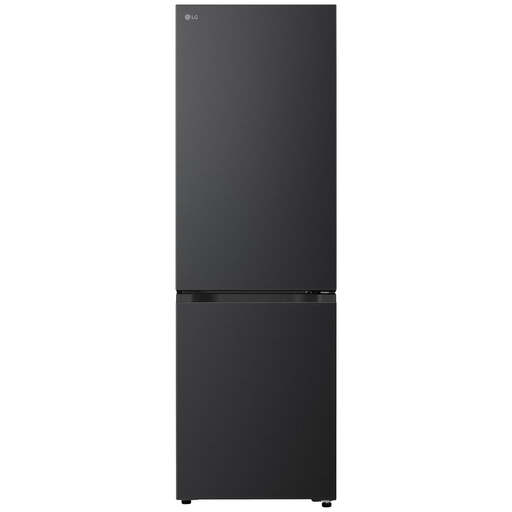 Image unavailable
Compare it with a separate freezer if you’re also planning to replace your main appliance.
The stated 333 L capacity is for the whole fridge-freezer, which has an energy rating of C. Check the capacity of the freezer compartment itself and its power-cut storage time.
 Image unavailable
Worth considering if you prefer chest freezer storage and have enough room to open the lid.
Stated capacity of 291 L, removable basket, fridge and freezer modes, energy rating E. Check the installation clearances and whether it’s suitable for the room temperature, especially if the room is unheated.
 Image unavailable
Worth considering if replacing your fridge is part of the plan, rather than adding a separate freezer.
The stated 495 L is the total capacity of this appliance, which has an energy rating of E. Check the freezer compartment capacity separately, along with the installation clearances and power-cut storage time.
 Image unavailable
Consider adding this chest freezer if 140 L meets your needs.
Storage basket, counterbalanced lid and energy rating E. Compare its capacity with the quantities you usually store, and check the climate class and power-cut storage time.
Compare the room’s minimum and maximum temperatures with the permitted ambient temperature range for the exact model. The climate class can help you check this. If one model is rated for low temperatures, that doesn’t mean other appliances from the same brand are too.
Allow for the ventilation clearances specified in the instructions for your chosen model, as well as enough room to open its door or lid. Electrolux’s installation guidance reminds users to follow the dimensions and clearances given in the appliance instructions; also measure the delivery route.
Check the stated annual consumption in kWh/year and usable capacity, bearing in mind that a fridge-freezer also keeps food chilled. The energy label, recommended by ADEME to help guide purchases, lets you compare these details; its rating alone isn’t enough to compare appliances with different functions or capacities.
Compare the stated power-cut storage time for each model rather than trying to work it out from its capacity or format. UFC-Que Choisir assesses this in its freezer tests, including by monitoring how the temperature changes when the power is off.