Households that often prepare and freeze meals
If you cook several meals in advance or buy in bulk, consider how much usable capacity you need when your freezer is at its fullest. Drawers or shelves can make frequently used portions easier to reach.


If your meals and groceries regularly overflow the freezer compartment you already have, a dedicated freezer could give you the extra capacity you need in the long term. Choose an upright freezer for easy access to meals organised by type, or a chest freezer for bulky items you need less often. If you only run out of space occasionally, try reorganising your stock first. If you also need to replace your fridge, compare the freezer capacity of a large fridge freezer before adding a second appliance.
If you cook several meals in advance or buy in bulk, consider how much usable capacity you need when your freezer is at its fullest. Drawers or shelves can make frequently used portions easier to reach.
For bulky purchases or seasonal produce that you use less often, consider a chest freezer’s capacity and floor space requirements. Also think about how you’ll find food stored at the bottom.
Whether it’s a narrow kitchen, cellar or garage, measure the available space and the clearance you’ll need. ADEME recommends checking the room’s ambient temperature against the appliance’s climate class.
First, work out whether you only run out of space occasionally or need extra capacity regularly. Then decide how you want to access your food. Whatever the format, make sure the location is suitable for the specific model.
Consider this if: you often reach for prepared meals and want to organise them in drawers or on shelves.
Bear in mind: the door opening and interior layout need to suit your containers, particularly larger ones.
Consider this if: you have enough floor space and mainly store bulky items or food you don’t need to access often.
Bear in mind: food at the bottom is harder to reach, so baskets and labels can come in handy.
Consider this if: you also need to replace your fridge or don’t have room for a second appliance.
Bear in mind: only the capacity of its freezer section tells you how much extra space you’ll have for frozen food.
Consider this if: you only run out of space occasionally or find it difficult to locate some of the food you already have.
Bear in mind: better organisation won’t create extra capacity if your stock regularly exceeds the space available.
| What to consider | What to check | Who is it for? |
|---|---|---|
| Usable capacity | Note the maximum amount you need to store, then compare usable freezer capacity in litres, separately from fridge capacity. | If bulk shopping or prepared meals regularly exceed the capacity of your current compartment, extra space becomes the priority. Around 36% of shoppers in this situation would put this first. |
| Access to food | Compare drawers, shelves or baskets with the size of your containers and how often you open the appliance. | If you often take out small portions without searching through the bottom of your stock, easy-to-see storage matters more. Around 29% of shoppers in this situation would prioritise easy access. |
| Location | Measure the space the appliance will occupy and the clearance needed to open it, then compare the room temperature with the range the model allows. | If the only available space is narrow or subject to temperature changes, being able to install the appliance there matters more than its format. Around 21% of shoppers in this situation would make this their top consideration. |
| Adding another appliance | If you only run out of space occasionally, reorganise your stock. Otherwise, compare a fridge freezer’s freezer capacity with your needs. | If you also need to replace your fridge, or rarely run out of freezer space, avoiding a second appliance may guide your choice. Around 14% of shoppers in this situation would make this their priority. |
A chest freezer can hold bulky items, but meals you use often can be harder to find if they’re stacked up.
If you regularly take out small portions, compare it with an upright freezer with drawers. If you choose a chest freezer, plan to use baskets and a clear system for organising your food.
According to Bosch, the climate class indicates the ambient temperatures the appliance is designed to operate in. So a cellar or garage won’t automatically be suitable for every model.
Check the room’s minimum and maximum temperatures, then compare them with the range given in the manual for the model you’re considering.
A large fridge freezer may mainly give you more fridge space, without solving your shortage of room for frozen food.
Compare the capacity of the freezer section alone with the maximum amount you want to store.
No Frost, FrostProtect, Freezer Guard and alarms aren’t automatically available on every model from a particular brand.
Check the full model number and its manual, then verify the capacity, dimensions and installation requirements separately.
Worth considering for upright freezers with adjustable storage and maintenance features, depending on the model.
A brand to consider for an unheated room, provided you choose a model specifically equipped with FrostProtect.
Another option to consider for a cold room, with upright and chest freezers featuring Freezer Guard.
These are dedicated freezers: four chest freezers for organising food from the top, and one upright model with food stored in drawers. Compare the stated capacity with the maximum amount you need to store, then check the installation requirements for the model you’re considering.
 Image unavailable
Worth considering for bulky items you don’t need to access often. You’ll need a good organisation system to reach food stored at the bottom.
Stated capacity of 291 L; conversion between fridge and freezer modes, a removable basket and five-level digital control are listed in the product name.
Before installing it in a garage or another room with variable temperatures, check the ambient temperature range allowed for this model.
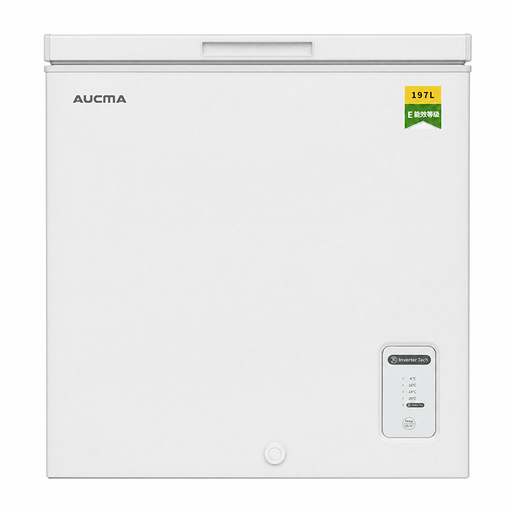 Image unavailable
Worth comparing if you want a dedicated compartment without choosing the 291 L AUCMA chest freezer. Plan how you’ll organise it to reach items at the bottom.
Stated capacity of 197 L; conversion between fridge and freezer modes, a removable basket and five-level digital control are listed in the product name.
Check the permitted ambient temperature range before choosing an unheated location.
 Image unavailable
Worth considering if you often reach for prepared meals and prefer to organise them in drawers rather than in a chest freezer.
Stated capacity of 161 L; stainless steel finish, No Frost, reversible door hinge and alarm are listed in the product name.
Check the dimensions, door clearance and climate class before choosing a location. The temperature range stated for the appliance doesn’t, on its own, tell you which ambient temperatures are permitted.
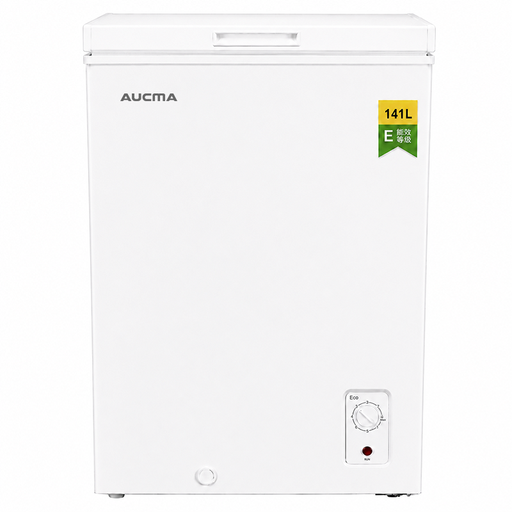 Image unavailable
Worth comparing for a smaller amount of extra storage, if opening the freezer from the top suits the way you access your food.
Stated capacity of 141 L; conversion between fridge and freezer modes, a seven-level thermostat and a removable basket are listed in the product name.
Check how much space you’ll need to open the lid and the permitted ambient temperature range for your chosen location.
 Image unavailable
Worth considering if a stated capacity of 140 L suits the maximum amount you need to store and top access works for the way you organise your food.
A storage basket, counterbalanced lid and adjustable temperature control are listed in the product name.
Before placing it in a cellar or garage, check the permitted ambient temperature range for the CF182EWE0FR model.
Start with the maximum amount your current compartment can’t hold, rather than the number of people in your household. Factor in bulk shopping, prepared meals and bulky items, then compare the usable freezer capacity of the appliances you’re considering.
Yes, if the model’s recommended ambient temperature range covers the actual temperatures in the room. ADEME recommends checking the climate class. Liebherr and Beko also state that certain FrostProtect and Freezer Guard models operate at ambient temperatures as low as −15 °C; this doesn’t apply to all their freezers.
Compare the energy labels and product details of models whose capacity and format meet your needs. Don’t choose based on external size alone: check usable freezer capacity and the dimensions needed for installation separately.
No. According to Bosch, No Frost means you don’t need to defrost models equipped with the feature manually, but you should still install and maintain the appliance in accordance with its manual. UFC-Que Choisir also highlights the need for an earthed connection.