Households that batch cook
If you prepare several portions at a time and take them out regularly, consider an upright freezer with drawers that fit the size of your containers and dishes.


If you want to reach pre-prepared portions regularly, choose an upright freezer if its drawers can accommodate your containers. A chest freezer is better suited to bulky items and offers open storage, provided you have enough floor space, but you’ll need to organise its contents. If you’re also replacing your fridge, compare the usable capacity of the freezer compartment in a fridge freezer with the amount of food you plan to store.
How much you need to store matters, but the way you organise and take out meals can determine which format is most practical for everyday use.
If you prepare several portions at a time and take them out regularly, consider an upright freezer with drawers that fit the size of your containers and dishes.
A chest freezer can hold bulky containers in its open storage space. Measure the floor area available and check that the model’s permitted ambient temperature range is suitable for the room you have in mind.
If you’re concerned about power cuts, compare the storage time of each model. UFC-Que Choisir’s test protocol measures this by simulating a power cut, so the freezer type alone won’t tell you which appliance is best.
UFC-Que Choisir points out that choosing a freezer is about more than capacity. First consider how easily you can access your meals and the space you have available, then compare the specifications of the exact model.
Worth considering: if you want to organise portions in drawers and take them out frequently.
Bear in mind: check that your containers fit in the drawers and that they’ll still be easy to use once the appliance is in place.
Worth considering: for a large stock or bulky containers, if you have enough floor space.
Bear in mind: organise the open space into sections or use baskets so you can find portions stored at the bottom.
Worth considering: if you also need to replace your fridge and its freezer compartment has enough space for the meals you plan to store.
Bear in mind: don’t confuse the appliance’s total capacity with that of its freezer compartment.
| Criteria | What to check | Your needs |
|---|---|---|
| Access to meals | Compare the size and ease of use of an upright freezer’s drawers, or the baskets and access to the bottom of a chest freezer. Think about where you’ll put your tubs, bags and dishes. | I take out prepared portions regularly and want to easily tell meals apart from ingredients. |
| Capacity and location | Compare the freezer compartment’s capacity in litres, then measure the height, width, depth and clearance required in the manual. For a fridge freezer, don’t use its total capacity as its freezer capacity. | My larger dishes need to fit without making the appliance difficult to install or use in the room I have in mind. |
| Unheated room | Check the climate class, ambient temperature range and installation instructions for the exact model. | If I put the freezer in a garage or cellar, it needs to be suitable for the temperatures in that room. |
| Energy use and noise | The European Commission says the energy label provides information including energy use, capacity and noise emissions. Compare kWh/year and noise levels across appliances suited to similar storage needs. | An appliance installed near living areas also needs to meet my expectations for noise and energy use. |
| Storage time during a power cut | Check the figure for the exact model and how it was measured, if this is stated. UFC-Que Choisir’s test protocol measures how long the temperature stays below −9 °C during a simulated power cut. | If I’m storing lots of meals, I want to compare this figure rather than assume it from whether the appliance is upright or chest-style. |
Open storage can accommodate large containers, but portions at the bottom of a chest freezer may be harder to find. In an upright freezer, drawer size can limit the containers you can store.
Make a list of the tubs, bags and dishes you usually use, then check the interior layout before comparing capacities in litres.
The permitted ambient temperature depends on the appliance. A feature listed for one model doesn’t apply to every model in a range.
Compare the temperature range in the model’s manual with the temperatures in the room where you plan to install it.
An energy rating on its own doesn’t tell you the appliance’s capacity or its stated annual energy use.
As well as the information shown on the energy label, the European Commission recommends checking kWh/year, capacity and noise. Compare models that meet similar storage needs.
You can’t compare an upright and a chest freezer on this basis without model-specific data. UFC-Que Choisir measures storage time in its tests by simulating a power cut.
Look up the storage time for the model you’re considering, and distinguish between a figure stated by the manufacturer and a result obtained using a test protocol.
These brand examples can help you identify features to compare. A feature listed for one model or range won’t necessarily apply to every model from that brand.
Liebherr France offers chest freezers and freestanding models, giving you options to consider for different locations.
Haier France offers upright and chest freezers. Compare their interior layouts based on how you organise your meals.
Beko France offers a range of upright freezers, some of which have specific installation features.
Whirlpool France’s product information provides examples of features to check on both upright and chest freezers.
This selection includes an upright freezer for organising portions and chest freezers in different capacities for open storage. Compare their dimensions and layouts with your meals and available space in mind.
 Image unavailable
If you need open storage for a large stock of meals, check whether the removable basket suits the way you organise smaller portions. The product description lists an E energy rating, LED lighting and a five-level digital control. As this model is convertible, select freezer mode for frozen meals. Also check the manual for its ambient temperature range and storage time during a power cut.
 Image unavailable
This upright freezer is worth considering if you’d rather separate portions in drawers than stack them in a chest freezer. The product description lists three drawers, No Frost technology and a C energy rating. Check that the compartments can accommodate your containers and that the dimensions and ambient temperature range suit your chosen location.
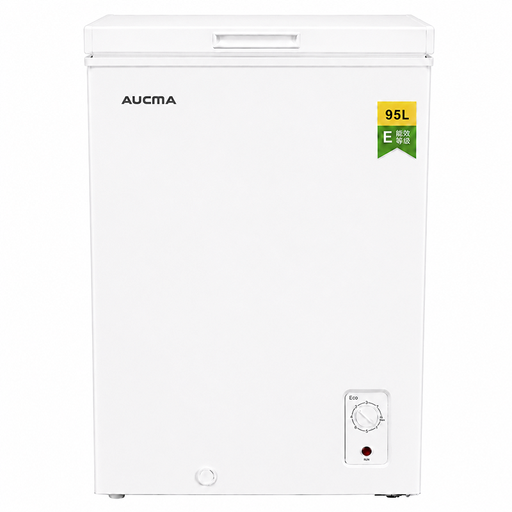 Image unavailable
Compare the stated 95 L capacity with the number and size of the meals you want to store. The product description mentions a removable basket, a seven-level thermostat and an E energy rating. To store frozen meals, check that the right mode is selected. Also check the installation requirements and the model’s storage time during a power cut.
 Image unavailable
This 140 L chest freezer is worth considering for extra storage if its open space suits your containers. The product description lists a storage basket, temperature control and an E energy rating. The basket only organises part of the freezer, so plan how you’ll find meals stored beneath it too.
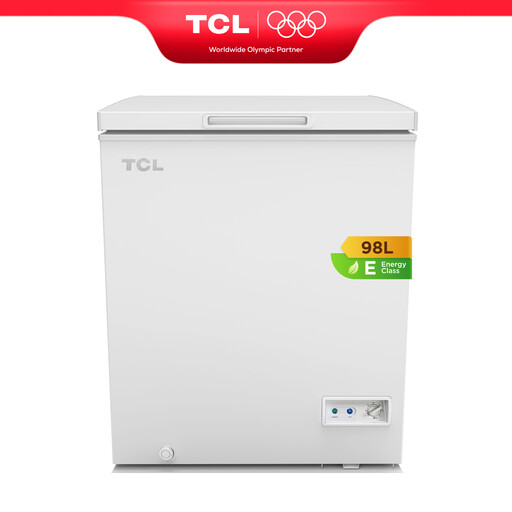 Image unavailable
Compare the stated 98 L capacity with the number of portions you prepare, as it may not be enough for a large stock. The product description lists a basket, temperature control and an E energy rating. Check that you have enough space and consider how you’ll organise the rest of the contents.
Compare the energy rating, annual energy use in kWh, the capacity of the freezer compartments and the noise level. The European Commission lists this information on the energy label for refrigeration appliances. When choosing between models, focus on capacities that suit the amount of food you plan to store.
No. Check the storage time for each model rather than assuming it from the freezer type. UFC-Que Choisir’s test protocol measures how long food remains below −9 °C during a simulated power cut. Consider the method used when comparing figures.
Yes, if the model’s ambient temperature range and instructions cover the conditions in the room. Some models have specific specifications: for example, Beko says the RFNE448E55W can operate in an ambient temperature of up to −15 °C. This doesn’t apply to all freezers, so check the manual for the model you’re considering.