Households that regularly check their frozen stock
If you want to find your supplies by category without giving up a large amount of floor space, an upright freezer with drawers should be your first option to consider.


Choose an upright freezer if you often want to find food organised by category while keeping its footprint to a minimum. A chest freezer is better suited to larger reserves, bulky products and a room with plenty of available space. A large fridge freezer is mainly worth considering when you are replacing your fridge, provided that the freezer compartment alone offers enough capacity for your actual stock.
If you want to find your supplies by category without giving up a large amount of floor space, an upright freezer with drawers should be your first option to consider.
A chest freezer can suit bulk purchases, bulky items and the need for greater independence, provided its dimensions and ambient temperature range genuinely match the room.
A large fridge freezer combines refrigeration and freezing in the kitchen, provided its net freezer capacity is sufficient for your usual stock.
Start by measuring the storage capacity you need and the space available, then compare food access, storage time during a power cut and installation conditions.
Best for: households where frequent opening and drawer organisation matter, with limited floor space.
Bear in mind: maximum capacity is often lower than that of a chest freezer. Compare the storage time during a power cut, dimensions and climate class of the model you choose.
Best for: a large reserve, bulky products and a dedicated space in a utility room, cellar or suitable garage.
Bear in mind: a chest freezer takes up more floor width and needs baskets or storage zones to keep items at the bottom accessible.
Best for: when your fridge also needs replacing and you prefer to keep both appliances together in the kitchen.
Bear in mind: compare the capacity of the freezer compartment alone, as it may be lower than that of a dedicated freezer.
| Priority | What to check | Your needs |
|---|---|---|
| Capacity and size | Compare net freezer capacity in litres, dimensions H × W × D and the way the door or lid opens. For a fridge freezer, distinguish freezer capacity from total capacity. | I want enough storage without choosing an appliance that cannot be installed in the room intended for it. |
| Access and organisation | Check the drawers and compartments in an upright freezer, or the baskets and possible storage arrangements in a chest freezer. Look for areas suitable for tall or wide food items if you regularly store them. | I want to find food quickly and avoid moving everything to reach supplies at the bottom. |
| Storage time and installation room | Compare the storage time during a power cut where this is stated. Match the climate class or stated temperature range to the actual temperatures in your kitchen, cellar or garage. | I want to protect my supplies during a power cut and install the appliance in a room suitable for its operating conditions. |
| Energy use and maintenance | Compare the EU energy label, from A to G, as well as annual consumption in kWh between appliances of a similar size and type. Also check the noise level, cooling system and defrosting method. | I am looking for an appliance that can run continuously, rather than choosing based solely on the label rating or one isolated feature. |
A fridge freezer may show a high total capacity while allocating a much smaller proportion to freezing. For example, the Beko BRCNE50140ZXBN states a total capacity of 514 L, including 158 L of freezer capacity, according to Beko France.
Record the fridge and freezer capacities separately, then compare the freezer capacity alone with your current stock.
The climate class corresponds to the intended ambient operating temperature. A garage or cellar may fall outside this range depending on the season.
Record the room’s minimum and maximum temperatures, then check the manual, rating plate or technical information for the model. Look for a rating down to -15 °C only if the room requires it.
A chest freezer needs floor width and sufficient vertical clearance to open its lid. For example, the Whirlpool W3RHS37EW1 is 133 cm wide, according to Whirlpool France.
Mark out its footprint, allow enough room to open the lid fully and organise items at the bottom using baskets or boxes.
The energy label allows you to compare consumption, capacity and noise, but it does not replace checking the storage time during a power cut, storage layout and defrosting method.
Use a comparison checklist that includes, at a minimum, net freezer capacity, dimensions, climate class, storage time during a power cut, noise level, cooling system and internal layout.
Beko offers examples in all three formats covered: upright freezers, chest freezers and fridge freezers. The brand is worth considering if you want to compare several storage solutions within one range.
Liebherr is worth considering for upright and chest freezers when internal organisation, NoFrost or installation in a cold room are decisive criteria.
Whirlpool may be suitable for a large-capacity family chest freezer when the stated storage time during a power cut and installation in a suitable garage are important.
Bosch can provide a useful benchmark when assessing an upright freezer and carefully checking the technical information and climate range before installation.
These Joybuy options are dedicated freezers designed to extend your family food storage, in either upright or chest format.
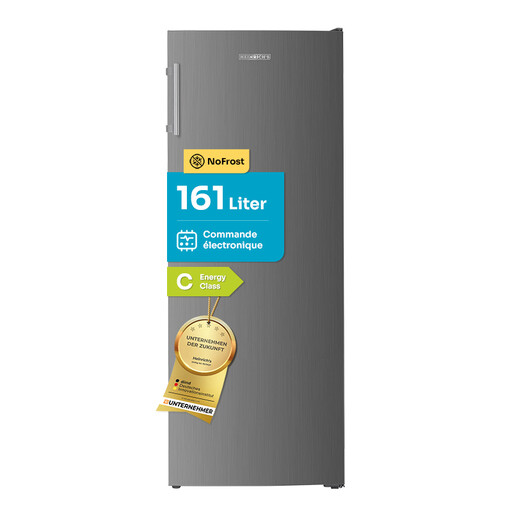 Image unavailable
This format suits households that want to organise supplies in drawers and access them frequently.
Stated features: 161 L, No Frost protection, three drawers, two shelves, LED display, alarm, reversible door and a temperature range of -14 °C to -22 °C.
Check that 161 L provides enough additional capacity for your supplies, as well as checking the dimensions, door clearance, ambient temperature range and storage time during a power cut.
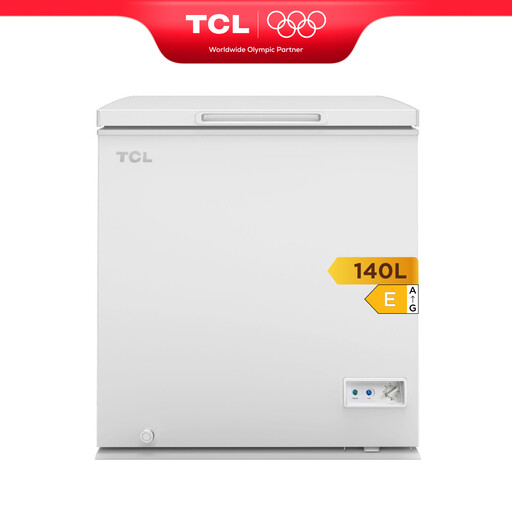 Image unavailable
This chest freezer can work well as an organised supplementary reserve when the available floor space allows for top opening.
Stated features: 140 L, storage basket, counterbalanced lid, adjustable thermostat, adjustable feet and E energy rating.
Compare 140 L with your family’s stock and check the storage time during a power cut, climate range, vertical lid clearance and how items at the bottom can be organised.
First compare net freezer capacity, external dimensions and access. An upright freezer makes drawer organisation easier and generally takes up less floor space, while a chest freezer may offer more capacity but requires width, depth and a system of zones or baskets.
Yes, but only if the climate range or a specific function of the model covers the temperatures actually recorded in the room. Bosch Electroménager France points out that appliances are designed for defined ambient temperatures; some Beko, Liebherr and Whirlpool models explicitly state that they operate down to -15 °C.
Measure the width, depth and height of the installation area, as well as the delivery route and the space needed to open the door or lid fully. For example, Whirlpool states that its W3RHS37EW1 chest freezer is 133 cm wide and 70,5 cm deep, while Liebherr states that the FNd 522i upright freezer is 59,7 cm wide.
For domestic refrigeration appliances sold in the European Union, compare the efficiency rating from A to G, annual consumption in kWh, storage capacities and noise level. The European Commission states that the QR code on the label links to EPREL, where you can view detailed information about the model.
It is useful to compare when it is provided for each model, but it should not be inferred from the type of appliance. UFC-Que Choisir assesses this criterion by measuring the time needed for the freezer temperature to rise from -17 °C to -9 °C without power. Read the stated figures alongside the conditions specified on each product page.