Households that freeze portions
If you regularly take out prepared meals and bags of food, an upright freezer’s drawers can make it easier to organise and access them. Check their size, though, and whether they can be removed.


If you regularly take out frozen meals, an upright freezer’s organisation and easy access could be just what you need. For bulky provisions, consider a chest freezer if you have enough space. A large fridge freezer is better suited to households short on space for both fresh and frozen food. If you’re considering one, check the freezer capacity in litres rather than just the total volume.
If you regularly take out prepared meals and bags of food, an upright freezer’s drawers can make it easier to organise and access them. Check their size, though, and whether they can be removed.
A chest freezer is worth considering if you have enough floor space and want to store bulky food. Think about how you’ll reach items at the bottom, too. If you’re putting it in an unheated room, check the ambient temperature range allowed for the model.
If your main fridge is also too small, replacing it with a large fridge freezer could meet both needs. Compare the fridge and freezer capacities separately before deciding.
UFC-Que Choisir highlights the storage capacity of chest freezers and the more compact format of upright models. To choose, start with the food you want to store and the space available, then compare how easy each model will be to use every day.
Consider it if: you organise portions in drawers and take them out often.
Bear in mind: drawer capacity and ease of access vary by model.
Consider it if: you store bulk or bulky food and have enough floor space.
Bear in mind: items at the bottom need more organisation to keep them easy to reach.
Consider it if: you want more fresh and frozen storage by replacing your main appliance.
Bear in mind: some of the total capacity is for fresh food, and the appliance may take up more space in your kitchen.
| Criteria | What to check | Who it matters to |
|---|---|---|
| Capacity and location | Compare freezer capacity and external dimensions, including the clearance needed to open the door. In an unheated room, check the permitted ambient temperature range. | I want to store more provisions, but the appliance needs to fit in the space available and be able to open. Around 37% of consumers would prioritise capacity that suits their available space. |
| Access and storage | Check the size of an upright freezer’s drawers and whether they can be removed, or look at a chest freezer’s baskets and usable depth. | If I regularly take out portions, I want to find a meal without moving all my provisions around. Easy access would be the main priority for around 27% of consumers. |
| Replacing your fridge | With a large fridge freezer, check the fridge and freezer capacities separately, then measure the available space in your kitchen. | If I’m short on space for both fresh food and frozen food, replacing my main appliance could be the better option. Around 18% of consumers would prioritise this combined need. |
| Everyday running | Compare each model’s kWh/year, noise level in dB(A) and stated storage time in the event of a power cut. | If the appliance will be near a living area, I pay particular attention to noise, as well as energy use and storage time during a power cut. These considerations would come first for around 18% of consumers. |
A large chest freezer can take up a lot of floor space, while food at the bottom can be harder to find. UFC-Que Choisir notes that chest freezers can hold up to 600 litres.
Measure the space, delivery route and clearance needed for the lid or door. Then think about how you’ll get to the food you use most often.
A large fridge freezer divides its capacity between fresh and frozen food, so its total volume doesn’t tell you how much space you’ll have for frozen meals.
Compare the capacity of the freezer compartment alone and check that the appliance’s full dimensions will fit in your kitchen.
According to ADEME, fridges and freezers run continuously. The European Commission says the label also shows energy consumption, capacity and noise emissions.
For the appliances you’re considering, check the kWh/year and dB(A), taking usable capacity and the room where it will be installed into account.
The permitted ambient temperature depends on the appliance. A feature listed for one model doesn’t necessarily apply to the whole range.
Before choosing a model for an unheated cellar or garage, check its product specifications and manual to find its operating temperature range.
Some chest and upright freezer models are worth considering if you need an appliance suitable for a room with little or no heating.
The brand’s upright freezers may suit households looking to organise portions in drawers.
Bosch’s larger models are worth considering if you’re thinking about replacing your main fridge rather than adding a separate freezer.
These models illustrate the three options: replacing your fridge freezer with a larger model, adding a chest freezer or choosing an upright freezer to organise portions. Compare their capacities according to what you need: a fridge freezer’s total capacity is not the same as its freezer capacity.
 Image unavailable
Worth considering if you want to replace your main appliance and store both fresh and frozen food.
The product name lists a total capacity of 467 L, Total No Frost technology, a Smart Inverter and an energy rating of E.
Check the freezer compartment capacity separately, along with the space needed for installation.
 Image unavailable
Worth considering for storing provisions in a chest freezer, if its footprint and top access suit your home.
The product name lists convertible fridge-freezer operation, a removable basket, LED lighting, five digital settings and an energy rating of E.
If you’re putting it in an unheated room, check the permitted ambient temperature in the model’s manual. Check its storage time during a power cut too, if that matters to you.
 Image unavailable
Worth considering if you’d rather organise portions in an upright freezer than stack them in a chest freezer.
The product name lists No Frost protection, drawers, a reversible hinged door, an alarm and an energy rating of C.
Check the dimensions, drawer layout and annual energy consumption before deciding where to put it.
 Image unavailable
Worth considering if you want to add a 99 L chest freezer and don’t need to store large quantities.
The product name lists four-star freezing, an adjustable thermostat, a removable basket and an energy rating of E.
Check that the capacity and access to food stored beneath the basket suit the way you organise your provisions.
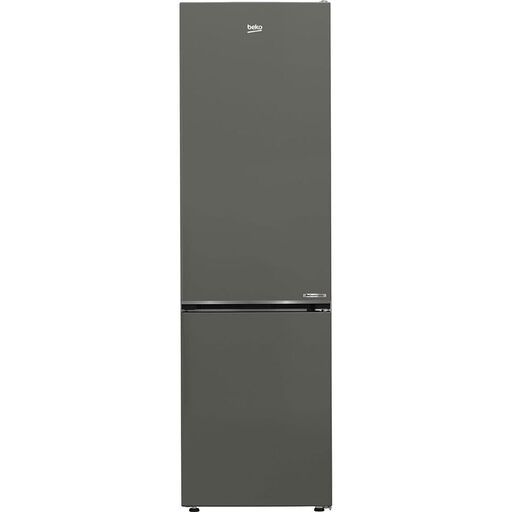 Image unavailable
Worth comparing if replacing your main fridge needs to give you more space for both fresh and frozen food.
The product name lists a total capacity of 355 L, Total No Frost technology and an energy rating of C.
Before buying, check the freezer capacity in litres, the available height and the clearances needed.
Yes, if the ambient temperature range listed for that specific model includes the temperature in your garage. For example, Liebherr says its CFd 2505 Plus chest freezer is suitable down to -15 °C, but this feature doesn’t automatically apply to other freezers.
Because storage time and capacity describe two different things. In its tests, UFC-Que Choisir measures how long it takes for the temperature to rise from -17 °C to -9 °C without a power supply. Check the figure for the model you’re considering.
Compare annual energy consumption, storage capacity and noise emissions, taking into account how much space you actually need. The European Commission says this information appears on the labels of refrigeration appliances; the energy rating letter alone doesn’t tell you how an appliance will work for you day to day.