Household buying in bulk
You need to store large or bulky items and can set aside floor space for a dedicated appliance. UFC-Que Choisir distinguishes between households needing a large capacity and those looking for more compact storage.


If you often take out different foods and want to keep them organised, an upright freezer may be more convenient. For bulky items and large stocks, consider a chest freezer instead, provided you have enough floor space and can organise access to food at the bottom. UFC-Que Choisir recommends considering storage and access, then checking each model’s usable freezer capacity, dimensions, permitted room temperature, stated storage time, kWh/year and noise level.
You need to store large or bulky items and can set aside floor space for a dedicated appliance. UFC-Que Choisir distinguishes between households needing a large capacity and those looking for more compact storage.
You often take out different portions and want to find food easily in accessible compartments. The drawers in an upright freezer and the baskets in a chest freezer offer different types of access.
Your choice depends on the space available or the temperature in your pantry or garage. Check the dimensions and installation requirements for the specific model.
Best if: you often look for different types of food and want to keep them separate in drawers.
Things to consider: drawers can limit the space available for some large containers. Also check that the door can open fully where you plan to place the freezer.
Best if: you store bulky items or foods in a variety of shapes, and have enough floor space and clearance for the lid.
Things to consider: food at the bottom is less accessible. Baskets and a well-planned layout can make it easier to find.
For households looking for plenty of freezer capacity, the priority may be volume, access, placement or ease of use. The percentages below show the approximate share of consumers for whom each is the main priority.
| What matters | What to check | Who it matters most to |
|---|---|---|
| Usable capacity and shape of your food | Compare the litres of usable freezer space, the dimensions and the opening. With a fridge-freezer, don’t confuse total capacity with freezer capacity. | If I store large quantities, I want to check that my containers will fit and that the freezer capacity meets my needs; around 33% of consumers put capacity first. |
| Everyday access and storage | Depending on the format, check how the door opens and drawers come out, or how the baskets are arranged. | If I often take out different portions, I want storage that makes them easy to find; around 33% of consumers prioritise access. |
| Suitability for the space | Measure the space and clearance needed, then compare the possible room temperature with the range permitted for the model. | If my appliance is going in a pantry or garage, I first check that it suits the space and room temperature; around 20% of consumers prioritise where it will go. |
| Energy use, noise and storage time | Compare the kWh/year, noise level in dB and stated storage time in hours for each model. | To choose between models that suit my food, I look at their energy use, noise and storage time; nearly 14% of consumers put these practical features first. |
The stated capacity of a fridge-freezer includes the fridge compartment, so it doesn’t all represent freezer space.
Before choosing a fridge-freezer or a separate freezer, compare the capacity of the freezer compartment alone with the amount of food you need to store.
A fridge-freezer may not give you the extra freezer capacity you need, even if its total capacity looks generous.
An open compartment can accommodate items in different shapes, but food at the bottom is less easy to reach than in drawers.
Measure the space, check there’s enough clearance for the lid and think about how you’ll get to your food using the baskets provided.
The temperature range associated with a climate class doesn’t, on its own, guarantee that an appliance can work in a very cold garage. Bosch states that climate class SN-T starts at +10 °C; some models separately specify that they can operate at lower temperatures.
Compare the actual room temperature with the range permitted for the specific model and follow its installation instructions.
For the CFe 2500, Liebherr describes SmartFrost and StopFrost as features that reduce frost build-up or how often you need to defrost. This doesn’t mean that maintenance is no longer needed.
Check the instructions for the maintenance method and frequency for the model you choose.
The brand’s freestanding upright freezers are worth comparing if organised access matters to you.
Consider the brand’s large-capacity chest freezers if you have plenty to store and enough space.
Chest freezers with baskets may suit households storing large quantities of food.
The French catalogue includes both upright and chest freezers, so you can compare the two types of storage within the range.
This selection brings together upright and chest freezers, as well as a large-capacity fridge-freezer, so you can compare dedicated food storage with the freezer space that comes as part of a fridge.
 No image available
The upright design and compartments are worth considering if you want to separate your food and keep it organised for easy access.
The product details list a capacity of 161 L, three drawers, two shelves, a No Frost function and energy rating C. The stated temperature range is −14 °C to −22 °C.
This model is not designed for built-in installation.
 No image available
The chest compartment and removable basket are worth considering for storing larger quantities. Plan how you’ll organise food at the bottom.
The product details list a capacity of 291 L, energy rating E, stated energy consumption of 226 kWh/year and a five-level digital control. A minimum clearance of 10 cm around the appliance is required for ventilation.
This model is described as convertible between refrigeration and freezing.
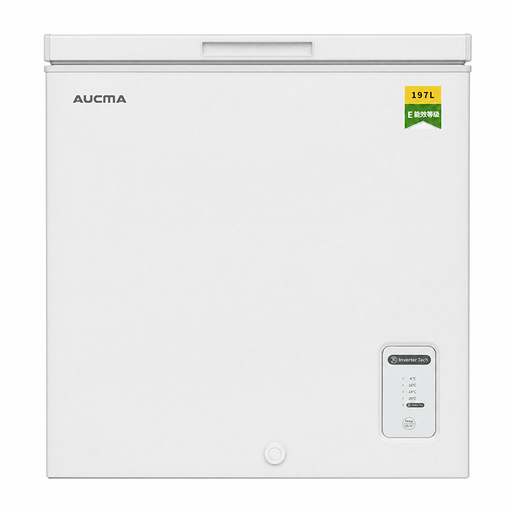 No image available
This chest freezer with a removable basket may suit you if you want dedicated storage. Remember to organise products placed at the bottom.
The product details list a capacity of 197 L, energy rating E, stated energy consumption of 197 kWh/year and a five-level digital control. A minimum clearance of 10 cm around the appliance is specified for ventilation.
This model is described as convertible between refrigeration and freezing.
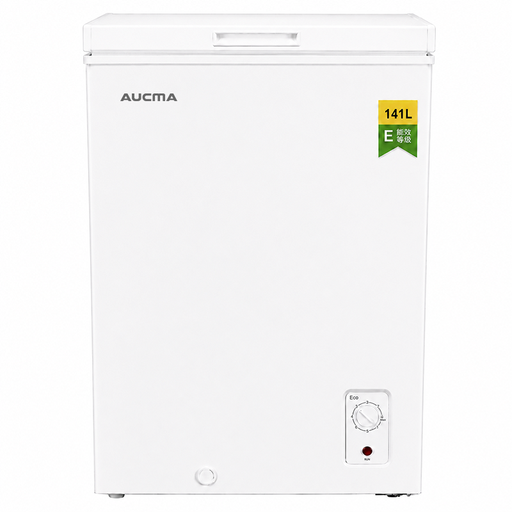 No image available
This chest freezer may suit you if you have floor space and want dedicated freezer storage with a removable basket.
The product details list a capacity of 141 L, energy rating E, stated energy consumption of 179 kWh/year, a seven-level thermostat and dimensions of 632 × 554 × 848 mm.
This model is described as convertible between refrigeration and freezing.
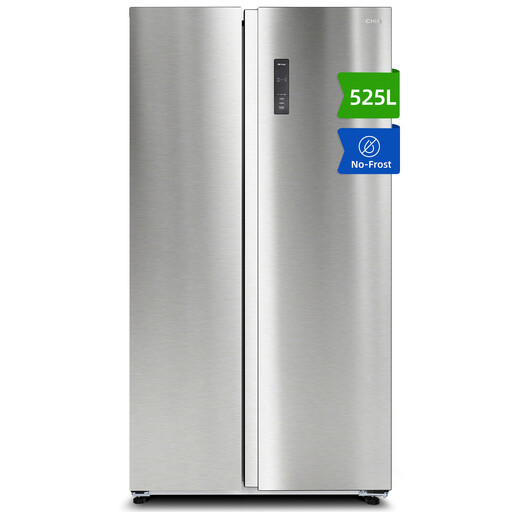 No image available
Worth considering if you also need a fridge: the total capacity includes both compartments, so it doesn’t all represent freezer storage.
The product details list 333 L for the fridge and 192 L for the freezer, energy rating E, a No Frost function and a stated noise level of 37 dB.
No. Also compare the kWh/year and usable freezer capacity of models that suit the food you need to store. Actual energy use depends, among other things, on how and where you use the appliance.
No. Compare the permitted ambient temperature range with the temperatures in your garage and follow the model’s instructions. Bosch states that its SN-T class starts at +10 °C; lower temperatures must be expressly permitted for the specific model, as with the FrostProtect feature listed by Liebherr for the CFe 2500, down to −15 °C.
Not necessarily. For the CFe 2500, Liebherr describes SmartFrost and StopFrost as features that reduce frost build-up or how often you need to defrost. Check the maintenance instructions for your chosen model rather than assuming these features are the same as No Frost.
The statutory guarantee of conformity applies to new, second-hand and refurbished goods sold by a professional to a private individual. According to the Ministry of the Economy and Finance, you have two years from delivery to claim under this guarantee. It is separate from any commercial guarantee that may also be offered.
The EU energy label, in use since 1 March 2021, gives information including the A to G rating, kWh/year, freezer capacity and noise level. The European Commission and the DGCCRF provide details of the information that applies to household refrigeration appliances. In France, when you buy a new appliance, including online, the retailer must offer to take back your old appliance on a «1 for 1» basis, according to the ministry responsible for ecological transition.