Households that want quick access to prepared portions
They regularly freeze labelled meals and want to organise them in drawers or compartments, so they don't have to move other food every time they need something.


If you want extra storage for a household that often freezes meal portions, an upright freezer makes it easier to organise and access them thanks to its compartments. A chest freezer is better suited to storing larger quantities, provided you have enough floor space and can organise the interior. Replacing your fridge freezer makes most sense if you also need more room for fresh food.
They regularly freeze labelled meals and want to organise them in drawers or compartments, so they don't have to move other food every time they need something.
They buy in bulk or prepare lots of meals in advance. A large freezer compartment may suit them if they're happy to organise food in baskets and containers.
They need to consider the width, depth and height, as well as the clearance needed to open the door. If the freezer is going in a cold room, the model's permitted ambient temperature range matters too.
If you need extra storage for meals alongside an existing appliance, start by comparing the different types based on how often you'll access portions, how much frozen food you need to store and how much space you have. UFC-Que Choisir highlights the type, capacity and climate class among the factors to consider.
Consider it: if you want to organise portions that you access often and keep them in separate compartments.
The trade-off: check that the drawers fit your containers and that the door can open where you plan to put the freezer.
Consider it: if you need to store meals and food that you access less often.
The trade-off: access from the top means you'll need a way to organise everything and find items at the bottom.
Consider it: if you're also replacing your existing appliance and need more space for both fresh and frozen food.
The trade-off: its total capacity doesn't tell you how much space is available for frozen food.
| Factor | What to check | Who it's for |
|---|---|---|
| Access to portions | Check the drawers, baskets or shelves, and the clearance needed to open the appliance. | If I take frozen meals out several times a week, I want to find a container without having to empty a pile of food. Around 42% of consumers prioritise easy everyday access. |
| Storage capacity | Compare the net freezer capacity in litres and check there's room for your largest containers. | When I prepare or buy food in batches, I first look for enough room to store it, even if that means organising the freezer more carefully. This is the main priority for around 33% of consumers. |
| Location | Measure the appliance and access routes, and allow space to open it. If it's going in a cold room, check the model's permitted ambient temperature range. | I need to be sure I can get the appliance into the room, open it and use it there before choosing its capacity. For around 25% of consumers, suitability for the available space comes first. |
A large fridge freezer doesn't necessarily have enough room for frozen meals.
Compare the freezer compartment's net capacity in litres with the containers you use.
In a freezer compartment with few dividers, portions at the bottom can be hard to find.
If you'll be taking meals out regularly, use baskets or boxes and organise portions by type and date.
The room temperature needs to stay within the operating range specified for the model you've chosen. According to Beko, only certain Freezer Guard chest freezers are designed to operate at ambient temperatures as low as −15 °C.
Check the usual minimum temperature in the room and compare it with the range stated in the instructions for the exact model.
An old freezer should be taken to an appropriate collection point for electrical and electronic equipment.
If you're replacing an appliance, ask the retailer how to arrange collection and check the practical removal arrangements when you place your order.
Upright freezers to consider if vertical storage is a priority.
A range of chest freezers worth considering, particularly if the appliance will be installed in a cold room.
A range that includes upright and chest freezers, so you can compare the two storage styles.
Upright and chest freezers to compare based on your preferred defrosting method and installation conditions.
These upright and chest freezers can give you extra frozen storage without replacing your household fridge freezer. Compare their capacity with the amount you usually store, then check how much space you'll need to install one.
 Image unavailable
A 60 L upright appliance for keeping portions separate. The title lists three drawers, while the description details two covered shelves and a drawer. Check the exact layout if storage space is an important factor in your decision.
A reversible door and E energy rating are listed. To compare running costs, also check the model's annual energy consumption in kWh on the label.
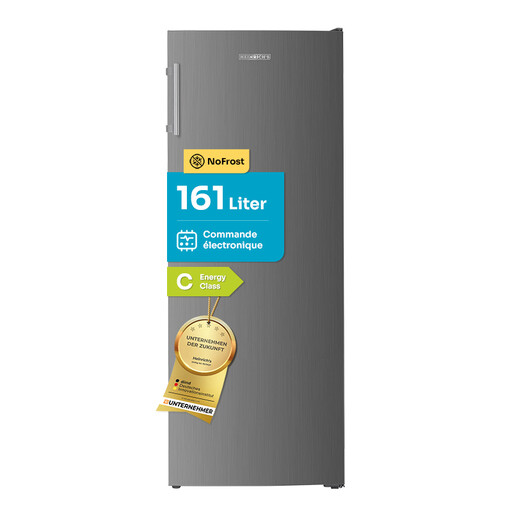 Image unavailable
A 161 L upright freezer for organising a stock of portions. This model is listed with NoFrost, a reversible door and a C energy rating.
Measure the space and delivery access before choosing it. Also compare its annual energy consumption in kWh and, if it's going in a cold room, check the permitted ambient temperature range.
 Image unavailable
A chest freezer for storing meals and food, with a removable basket to help organise the interior. This 291 L model is described as convertible between fridge and freezer modes: choose the mode you need rather than expecting to use both at once.
An E energy rating and five-level digital control are listed. Before installing it in a cold room, check the clearance above the lid and the permitted ambient temperature range.
 Image unavailable
Add 141 L of storage with this top-opening chest freezer. The removable basket keeps some food within easy reach, but only divides part of the freezer compartment.
This model is listed as convertible between fridge and freezer modes, with a seven-level thermostat and an E energy rating. Check the space needed to open the lid and the permitted ambient temperature if you plan to put it in a garage.
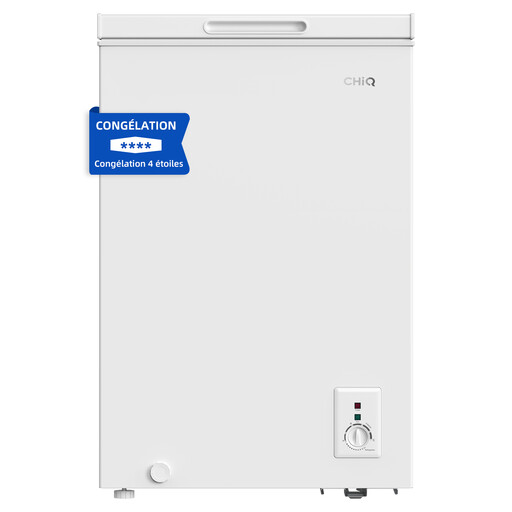 Image unavailable
A 99 L freezer for extra storage if you prefer a chest-style compartment. Its removable wire basket keeps some smaller items close to hand.
An adjustable thermostat and E energy rating are listed. The product description specifies manual defrosting; also check the permitted ambient temperature range if the appliance will be kept in a cold room.
Compare the energy rating and annual consumption in kWh, then check the net freezer capacity separately. With a fridge freezer, the total capacity doesn't tell you how much room you'll have for meals. ADEME recommends using the energy label to help you choose an appliance.
Yes, as long as the garage temperature stays within the permitted ambient range for your chosen model. Check the instructions for this range: Beko says some Freezer Guard chest freezers can operate at ambient temperatures as low as −15 °C, but this doesn't apply to all chest freezers.
Yes. Manufacturers describe NoFrost as a feature that saves you the hassle of defrosting, but you should still follow the maintenance instructions, particularly for the seals and ventilation openings.
Ask the retailer to take it away when you buy your new appliance. The French organisation ecosystem says that in France, an old equivalent appliance can be taken back when you buy a new one, either in store or on delivery depending on how you shop. Confirm the practical arrangements for this bulky item.