What should you look for?
Start with the need that will really determine your purchase: comparing fat content, choosing an unsalted recipe, or checking allergens and storage instructions.
| Criteria |
What to check |
Who is it for? |
| Fat |
Compare the “fat” line per 100 g on the packs you’re considering. A claim about the recipe doesn’t replace this figure. |
If my first priority is reducing the fat in my snack, a recipe with no added oil won’t meet my needs on its own. Around 46% of consumers would make this their top priority. |
| Recipe and salt |
Read the ingredients and salt content, and check that any “no added oil” claim applies to the specific product you’ve chosen. |
Between lectures, I may simply want almonds that are easy to carry, unsalted or made without added oil. This would be the top priority for around 36% of consumers. |
| Allergens and storage |
Check the ingredients, any warnings about traces and the storage instructions on the pack. |
If allergens affect my choice, or I need to keep the packet in my bag, this information matters more than the pack size. It would be the top priority for around 18% of consumers. |
Brands and products to know
These examples help you distinguish a recipe’s ingredients from its fat content. Each figure applies to the specific product listed, not the brand as a whole.
SIMPL / Carrefour
Raw, shelled almonds in a 400 g pack.
- Carrefour’s product listing gives a single ingredient: almonds.
- It contains 55 g of fat per 100 g. This simple recipe doesn’t mean the product is lower in fat.
TOKAPI / E.Leclerc
Unroasted, shelled almonds with no added salt, in a 200 g pack.
- E.Leclerc’s product listing names shelled almonds as the ingredient and gives a salt content of 0.0 g.
- It also contains 51.6 g of fat per 100 g: no added salt doesn’t mean lower fat.
Daco Bello
Roasted almond products are listed by Auchan and Monoprix; check their nutritional information separately.
- The product listed by Auchan is described as having no added salt or oil.
- It contains 56 g of fat per 100 g. Another unsalted roasted product listed by Monoprix contains 51 g per 100 g.
Vico Natur’ & Bon
Unroasted, unsalted almonds in a 180 g pack, listed by Monoprix.
- The product listing gives “almonds” as the ingredient.
- It contains 53 g of fat per 100 g and may contain peanuts and other nuts.
A snack to compare on Joybuy
This handy snack combines almonds and corn. It gives you another recipe to consider for a break at university, but it shouldn’t be confused with a pack of plain whole almonds or one marketed as lower in fat.
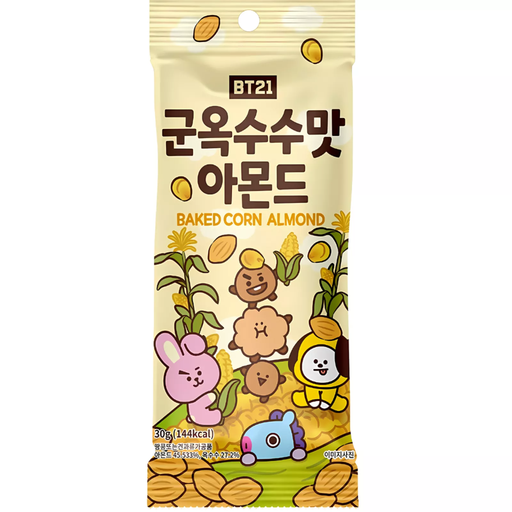 Image unavailable
BT21 baked corn flavour almonds, 30g
The 30g pack is handy for a small snack on the go. This recipe combines almonds and corn, so the product name alone doesn’t make it comparable to whole almonds. If fat is your main concern, check the values per 100 g on the packaging of the product being sold. Also check the ingredients and allergen information.
View on Joybuy
Frequently asked questions
Are unsalted almonds lower in fat?
No. The claim “unsalted” isn’t enough to show that a product is lower in fat. TOKAPI unsalted almonds at E.Leclerc and Vico almonds at Monoprix contain 51.6 g and 53 g of fat per 100 g, respectively.
Does having no added oil make roasted almonds lower in fat?
Not on its own — you can’t conclude that a product has a lower fat content from this claim alone. Daco Bello almonds listed by Auchan as having no added oil contain 56 g of fat per 100 g. Compare the nutritional information for the product you’re thinking of buying.
How many almonds should I take to university?
Santé publique France gives a small handful of unsalted nuts, including almonds, per day as a general guide. This guide doesn’t determine what a balanced lunch should contain; if you have a relevant allergy, first check whether the product is suitable for you.
How should I keep an opened packet in my bag?
Reseal it and follow the instructions on the packaging. Monoprix’s listing for Daco Bello roasted almonds specifically recommends storing them in a cool, dry place.
What should I look for on the label of a product sold in France?
For prepacked food, check the ingredients, allergens and nutritional information, including the fat content per 100 g. The DGCCRF explains the rules for nutrition declarations; when comparing products, use the information on the specific pack.


