
Livraison le jour même ou le lendemain

Qualité garantie

Débloquez vos offres de bienvenue: Livraison GRATUITE | Jusqu'à -80 % | 30 jours d'essai gratuits à JoyPlus
Téléchargez l'application
The infamous "drawer of shame," filled with tangled cables, one for every device: a Lightning cable for the iPhone, a USB-C for the Android smartphone, another for the laptop... Does this sound familiar? As our collection of gadgets grows, managing chargers has become a real headache.
A universal charging cable promises to end this nightmare. The idea is simple: a single solution to power all your devices, regardless of their brand or connector type. This guide helps you cut through the noise and choose the right cable, focusing on concrete criteria like power, compatibility, and durability—not marketing jargon.
Before diving into our top picks, here are the key criteria to keep in mind to make the right choice.
Power, measured in watts (W), determines how quickly your devices charge. To take advantage of fast charging, the formula is simple: your cable, your charger, and your device must all speak the same language, which is most often the renowned Power Delivery (PD) standard.
As a general rule:
An underpowered cable will charge your laptop slowly, or perhaps not at all. The rule of thumb: always check the maximum power rating supported by the cable.
The main appeal of a universal cable is, of course, its ability to adapt to different devices. There are two main types of solutions:
Make sure your chosen cable is compatible with all your devices: smartphones (iPhone, Samsung, etc.), tablets, headphones, portable consoles, and more.
A charging cable is an accessory that takes a daily beating. To avoid having to buy a new one every six months, the smart move is to opt for a braided cable. Its nylon or fabric sheath provides far better resistance to bending and fraying than a standard plastic cable. Another tell-tale sign of quality is reinforced joints between the cable and the connectors. This is often the weakest point.
We have selected a few models that stand out for their versatility and performance, designed to meet a variety of needs.
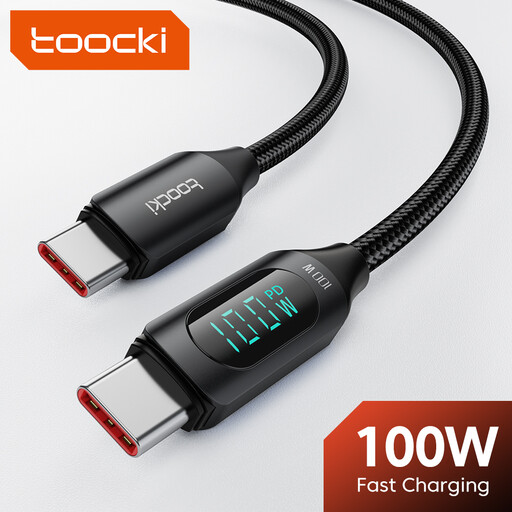
Why it stands out: Its small, built-in LED screen displays the charging wattage in real time. It's a feature that's as fun as it is practical for verifying that fast charging is active.
Highlights:
Who is it for? For tech enthusiasts who love to monitor performance and juggle power-hungry devices, like a laptop and a latest-generation smartphone.
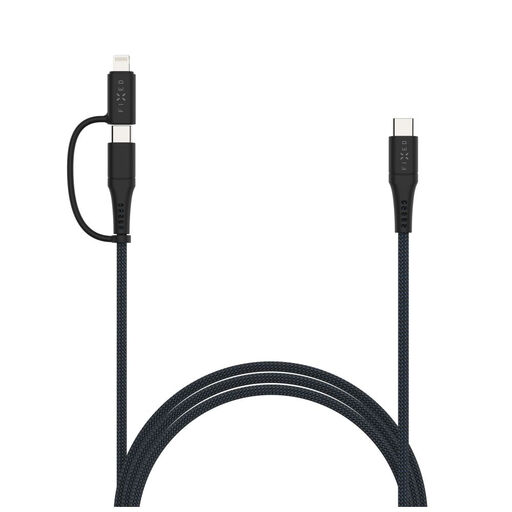
Why it stands out: It combines the sturdiness of a braided cable with the convenience of an MFi (Made for iPhone) certified Lightning adapter—the key to flawless compatibility and safety with Apple products.
Highlights:
Who is it for? Ideal for Apple loyalists looking for a long, durable, and certified cable without sacrificing the versatility of USB-C for their other devices (PC, Android tablet, etc.).
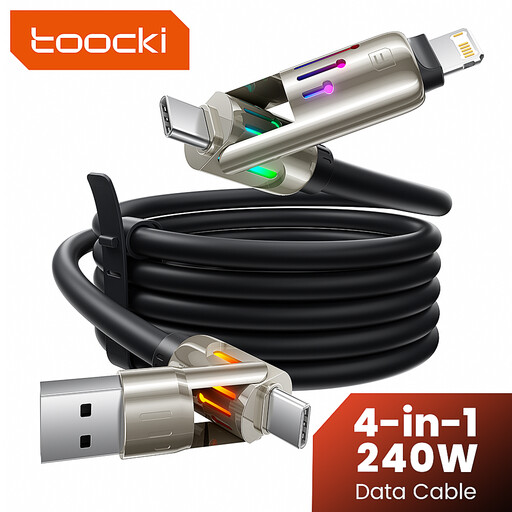
Why it stands out: This is the Swiss Army knife of charging. With its four connector combinations, it's ready for (almost) any situation, past or present.
Highlights:
Who is it for? For families with a diverse mix of old and new devices, travellers who want to pack light, or anyone looking for a single, future-proof solution.
Our selection focuses on versatile solutions, but the world of charging accessories is a vast jungle. To discover more specific cables, chargers, or other essential accessories for your digital life, take a look at our other categories.
Discover our full selection of electronic accessories
No, provided you choose a quality cable and a wall charger that meets safety standards (like CE marking). Modern devices are equipped with protection circuits that regulate the power they receive. The cable is merely a conduit for energy; the device itself "decides" how much power to draw.
The Lightning connector is a proprietary Apple technology found on iPhones (up to the 14 series), some iPads, and accessories. USB-C has become the universal standard, adopted by the majority of manufacturers (including Apple on its recent products). It is valued for its reversible design, high data transfer speeds, and its ability to handle high power levels for charging via Power Delivery.
No. For the magic of fast charging to work, three conditions must be met:
If even one link in this chain is missing, charging will automatically default to a standard, much slower speed.