Renters without essential appliances
You’ll need to store food and prepare meals as soon as you move in. Start by checking which appliances are actually listed in your tenancy agreement and check-in inventory.


For an unfurnished rental, check your tenancy agreement and check-in inventory first, then choose your refrigeration and cooking appliances to suit your habits and the space available. A dishwasher and appliances you use less often can wait. If you’re only planning a short stay, compare borrowing, renting, buying second-hand and postponing your purchase too—there’s no one option that’s always cheaper.
You’ll need to store food and prepare meals as soon as you move in. Start by checking which appliances are actually listed in your tenancy agreement and check-in inventory.
You’re looking for freestanding appliances that are easy to take with you and won’t take up too much room for moving around or preparing food. Measure the available space before choosing a model.
You want to avoid buying appliances straight away if you’ll rarely use them or they’ll be difficult to transport. Compare borrowing, renting, buying second-hand and postponing your purchase, taking into account how long you plan to stay and the terms of each option.
Once you’ve checked your tenancy agreement, decide what to buy based on your everyday needs, the space available and how long you expect to stay. ADEME recommends choosing appliances that suit how you’ll use them, and notes that larger appliances or buying more than you need can increase costs.
| Priority | What to check | Who it matters most to |
|---|---|---|
| Keeping food fresh | Appliances already in the property, the dimensions of the space and the separate capacities of the fridge and freezer. | If you shop for several days at a time or store frozen food, you’ll want enough capacity without unnecessarily crowding the kitchen. Around 36% of consumers prioritise food storage. |
| Everyday cooking | Which cooking appliances are missing, the space available and whether your pans are compatible if you choose induction. | If you can’t prepare meals the way you’d like in your rental, you’ll want a solution that suits your habits—without permanent installation if that isn’t an option. Around 29% of consumers put cooking first. |
| Washing up | How often you’ll use it, its full dimensions, the water supply and drainage, and the electrical connection. | If washing up regularly piles up, you could consider an appliance, provided the space and connections are suitable. Around 21% of consumers prioritise washing up. |
| Keeping long-term purchases to a minimum | How long you expect to use the appliance, whether you can transport it, the condition of a second-hand product and the seller’s identity. | If you’re only renting for a limited time or rarely use certain appliances, compare borrowing, renting, buying second-hand and postponing your purchase. Around 14% of consumers are mainly looking to avoid long-term purchases. |
The decree of 31 July 2015 sets out a list of appliances for furnished properties; it doesn’t tell you which appliances are provided in an unfurnished rental. ADIL Moselle also points out that an equipped kitchen isn’t automatically included.
Read your tenancy agreement and check-in inventory again before drawing up your shopping list.
If an appliance is already listed or in the property, you could end up buying a duplicate or disagreeing about its condition.
Width alone won’t tell you whether an appliance will fit in the space or can be connected. Depth, height, clearance and door opening space can all matter too.
Measure the space and the route into the kitchen, then check the installation instructions and connections before choosing.
A larger appliance takes up more space, and ADEME notes that larger appliances or buying more than you need can increase costs.
Assess your refrigeration and freezing needs separately, then compare capacities and dimensions with the space you’ve measured.
Your rights aren’t the same when you buy from a business as when you buy from a private seller. The French Ministry of the Economy states that the statutory guarantee of conformity applies to goods sold by a business to a consumer.
Check who the seller is, inspect the appliance and read the terms of sale before you decide.
Beko’s French range includes freestanding tabletop fridges, such as the TSE1264FMGN, which is listed as 54 cm wide.
Tefal’s portable induction hob range includes the Everyday Slim IH2108E1, a single-zone model for occasional cooking.
Bosch’s freestanding fridge-freezers are worth considering if your kitchen has room for a large appliance.
Whirlpool’s freestanding dishwasher range includes the WSFO3T223P, a 45 cm model for kitchens that can accommodate a plumbed-in appliance.
The products featured cover cooking with a portable induction hob and food storage, from a mini fridge to fridge-freezers with different capacities.
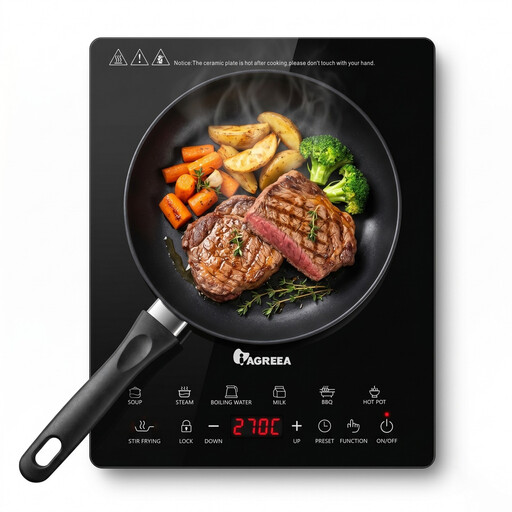 Image unavailable
Worth considering if you need to cook without a built-in hob, provided your cookware is compatible.
Listed power: 2 000 W; 8 power settings; 7 cooking programmes; 3-hour timer.
Designed for compatible cookware measuring 12 to 26 cm; the surface heats up during use.
 Image unavailable
Worth considering if you need plenty of storage and the space you’ve measured can accommodate this style of appliance.
Listed capacity: 333 L for the fridge and 192 L for the freezer. The product listing gives it an energy rating of E.
Check the dimensions and required clearances before choosing where to put it.
 Image unavailable
Worth considering if space is a key factor and a combined fridge-freezer meets your needs.
Listed width: 54 cm; listed capacity: 153 L for the fridge and 74 L for the freezer. The product listing gives it an energy rating of E.
Check the full dimensions and required clearances in the instructions.
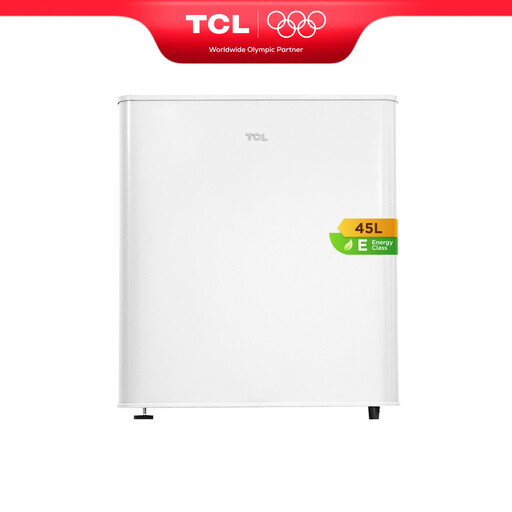 Image unavailable
Worth considering if you only need a little chilled storage, rather than as your only solution for storing a large amount of food.
Listed total capacity: 45 L, including 42 L of fridge space and 3 L of freezer space. The product listing gives it an energy rating of E.
Start by checking what’s already listed in your tenancy agreement and check-in inventory. Then prioritise refrigeration and cooking based on your meals and the space available. A dishwasher and appliances you use less often can wait if you don’t need them straight away, or if space or connections are an issue.
The legal list of appliances for a furnished property doesn’t tell you which appliances are included in an unfurnished rental. Check your tenancy agreement and check-in inventory to see which appliances are actually provided. ADIL Moselle points out that an equipped kitchen isn’t automatically included.
First compare models with capacities that suit your needs, then check the information on their energy labels. According to ADEME, the label shows, among other things, energy use in kWh per 100 standard cycles and water use per standard cycle. These figures won’t necessarily reflect your own cycles.
Measure the space and the route into the kitchen, then follow the model’s instructions for installation and clearances. Electrolux Assistance recommends following the instructions for your specific appliance and allowing air to circulate around it.
Yes. This guarantee applies to second-hand and refurbished goods sold by a business to a consumer. The French Ministry of the Economy states that it lasts for two years from delivery. Don’t assume the same rules apply to a private sale.