A kitchen with no appliances
First, work out how you’ll store food and prepare meals. For each appliance you’re considering, check the space, power supply and route into the kitchen.


For your first unfurnished home, start with the essentials you’re missing: somewhere to store food and a way to cook, followed by laundry if you don’t have regular access to another solution. Before ordering, check which appliances are already there, measure up, plan the delivery route and confirm the connections. Then choose a vacuum cleaner and small appliances to suit your routine and the space available.
Your shopping list will depend mainly on which appliances are already installed and what connections are available.
First, work out how you’ll store food and prepare meals. For each appliance you’re considering, check the space, power supply and route into the kitchen.
Limited kitchen and storage space may restrict your choice. Measure the doors, stairs and lift too: an appliance that fits its space still needs to be able to get there.
Check which appliances are available to use before ordering any more. If you already have regular access to laundry facilities, you can decide later whether you really need your own washing machine.
Make a list of the functions already available, then check the installation requirements for each missing appliance before choosing its capacity or size.
| Priority | What to check | What I need |
|---|---|---|
| Appliances already there | Check which appliances are provided and working. Also find out which laundry facilities you can access regularly. | I want to equip the home with the functions it’s genuinely missing, without ordering a second appliance for the same purpose. |
| Food storage and cooking | If either is missing, measure the space and the delivery route. For an electric hob or oven, confirm that the available power supply is suitable for the appliance. | If I have no way to store food or cook, I need to sort these essentials as soon as I move in. A compact appliance will only meet my needs if it lets me prepare the meals I want. |
| Laundry | Check the space, water supply, drainage and electrical supply. Choose a capacity to suit the amount of laundry you do: ADEME says that 7 kg is usually enough. | If I don’t have regular access to laundry facilities, a washing machine could be useful, provided it can be installed in my home. |
| Size and access | Compare the model’s dimensions with the space available, the clearances it needs and every part of the delivery route. Make sure you have somewhere to store it too. | In a small kitchen, I’d rather know where an appliance will go and how it will get in before choosing a size. |
| Use and maintenance | For the exact model, compare the relevant information on its energy label for that appliance category. For a washing machine, also check its durability index if one is displayed. | I want to compare appliances that suit the way I’ll use them, rather than relying only on the energy rating or a large capacity. |
| Cleaning and food preparation | For a vacuum cleaner, consider your floors, how easy it is to handle and where you’ll store it. For small appliances, check what they’re designed for, where they’ll go and whether there’s a suitable socket. | I’ll add these appliances to suit my cleaning and cooking habits, rather than following the same list for every home. |
A fridge, hob or washing machine that’s already there and in working order could make a new purchase unnecessary and take up valuable space.
Before making your list, note which appliances are there, their condition and which needs aren’t covered, room by room.
An appliance may fit in its space but still not get through the door, hallway, stairwell or lift.
Compare its full dimensions with the space and every part of the route. Check separately how much clearance is needed for installation.
A hob, oven or washing machine needs to be connected to a suitable installation. Promotelec notes that French electrical regulations require dedicated circuits for certain appliances.
Identify the intended socket and circuit before buying. If you’re unsure, ask your landlord or a qualified professional rather than relying on a multi-socket adaptor or extension lead.
A large drum won’t necessarily suit the amount of laundry you need to wash. The energy label provides other information to compare, depending on the appliance category.
Start with your needs: ADEME says that a 7 kg washing machine is usually enough. Then check the figures on the label for the model you’re considering.
These Joybuy options cover food storage, cooking and floor cleaning. Whether they’re right for you depends on which appliances are already there and what’s compatible with your home; they aren’t a complete shopping list.
 Image unavailable
Consider this if your home doesn’t have a fridge-freezer that suits your needs. This three-door model is listed as having Total No Frost and an E energy rating. Check its dimensions, required clearances and delivery route before ordering.
 Image unavailable
If your kitchen has no fridge-freezer, compare its listed width of 54 cm and height of 176 cm with the space and access route. The freezer uses Low Frost technology, so don’t assume it never needs manual defrosting.
 Image unavailable
An option to consider if your home doesn’t have a usable hob. The product title lists eight power settings and compatibility with cookware measuring 12 to 26 cm. Check your pans, available space and electrical supply before buying.
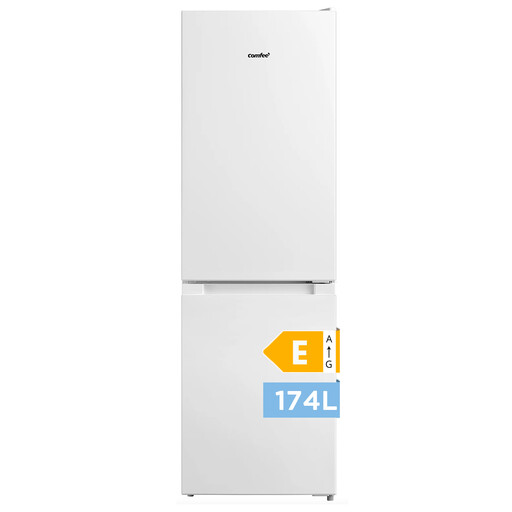 Image unavailable
Consider this if you need a fridge-freezer and 174 L is enough for your storage needs. The product title lists a height of 150 cm, and the freezer uses Low Frost technology. Also check its width, depth, required clearances and delivery route.
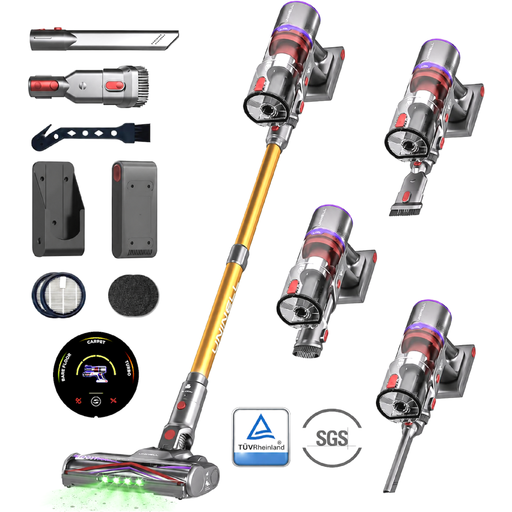 Image unavailable
Consider this if you need a vacuum cleaner for your floors and have somewhere to store it. The advertised battery life is up to 65 minutes; check how long it lasts in the mode you’ll use and how long it takes to charge.
Start by buying what you need to cover the functions your home is missing, particularly food storage and cooking. Decide whether to get a washing machine based on your regular access to laundry facilities. Check your tenancy agreement, inventory and, if possible, the appliances already in the property before ordering.
Measure the space, the clearances needed and the whole delivery route, including doors, hallways, stairs and the lift. For a washing machine, also check the water supply, drainage and intended electrical supply.
No. The power supply must be suitable for the appliance and the home’s electrical installation. Promotelec notes that French electrical regulations require dedicated circuits for some appliances, including washing machines and ovens. If you can’t identify the intended circuit, get the installation checked.
First compare their dimensions and the features that matter for your needs. Then compare the figures on the energy label for each exact model, rather than looking only at the rating. ADEME says the label gives buyers information about the efficiency of large household appliances; the details to check vary by category.
The durability index is an additional point to consider when it’s displayed. According to the French ministry responsible for ecology, it has been gradually replacing the repairability index for washing machines since 8 April 2025. You’ll still need to check the dimensions, connections and energy label.