
Livraison le jour même ou le lendemain

Qualité garantie

Débloquez vos offres de bienvenue: Livraison GRATUITE | Jusqu'à -80 % | 30 jours d'essai gratuits à JoyPlus
Téléchargez l'application
An under-door draught excluder limits draughts, keeps dust out and reduces some noise transfer. But you need to pick the right model: a poorly chosen one can peel off quickly, rub against the floor or let air in around the sides. Whether you're in a flat, a house, an office or a commercial premises, the choice depends mainly on the gap under the door, the type of flooring and the fixing system.
A self-adhesive door bottom designed for wooden flooring, tiles or PVC will struggle to stick to a dusty, gritty or very uneven surface. On the other hand, a rigid strip may not conform well to the variations of an older floor.
On an uneven surface, it's better to go for a brush door seal or one with a flexible membrane. On a smooth floor, a sealing strip usually provides a more consistent contact while remaining discreet.
A length of 93 cm fits many doors, but you need to compare it with the actual width of the door leaf. A model that's too long will need to be cut cleanly. One that's too short will leave an unprotected area, especially near the door frame.
Also remember to measure the height of the gap under the door. The models shown here are stated to be compatible with gaps of up to 15 mm. Some double-brush versions can cover gaps of up to 30 mm, depending on the product specification.
Even an adhesive that's marketed as durable can lose its sticking power if the floor is greasy, damp or dusty. Before fitting, clean and dry the area thoroughly, then follow the manufacturer's recommended pressing time. A rushed installation is one of the main causes of peeling.
The self-adhesive door bottom is quick to fit and requires no drilling. It's particularly suitable for tenants and interior doors, provided the surface is smooth, clean and dry.
The screw-fix door bottom needs a bit more preparation, but it can be more practical for heavy use or a door that's opened frequently. You'll need to measure, mark the fixing points and check that the strip doesn't interfere with the door's movement.
A seal that's too low may hinder the door from opening. One that's too high won't do its job properly. After fitting, close the door gently: it should remain easy to operate, and the contact with the floor should be even, without excessive pressure.
When the product specification mentions a reduction in airflow, these are figures provided for that particular model. They don't guarantee the same result in every home: that also depends on the quality of the installation, the geometry of the door and the type of floor.
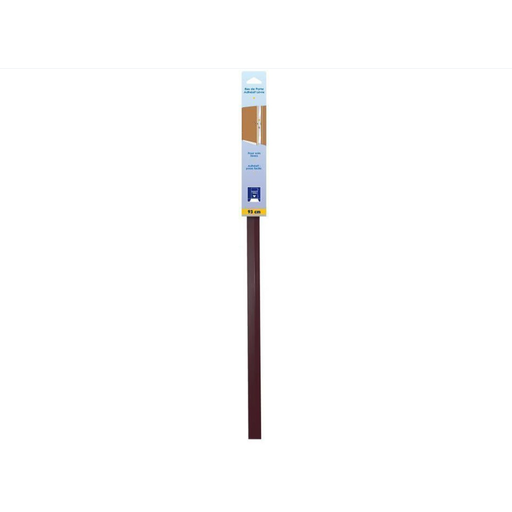
Why this choice suits this profile: This brown adhesive model is designed for smooth floors and can be cut to the desired width. It's ideal for a first installation on an interior door, with no drilling required.
The specification lists compatible surfaces and recommends careful surface preparation. This reduces the risk of peeling caused by fitting on a dusty floor.
PVC profile, flexible lip and 93 cm length. The specification mentions compatibility with several smooth floors and a stated lifespan of at least 5 years.
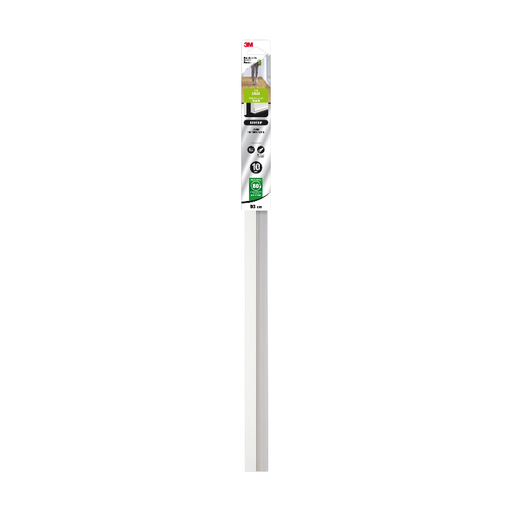
Why this choice suits this profile: Its white casing and transparent strip blend discreetly into a well-finished room, an office or a renovated home with a smooth floor.
This product is designed for smooth floors and can be cut to size. It is therefore not wrongly presented as a solution for rough or unstable surfaces.
Transparent strip, tool-free fitting and adjustable length. The product specification states an effective lifespan of at least 10 years, subject to installation and usage conditions.
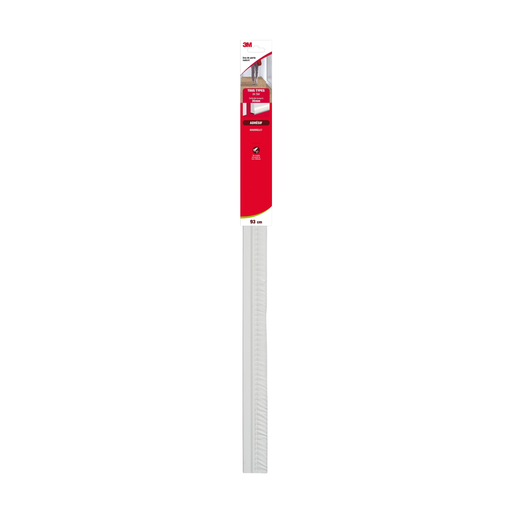
Why this choice suits this profile: Its double brushes and membrane are designed for very uneven floors, such as in an entrance hall, workshop, commercial premises or older property.
It doesn't rely on a single rigid strip to follow the contours: the specification indicates a double-brush design suitable for gaps of up to 30 mm.
Can be cut with a saw or scissors, flexible brushes and stated protection against air, noise and moisture. The specification mentions a lifespan of at least 5 years.
A removable draught-excluding door sausage can complement the installation in a rented property. However, it's generally less discreet and may need repositioning regularly. For a fixed solution against dust and noise, the door seal must remain properly adjusted to the surface.
We've put together a comprehensive, real-time updated list of products that fully meet these strict selection criteria and European safety regulations.
Choose a model with soft double brushes or a flexible membrane. It will follow the floor's variations better than a rigid strip. Still measure the maximum gap under the door to check the range covered, especially up to 15 or 30 mm depending on the product.
Its durability depends mainly on surface preparation, humidity, temperature changes and frequency of use. Fit it on a smooth, clean, dry surface without stretching the profile. The lifespans stated in the product specifications are specific to each model and don't replace real-world usage conditions.
It can limit air infiltration under the door and improve thermal comfort. The actual saving depends on the size of the gap to be filled, the overall insulation of the property, the ventilation and the type of door. An under-door draught excluder is therefore a thermal insulation supplement, not a substitute for necessary work.