
Livraison le jour même ou le lendemain

Qualité garantie

Débloquez vos offres de bienvenue: Livraison GRATUITE | Jusqu'à -80 % | 30 jours d'essai gratuits à JoyPlus
Téléchargez l'application
An undated diary lets you start organising whenever you like, without leaving blank pages during quiet periods. It’s ideal for students, professionals, creatives, travellers and anyone juggling schedules, note-taking and goal tracking.
Be careful, though: some touted advantages can quickly turn into drawbacks. Here are the main pitfalls to avoid before choosing your next diary or notebook.
An undated diary isn’t necessarily just a lined notebook. Some models offer monthly and weekly pages for you to fill in, while others are limited to lined pages. If you’re after proper day-to-day organisation, make sure you check for a planning structure.
A blank notebook can be perfectly fine for keeping a journal, jotting down ideas or recording a few thoughts. However, it will require more preparation on your part to keep track of appointments, tasks or goals.
A large format gives you more space to write, but it also takes up more room in your bag. Conversely, an A6 notebook slips easily into a pocket or small bag, at the cost of a more limited writing area.
Compare the stated dimensions with how you’ll actually use it. An A5 format measures roughly 14.8 × 21 cm, compared with about 10.5 × 14.8 cm for an A6. Also think about the thickness, the type of cover and the number of pages.
A faux leather cover or a colourful finish can look smart, but it doesn’t tell you much about the product’s real durability. Instead, examine the material, the rigidity, the closure system and how easy it is to clean.
A hard cover protects the pages better inside a bag. A soft cover, on the other hand, is generally lighter and more comfortable to carry. In either case, avoid leaving your diary exposed to damp, heat or direct sunlight for too long.
For professional planning, studies or creative projects, an undated A5 planner offers a comfortable amount of space. A model designed for 18 months can include monthly and weekly views without imposing a fixed calendar. This means you can start partway through the year and adapt how long you use it to suit your own pace.
For noting down an address, an idea or a shopping list, an A6 notebook is more practical to carry around. It can also serve as a compact personal diary or a lined notebook.
Also consider the difference between:
Paper weight refers to the weight of the paper per square metre. 100 gsm paper is thicker and more substantial than 70 gsm paper. It generally feels nicer and more stable when using a ballpoint pen or rollerball. However, this doesn’t guarantee no show-through at all with every ink.
The Moleskine models featured in this selection use 70 gsm ivory paper, with pages dedicated to planning and notes. The Jubiluu planners, meanwhile, use lined 100 gsm ivory offset paper.
A notebook with an elastic closure stays securely shut in your bag. A notebook with a bookmark ribbon helps you find the right page quickly, while a notebook with a pen loop stops you from hunting for your pen at the bottom of your bag.
These accessories are handy, but check their sturdiness and placement. An elastic that’s too loose won’t hold the notebook as well, while a loop that’s too narrow might not fit your usual pen. Ribbons, elastics and small parts should be kept out of reach of children under three years old.
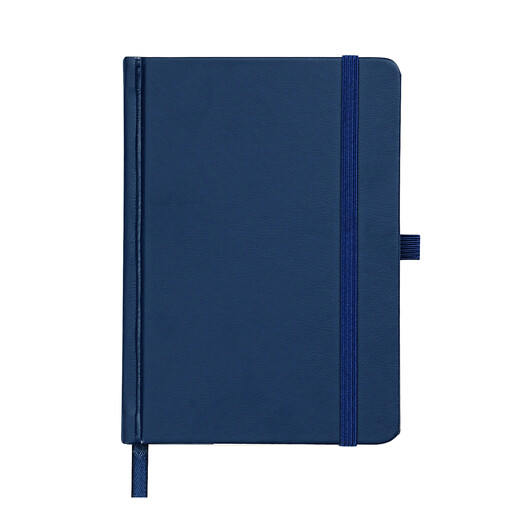
Why this choice suits this profile: Its compact size is perfect for first-time planners, lists and notes taken on the go, whether on public transport or campus.
Its 160 lined pages offer clearly defined space, without imposing a calendar you might leave empty.
A6 format, PU hard cover, 100 gsm lined offset paper, elastic closure, bookmark ribbon and pen loop.
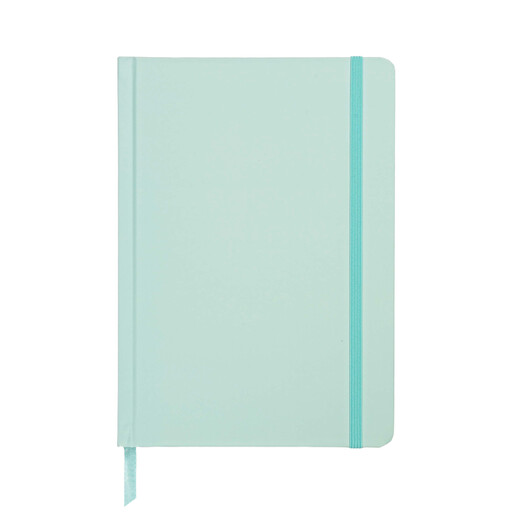
Why this choice suits this profile: People managing multiple projects, courses or habits benefit from monthly and weekly views, plus dedicated note pages.
Its undated structure avoids wasted pages and lets you pick up your planning again after a break.
A5 format, 224 pages, hard cover, 100 gsm paper, monthly and weekly sections, bookmark ribbon and elastic closure.
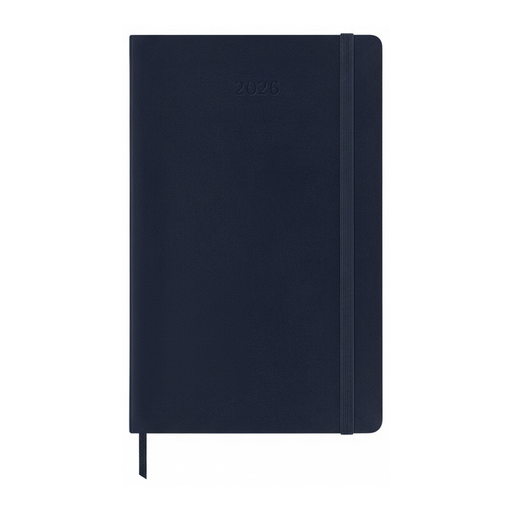
Why this choice suits this profile: Its one-page-per-day layout is ideal for detailed professional diaries, logbooks and projects that need regular notes.
The period of use and the daily layout are clearly defined. This makes it easier to choose according to your own writing rhythm.
Soft cover, lay-flat binding, elastic closure, bookmark ribbon, inner pocket and pages dedicated to travel, ideas and goals.
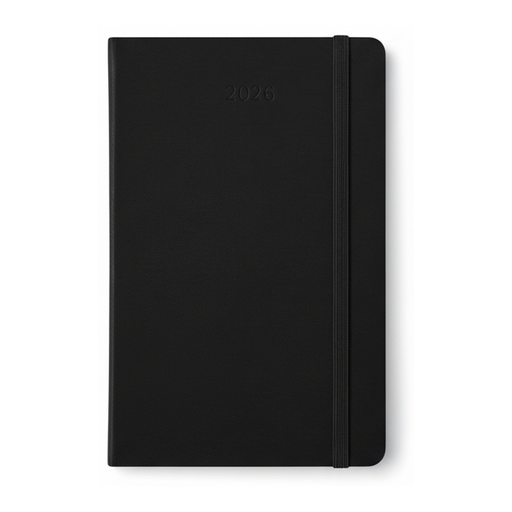
Why this choice suits this profile: The weekly double-page spread lets you see appointments, tasks and travel at a glance, with a separate section for notes.
The horizontal layout stops appointments from being scattered and makes the day-by-day breakdown immediately clear on each double page.
Large format, soft faux leather and hard cover, 70 gsm ivory paper, lay-flat opening, inner pocket, elastic closure and bookmark ribbon.
We’ve put together a comprehensive, real-time updated selection of products that meet these exacting criteria, while complying with European safety regulations.
Yes, as long as you choose a suitable layout. A model with monthly and weekly sections makes it easier to keep track of appointments, tasks and goals. A lined notebook will be better suited to free-form notes, ideas or keeping a personal journal.
It all depends on how many pages you use each week. An undated A5 planner designed for 18 months offers a long-term structure, but there’s no obligation to fill it at that pace. An A6 notebook with 160 pages is better suited to regular notes, lists and short entries.
A hard cover protects the pages better from pressure inside a bag. A soft cover generally takes up less space and is suitable for light travel. For everyday use, pay particular attention to the quality of the binding, the sturdiness of the elastic closure and its resistance to damp.