
Livraison le jour même ou le lendemain

Qualité garantie

Débloquez vos offres de bienvenue: Livraison GRATUITE | Jusqu'à -80 % | 30 jours d'essai gratuits à JoyPlus
Téléchargez l'application
An undated 18-month A5 planner lets you start organising your life whenever you choose, without wasting pages for a period that has already passed. This format is suitable for students and professionals, as well as freelancers or anyone looking to structure their days, track their goals or keep a dedicated space for notes.
However, product descriptions do not always make comparisons easy. An “elegant” cover, a high page count or simply mentioning “quality paper” is not enough to determine whether a planner really suits your habits. Here are the key points to check before buying, followed by a selection of Jubiluu models available in several colours.
The “18-month” description may refer to the notebook’s overall capacity, but how the pages are allocated is still crucial. An undated weekly planner should provide enough space for appointments, tasks and notes. Without a clear monthly view, it becomes harder to visualise deadlines and busy periods.
Paper that is too thin can limit your choice of pens and make writing less enjoyable. For everyday use, check the paper weight, shade and whether the pages are lined. A hardcover provides a more stable surface for writing away from your desk, while a softcover may be lighter.
An attractive colour cannot make up for an unsuitable internal layout. Before choosing an A5 planner, check for monthly pages, undated weeks, a notes section and practical features such as a closing elastic or a bookmark.
A5 dimensions are approximately 14.8 × 21 cm. This offers a good balance between readability and portability. The planner will generally fit in a work bag or student bag, while still leaving enough space to note several appointments and tasks.
If you often carry your notebook with you, also check its thickness and weight. With 224 pages, a planner offers plenty of space, but it will naturally be bulkier than a simple notebook.
The 100 g paper weight refers to the weight of the paper per square metre. It is heavier than that of many standard notebooks and is suitable for use with ballpoint pens, rollerball pens and pencils. However, it does not guarantee complete opacity with every felt-tip pen or ink, so your choice of writing instrument still matters.
The models featured here use 100 g, lined, off-white offset paper, with 112 sheets, totalling 224 pages.
To plan your goals and organise your everyday life, look for three features:
This combination allows you to use the notebook for studying, work, personal projects or journalling, without having to start at the beginning of the year or month.
The following models share the same core features: A5 format, an undated design intended for 18 months, a hardcover, 100 g off-white offset paper, 224 pages, and monthly and weekly sections. Your choice will mainly depend on the colour and how you plan to use it.
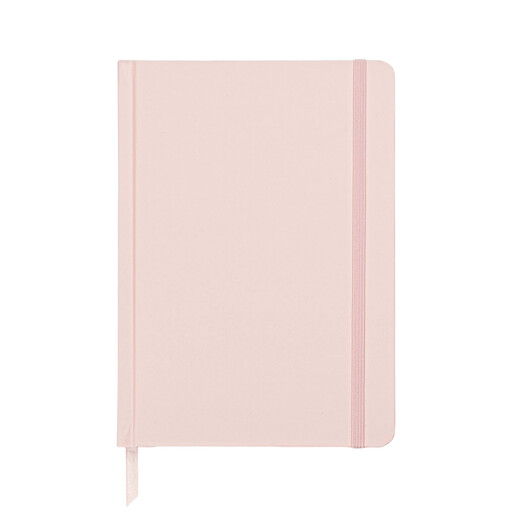
Why this choice suits this profile : Its undated format lets you start gradually, whether you are organising lessons, appointments or personal tasks.
The monthly and weekly layout means you are not dependent on a single view. The pages remain useful even after a break in use.
A5 format, 224 pages, 100 g offset paper and blush pink colour.
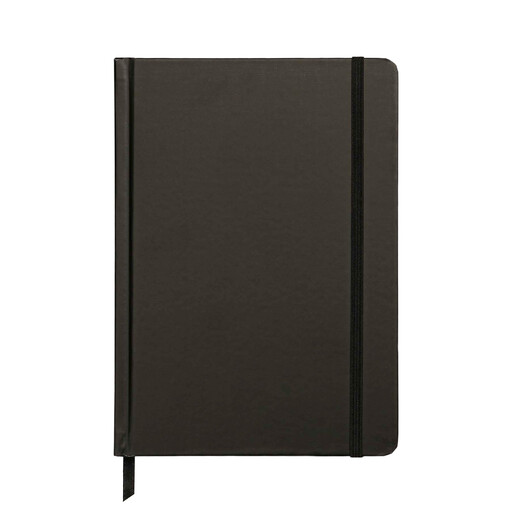
Why this choice suits this profile : The black colour fits easily into a professional setting and works equally well in the office or on the go.
The hardcover and closing elastic are suited to a notebook that is handled regularly, rather than relying on appearance alone.
Hardcover, bookmark, elastic and 112 sheets of 100 g paper.

Why this choice suits this profile : The 224 pages are ideal for anyone who combines planning, project tracking, meeting notes and personal writing in one notebook.
The notes areas alongside the weekly spreads prevent you from scattering information across several notebooks and make it easier to keep track of tasks.
224 pages, monthly and weekly views, bookmark and hardcover.
We have put together a comprehensive, real-time updated list of products that meet these demanding selection criteria and European safety requirements.
To avoid filling the pages at random, start by entering your fixed commitments in the monthly views. Then add important deadlines and distribute your tasks across the weekly pages. The notes area can be used to track your goals, prepare for a meeting or record ideas.
A simple colour-coding system helps you distinguish between work, studies, appointments and personal life. To keep your planner in good condition, wipe the cover with a soft, dry cloth, then store it away from moisture and heat sources. The paper is not intended for children under 3 years of age.
It is designed for use over 18 months, but the actual duration depends on how often you write and how you fill in the pages. Since it has no pre-printed dates, you can start or pause using it without making any pages obsolete.
The undated monthly planner provides an overview of deadlines and busy periods. The undated weekly planner offers more space for daily tasks and notes. A layout that combines both formats is ideal for people who switch between broad planning and detailed tracking.
Yes. Its dimensions of approximately 14.8 × 21 cm provide good readability while making the notebook easy to carry. For intensive use, however, check your bag’s capacity and make sure it offers enough room for comfortable writing.