
Livraison le jour même ou le lendemain

Qualité garantie

Débloquez vos offres de bienvenue: Livraison GRATUITE | Jusqu'à -80 % | 30 jours d'essai gratuits à JoyPlus
Téléchargez l'application
An undated 18-month A5 planner meets a very practical need: it lets you start organising your life whenever you choose, without wasting pages because the calendar or academic year has already begun. This format is just as suitable for employees and students as it is for freelancers, creatives and anyone juggling personal and professional projects.
But not all undated planners are created equal. An attractive cover can hide an impractical binding, paper that is too thin or a layout that leaves too little room for tasks. Here are the criteria to consider before buying, along with a selection of models suited to different needs.
The words “18 months” do not necessarily mean that every day has its own dedicated space. Some models are limited to a few monthly calendars, while others combine monthly and weekly views.
For versatile use, check for undated weekly spreads, monthly pages and note sections. This means your planner can also serve as a planning notebook, goal planner or organiser for your projects.
A hard cover offers better protection for the pages in a bag or on a desk, but it generally makes the whole planner heavier. A soft cover is easier to carry, but offers less protection against creasing.
The right choice therefore depends on your habits: daily commuting, use at work, taking notes in class or storing documents. An elastic closure can also keep the planner shut and prevent loose sheets from falling out.
Paper that is too thin may show ink through on the reverse side, particularly when using a fountain pen, felt-tip pen or certain gel pens. A paper weight of 100 g/m² is a useful benchmark for people who write frequently or use several colours.
However, this figure does not guarantee perfect opacity: the type of ink, pen nib and pressure applied also play a part. It is better to check the detailed specifications rather than rely on a vague description such as “premium paper”.
An A5 planner generally measures around 14,8 × 21 cm. This size provides enough room for appointments, priorities and notes, while still fitting comfortably into a rucksack or work bag.
For a planner intended for work or study, also remember to check its thickness and weight. A very comprehensive model can quickly become cumbersome if you carry it with you every day.
A weekly planner lets you see upcoming appointments and tasks at a glance. A notes area for each week is useful for separating priorities, ideas and important information.
A monthly planner is better suited to project planning, tracking deadlines, holidays or setting goals. For detailed day-to-day organisation, a page per day provides more space, but the notebook will also be bulkier.
A model combining monthly and weekly views allows you to move from an overview to more precise planning, without having to use several notebooks.
A hard cover made from card or a similar material provides a stable surface for writing, even without a desk. However, always check the product details: hard-wearing does not mean waterproof, nor does it guarantee resistance to prolonged exposure to moisture.
A ribbon bookmark makes it easy to find the current week. The elastic protects the pages and keeps the notebook closed in your bag. If included, the inner pocket can hold tickets or a few sheets of paper, but it should not be treated as a waterproof compartment.
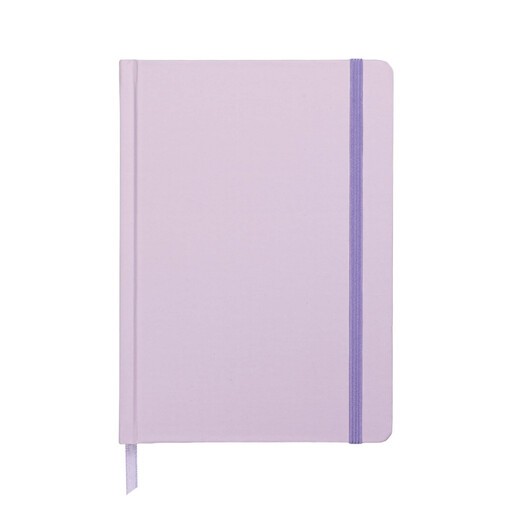
Why this choice suits this profile : Its A5 size and undated design let you start at your own pace, whether you are organising your studies, work or personal life.
The monthly and weekly views are undated, so you are not forced to use periods you do not need and can organise your time flexibly.
224 pages, 112 sheets of lined off-white 100 g/m² offset paper, hard cover, elastic closure and bookmark.
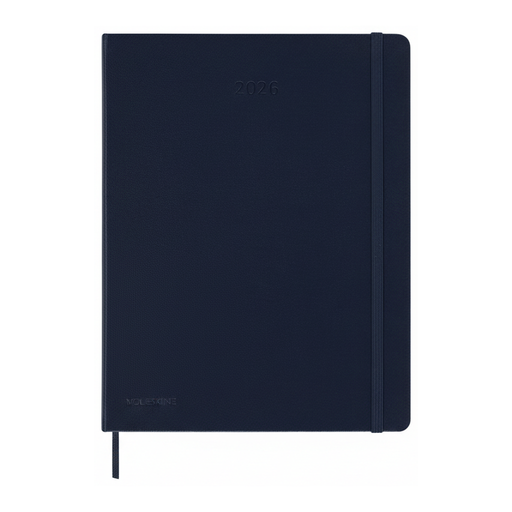
Why this choice suits this profile : This planner is designed for anyone looking for a structured organiser to manage appointments, projects, ideas and travel.
The product details specify the 70 g/m² paper weight and confirm that the binding opens flat to 180° – two useful details to know before buying.
Hard cover, elastic closure, ribbon bookmark, expandable inner pocket and pages dedicated to travel, goals and notes.
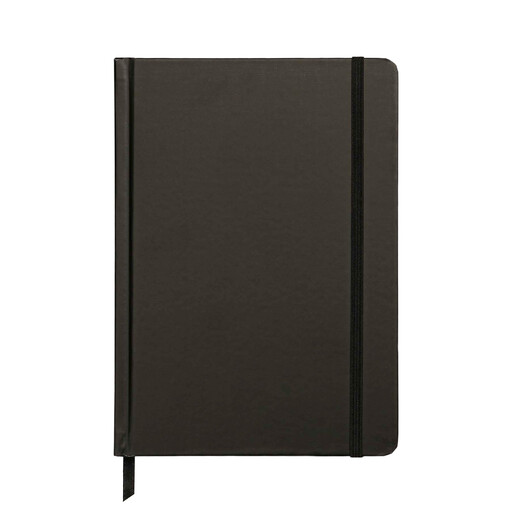
Why this choice suits this profile : Its design is suitable for regular use at the office, while travelling or for studying, with a discreet style that works anywhere.
The hard cover helps prevent creasing during transport, while the elastic keeps the planner closed between uses.
100 g/m² lined offset paper, 224 pages, customisable first page and alternating monthly overviews and undated weeks.
We have put together a comprehensive, regularly updated selection of products that meet these exacting criteria, in compliance with European safety regulations.
Start by adding recurring appointments and known deadlines. Then use the monthly view to distribute your main goals, such as exams, work deliverables, trips or administrative tasks.
Each week, limit the number of priorities and leave space for tasks that need to be carried over. If you use your planner for goal setting, you can dedicate the first few pages to three things:
A simple colour-coding system can help you distinguish between work, study, personal life and appointments. This prevents your planner from becoming an unreadable list where everything ends up mixed together.
Keep your planner in a dry place and avoid prolonged contact with water or a heat source. A hard cover can be cleaned with a soft, dry cloth. Also avoid overloading the binding by inserting too many documents between the pages or into the pocket.
The lifespan depends on how often you write in it, the conditions in which it is transported and how the planner is handled. Paper weight, binding quality and the presence of an elastic are all useful indicators, but none can guarantee a precise lifespan for every user.
Yes. You enter the dates yourself and start whenever it suits you. This is particularly useful when starting a new job, beginning a new term, launching a freelance activity or organising your time over 18 rolling months.
The term A5 planner generally refers to a notebook focused more on goals, to-do lists and notes. A traditional diary tends to focus more on dates and appointments. Models that combine monthly pages, weekly spreads and note sections sit somewhere between these two uses.
It works well with many ballpoint pens, rollerballs and gel pens, but the result varies depending on the ink and nib used. With a fountain pen or a felt-tip pen with a heavy ink flow, always check the risk of show-through on the reverse before filling several pages.