
Livraison le jour même ou le lendemain

Qualité garantie

Débloquez vos offres de bienvenue: Livraison GRATUITE | Jusqu'à -80 % | 30 jours d'essai gratuits à JoyPlus
Téléchargez l'application
An ultrasonic cleaner can be very useful for looking after glasses, jewellery, small tools and beauty accessories. However, not all models meet the same needs. A tank designed for rigid items will not necessarily replace an ultrasonic facial spatula. Similarly, a device intended for make-up brushes may focus more on drying than on cleaning capacity.
Before placing your order, it is therefore worth distinguishing between different uses, checking the features actually offered and keeping an eye out for a few common pitfalls.
The term “ultrasonic” covers several product categories. A facial peeling device, also known as an ultrasonic facial spatula, is generally held in the hand and used on damp skin. An ultrasonic cleaning tank, on the other hand, holds items in a suitable solution.
These two devices therefore serve different purposes. Using a model designed for jewellery on your face, or a facial spatula to clean tools, is likely to result in a disappointing experience and inappropriate use.
At home, a large tank is not always essential. A 3 L ultrasonic cleaner can hold several pairs of glasses, pieces of jewellery or small tools, but it will also take up more space and require more cleaning solution. For occasional use, a compact model is often easier to store.
The genuinely useful capacity also depends on the shape of the basket, the height of the items and whether they can be immersed without touching the sides of the tank directly.
Cleaning is only part of the job. Make-up brushes must then be dried properly to prevent moisture from building up and to keep them practical to use. Some devices combine cleaning with brush drying, offering pre-set durations. However, check whether this function is intended for brushes, sponges or both.
A tank that is difficult to empty, a lid that is awkward to clean or fragile accessories can also turn a device that looks appealing on paper into a genuine daily chore.
Start by listing the items you want to clean:
For jewellery with set stones, plated items, watches, pearls, porous stones or pieces containing glued components, always consult the manufacturer’s recommendations. Ultrasound is not suitable for every material. If in doubt, gentle manual cleaning is still the safer option.
For domestic use, check in particular:
The VEVOR model featured below states that it has a 3 L tank, an LED display and a 220 V power supply with a European plug, according to its product title. These details should nevertheless be confirmed in the technical specifications and instruction manual before first use.
In France, check for the CE marking, the supported voltage, whether instructions are available in French and the contact details of the manufacturer or importer. CE marking does not guarantee that a device is suitable for every use; it only confirms a declaration of conformity with the applicable requirements.
A stainless-steel tank generally makes maintenance easier, but also inspect the condition of the seals, cable, lid and controls. Never immerse the electrical components and always follow the stated liquid level.
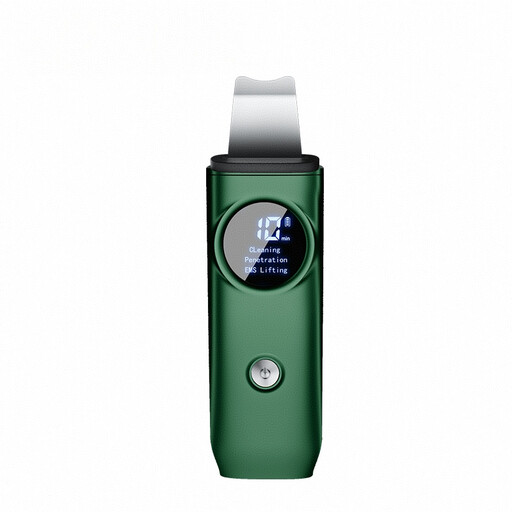
Why this choice suits this profile : Its spatula format is aimed at people looking for a facial peeling device to add an at-home skincare step, without investing in a versatile cleaning tank.
It reduces the risk of confusing facial care with cleaning objects, as its design is presented as that of a facial spatula. Even so, check the modes, accessories and usage instructions.
A portable format and a stated facial peeling function. This device does not replace a tank designed for glasses, jewellery or tools.
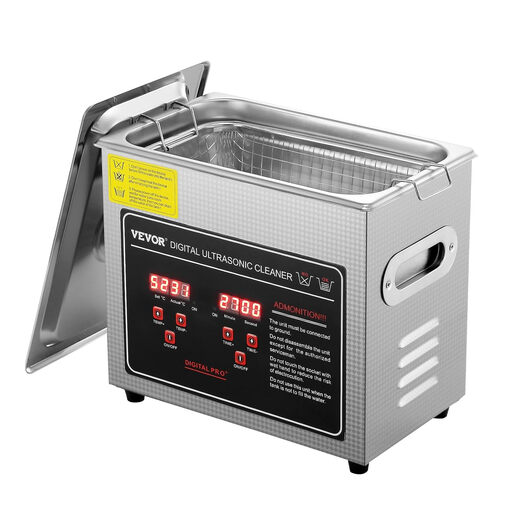
Why this choice suits this profile : Its stated 3 L capacity and LED display will appeal to users who want to clean jewellery, glasses and small tools regularly in a dedicated tank.
The capacity and power supply mentioned in the name make comparison easier. Nevertheless, check the internal dimensions, timer, basket and compatible items.
A tank stated to be made from stainless steel, an LED display and a 220 V European plug, according to the product title.
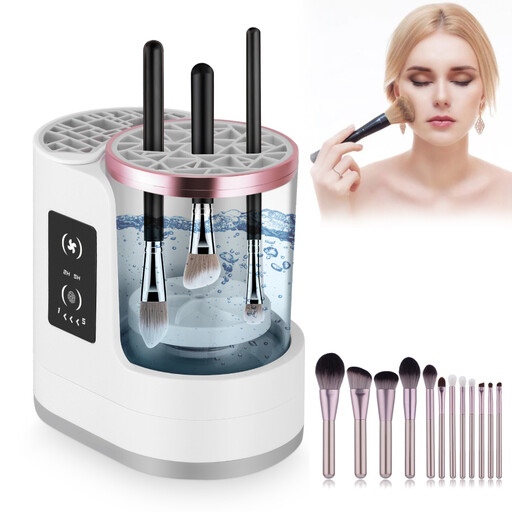
Why this choice suits this profile : Make-up enthusiasts and beauty professionals may prefer a specialist device that combines brush cleaning with a programmable drying time.
It addresses the issue that is often overlooked: drying, with two stated durations of 2 h and 5 h. Check how many brushes are compatible and how they are secured.
Five stated levels, brush cleaning and an integrated drying function. As a specialist device, it does not necessarily replace a versatile cleaning tank.
We have brought together a complete, real-time updated selection of products that meet these purchasing criteria as well as European safety requirements.
Use a solution that is compatible with the item being cleaned and follow the quantities stated in the instructions. Avoid flammable products, liquids not intended for this purpose and running the device empty. If the device includes one, place the items in the basket to reduce scratching and direct contact with the tank.
For glasses, remove any components that should not be immersed and rinse them if recommended in the instructions. For jewellery, check for stones, pearls or glued parts. As for brushes, follow the procedure specific to the device and wait until they are completely dry before storing them.
Power consumption depends on the device’s power rating and the length of the cycles. A clear timer helps prevent unnecessarily long programmes. Running costs mainly depend on the electricity, water and cleaning product used. How often the solution needs replacing will vary according to the items being treated.
It depends on the instructions and the item concerned. For some uses, tap water can be used as a base. For other types of dirt, a specific solution will be required. Follow the manufacturer’s recommendations and never mix several products unless explicitly instructed to do so.
The duration depends on the material, the level of dirt and the available programme. Start with a short cycle, check the result and run another cycle if necessary. For delicate items, a longer cycle is not necessarily more effective — and may even be inadvisable.
Some models are advertised as compatible with jewellery and glasses, but each item must be assessed individually. Surface treatments, glued arms or certain types of lenses may require special precautions. Check the manufacturer’s guidance before immersing anything.