
Livraison le jour même ou le lendemain

Qualité garantie

Débloquez vos offres de bienvenue: Livraison GRATUITE | Jusqu'à -80 % | 30 jours d'essai gratuits à JoyPlus
Téléchargez l'application
An overly heavy backpack can turn even the most beautiful hike into an ordeal. When you're out in nature, every gram counts. But be warned, equipping yourself with ultralight bivouac gear doesn't have to mean sacrificing comfort or safety. The idea is to make smart choices to optimise your pack and savour every moment of the adventure.
As the Head of Product Recommendations at Joybuy, my role is to do the groundwork for you. In this guide, I'll share my tips and a selection of products to help you build a high-performance complete bivouac kit without breaking the bank.
Before you dive headfirst into shopping, there are a few basic principles to follow. Good lightweight hiking equipment is a delicate balance of weight, functionality, and durability.
On a hike, your shelter (tent or tarp), sleep system (sleeping bag and mat), and the backpack itself are the three items that weigh the most. Optimising even one of these three has an immediate impact. For example, swapping a 3 or 4 kg tent for a lightweight model under 2 kg, like a lightweight 2-person hiking tent, is a complete game-changer on a multi-day trek.
The ideal scenario? Every item should serve multiple purposes. For example, foldable walking poles don't just take the strain off your knees on descents; they can also be used as poles to set up a tarp, saving you from carrying dedicated tent poles. Similarly, a single garment that acts as both a mid-layer and a windbreaker is always smarter than two separate pieces. Compactness is just as crucial: gear that folds or compresses down to a minimal size frees up valuable space in your pack.
The race to reduce weight has pushed manufacturers to innovate. Materials like 7075 aluminium, used for tent poles and walking poles, offer an unbeatable strength-to-weight ratio. For textiles, low-denier polyesters with special coatings (silicone, polyurethane) provide excellent waterproofing without weighing you down. Understanding these basics will help you decipher spec sheets and make the right choice for your adventures.
To put these principles into practice, here is a selection of products from NatureHike France, a brand renowned for its gear's aggressive price-performance ratio.
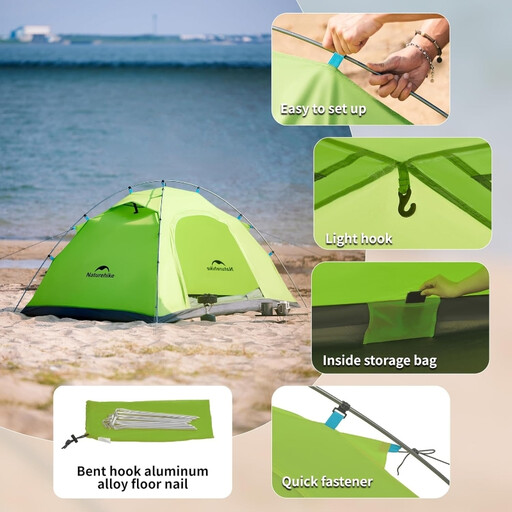
Why this product stands out: This tent is an excellent compromise for hikers looking for a reliable shelter without the bulk. With its feather-light weight of 1.65 kg, it falls firmly into the lightweight tent category while still providing 4-season protection. Its polyester construction with waterproof and UV-resistant coatings makes it versatile for varied weather conditions, from summer sun to mid-season showers.
Key features:
Who is it for? For hiking pairs, or the solo trekker looking for a bit more space, who want a versatile tent that can accompany them for most of the year without weighing down their pack.
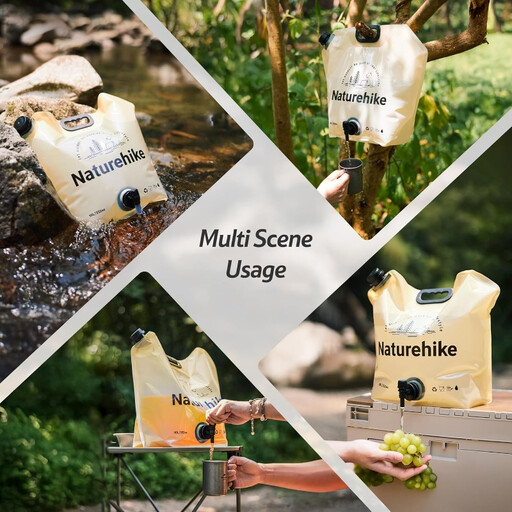
Why this product stands out: Water management is crucial when bivouacking. This 10Lcamping water reservoir perfectly solves the problem of transport and distribution. Its key feature? Its compactness. Once empty, it folds up and takes up almost no space. Weighing just 140 g, it's much lighter than any rigid container. The integrated tap is a small detail that makes all the difference at the campsite.
Key features:
Who is it for? Ideal for those setting up a base camp for several nights, for groups, or for treks in areas where water sources are scarce.
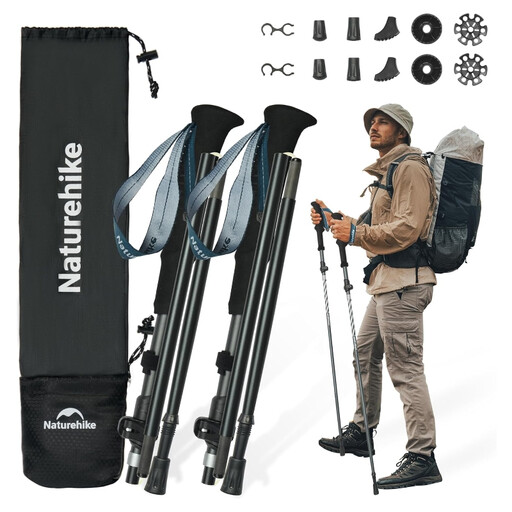
Why this product stands out: These foldable walking poles are a staple of minimalist gear. Made from 7075 aluminium, they combine robustness with a low weight (690 g per pair). Their main advantage is their foldable design, which allows them to be quickly stored on your pack during technical sections or on flatter terrain.
Key features:
Who is it for? For all trekkers and hikers tackling varied terrain with elevation changes. It's an excellent investment to protect your joints and increase your endurance over the long haul.
Of course, this selection is just a taste. Every hiker is unique, with needs that vary depending on their activity, destination, and personal preferences.
To build your own complete bivouac kit and discover a wider range, explore our dedicated category. There you will find other tents, sleeping bags, mats, and accessories designed for lightness.
? Discover all our lightweight camping gear
1. What is the base weight of a pack to be considered "ultralight"? There's no rule set in stone, but the consensus within the hiking community is as follows: a base weight (the weight of the pack without consumables like water, food, and fuel) under 5 kg is considered ultralight (UL). Between 5 and 9 kg, it's referred to as lightweight hiking.
2. How can I get into ultralight hiking without breaking the bank? You don't have to change everything at once! Start with a simple step: weigh every item in your current pack. Identify the 3 or 4 heaviest items (usually the tent, backpack, and sleeping bag) and focus your efforts on replacing just one of them. Switching from an old 4 kg tent to a model under 2 kg, like the P-Series featured here, will have a dramatic effect.
3. Is ultralight bivouac gear more fragile? Not necessarily. Ultralight gear uses advanced materials that optimise the strength-to-weight ratio. It simply requires a bit more care. For example, with a thinner tent groundsheet, you'll need to take the time to properly clear your campsite to avoid punctures. With proper care, this type of equipment can easily last you for many seasons.