
Livraison le jour même ou le lendemain

Qualité garantie

Débloquez vos offres de bienvenue: Livraison GRATUITE | Jusqu'à -80 % | 30 jours d'essai gratuits à JoyPlus
Téléchargez l'application
After a long day of hiking or once you've set up camp, sitting down comfortably is a simple yet essential luxury. However, choosing an ultralight camping chair can quickly become a headache. Between promises of feather-light weight and the reality of the field, many models disappoint. To avoid making the wrong choice, here are the common pitfalls to avoid and the criteria that truly matter.
The market is flooded with models that look perfect on paper but reveal their flaws in use. Here are the most common issues:
To make the right choice, focus on a few objective technical specifications. These are the true guarantees of the quality and durability of your future bivouac chair.
The number one criterion for a hiking chair is its weight. The goal is to stay under the symbolic 1.5 kg mark, and ideally under 1 kg for minimalist trekkers. However, this weight must be weighed against the supported maximum static load. A good model should be able to support at least 100 kg without showing any signs of weakness. To achieve this ratio, reputable manufacturers use materials like aircraft-grade aluminium alloy, which combines lightness and strength.
Stability is directly dependent on the frame's design. A triangulated or cross-frame (X-frame) structure offers much more effective weight distribution than a simple four-legged design. Also, take a look at the leg tips: they should be wide and equipped with non-slip rubber feet for good grip on grass, dirt, or rocky ground. This is what distinguishes a simple folding camping armchair from gear suitable for all situations.
A compact camping chair should be able to slip into the side pocket of a backpack or be attached to the outside without hindering your movement. Check the folded dimensions. A size around 11 x 11 x 36 cm is an excellent benchmark. Ease of assembly is just as crucial. Quick-deployment systems, where the frame snaps into place in a single motion, are a significant advantage in the field.
Instead of an endless catalogue, here is a curated selection designed for different user profiles and based on our criteria for durability and practicality.
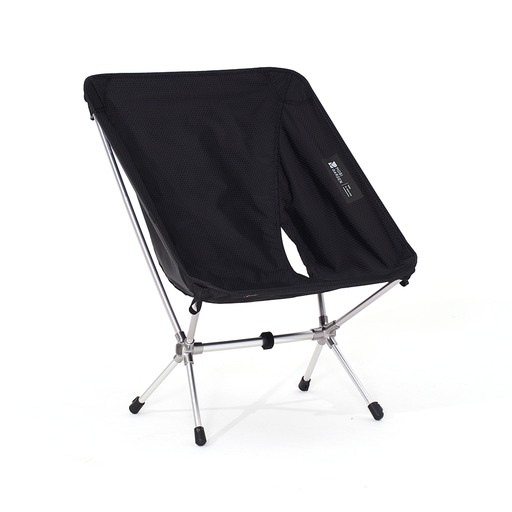
Why this model? For those who count every gram, this 765 g model is a clear winner. It allows you to enjoy the comfort of a seat without weighing down your pack—a game-changer for long hikes and self-supported treks.
Its aircraft-grade aluminium alloy frame offers surprising sturdiness (140 kg load capacity) for its weight, avoiding the trap of "lightweight" but fragile chairs.
Feather-light (765 g) and near-instant assembly thanks to its quick-deployment frame.
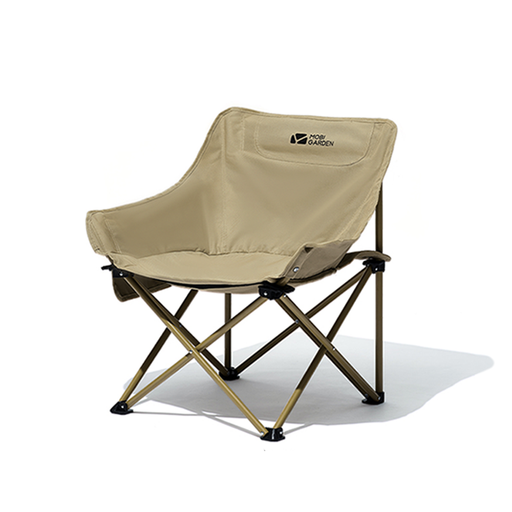
Why this model? For those who prioritise comfort for an evening at the campsite or a day of fishing, this moon chair model is perfect. It offers a wider, more enveloping seat, while keeping the weight manageable (2.35 kg).
Its carbon steel frame and thick Oxford fabric ensure good longevity. Its X-frame design provides excellent stability, ideal for relaxing without a second thought.
Its wide, curved seat (64.5 cm) offers excellent lumbar support and superior comfort. Bonus: the ever-practical side storage pocket.
Discover our complete, up-to-date selection of products that meet our demanding selection criteria and current safety standards.
Longevity depends on the materials and maintenance. A model with an aluminium alloy frame and a high-density Oxford fabric cover will offer much better resistance to stress and UV rays. To make it last, a few simple steps are enough: clean the chair after each use to remove mud and sand, dry it completely before storing, and keep it in a dry place, away from direct sunlight.
The most practical models feature a single-piece frame with segments connected by an internal elastic cord. Assembly simply involves connecting the tubes, which guide themselves into place, and then attaching the fabric seat to the four corners of the frame. Disassembly follows the reverse process and usually takes no more than a minute.
Stability on uneven terrain is a key criterion. Chairs with a triangulated structure and feet with wide, non-slip pads perform much better. It is always advisable to find the flattest possible surface and ensure all four feet are firmly in contact with the ground before sitting down to prevent any tipping.