
Livraison le jour même ou le lendemain

Qualité garantie

Débloquez vos offres de bienvenue: Livraison GRATUITE | Jusqu'à -80 % | 30 jours d'essai gratuits à JoyPlus
Téléchargez l'application
Heading out for a hike or a bivouac with an overly heavy backpack can quickly turn a dream trip into a nightmare. Choosing an ultralight 2-person backpacking tent is therefore a critical step in your preparation. The problem?is that the market is saturated with often misleading marketing promises. Some models sacrifice durability for a feather-light weight, while others skimp on essential criteria like ventilation. This guide is here to separate fact from fiction and help you focus on what truly matters.
Before diving into spec sheets, let's review the common mistakes that will make you regret your purchase.
To make the right choice, focus on these key points that signify the quality and performance of a lightweight 3-season tent.
Weight is the name of the game, but it should never come at the expense of basic comfort. For a 2-person backpacking tent, aiming for under 2 kg all-inclusive is an excellent goal. But beyond the grams, analyze the livability?:
The durability of your tent depends directly on the quality of its materials.
Because every adventure is unique, here are three models that meet specific needs, all selected according to our strict criteria.
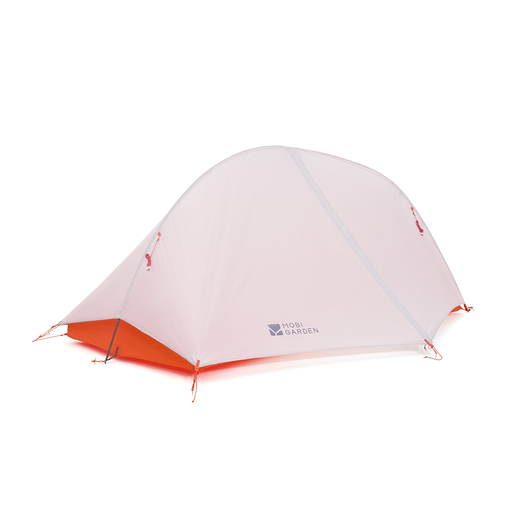
Why we chose it: Weighing in at just 1.18 kg, it's designed for those who count every gram. Perfect for long-distance treks and mountain traverses where lightness is king.
It doesn't sacrifice comfort on the altar of weight. Its inner tent, made mostly of mesh, ensures maximum ventilation to combat condensation. The two doors and two vestibules are a welcome luxury for two-person living.
Its 20D silicone-coated ripstop nylon fabric strikes the ideal balance between lightness and tear resistance, all supported by ultralight aluminum poles.
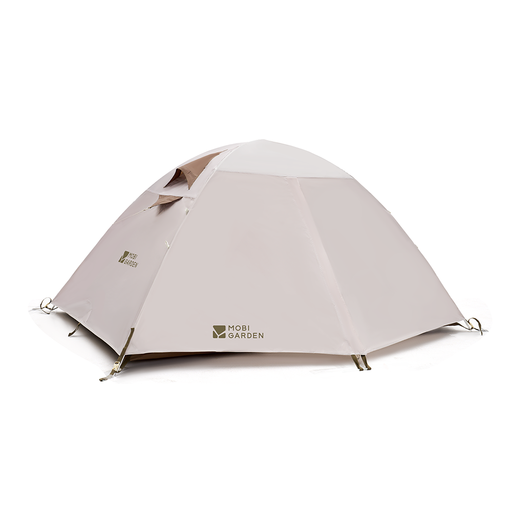
Why we chose it: This is the sensible choice for regular outings. Its weight of 2.64 kg is still manageable, but its 68D polyester fabric and thicker groundsheet (4000 mm) ensure bulletproof durability.
It doesn't give in to the siren call of ultralight by sacrificing reliability. Its freestanding dome structure is a classic design, guaranteeing stability and an easy setup, even on tricky terrain.
Durability. Polyester sags less than nylon when wet, and its reinforced floor acts as a real shield against abrasion and ground moisture.
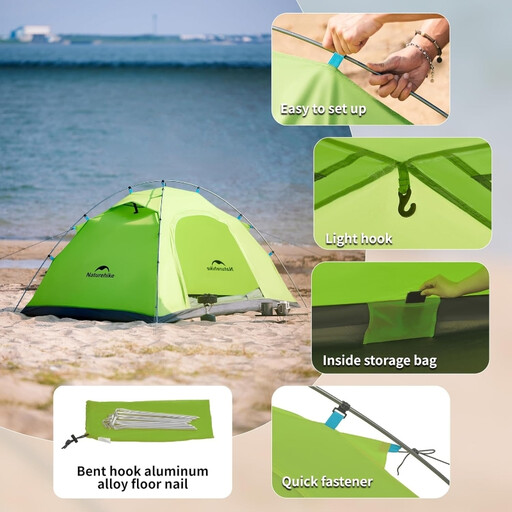
Why we chose it: With a very competitive weight of 1.65 kg, it offers formidable versatility for those who venture out in the early and late seasons, when the weather can be harsher.
It provides enhanced protection without being overkill like a 4-season tent, which is often too heavy and bulky. It remains a lightweight, compact, and relevant shelter.
Its design gives it excellent wind stability and flawless protection, making it a reassuring option against the elements, all at an impressively low weight.
We have curated a complete selection of tents that meet our demanding specifications and safety standards.
The longevity of an ultralight tent primarily depends on the care you give it. Its lightweight fabrics (15D, 20D) are inherently more delicate. The golden rule to make it last?: always dry it completely before storing it to prevent mildew, which attacks the waterproof coating. Cleaning it with clear water and a soft sponge, and storing it in a dry place away from the sun, will do the rest. A well-maintained, high-quality tent will accompany you for many seasons.
Yes, more than enough. For most 3-season conditions you'll encounter, a 2000 mm hydrostatic head rating for the rainfly is more than sufficient (the official standard for waterproofness is 1500 mm). The most important thing isn't the number, but the quality of the design?: well-sealed seams, a rainfly that provides good coverage over the inner tent, and protected zippers are far more crucial than a record-breaking rating on paper.
Condensation is an unavoidable physical phenomenon, but it's not unmanageable. To control it, here are a few tips?: first, choose a campsite that isn't in a damp hollow and where air can circulate. Next, make use of all your tent's ventilation features. Open the rainfly vents and, if the weather allows, leave the vestibule door slightly ajar. Finally, be aware that double-wall tents (inner tent + rainfly), like those in our selection, are by design much more effective at managing this phenomenon than single-wall tents.