
Livraison le jour même ou le lendemain

Qualité garantie

Débloquez vos offres de bienvenue: Livraison GRATUITE | Jusqu'à -80 % | 30 jours d'essai gratuits à JoyPlus
Téléchargez l'application
Going solo means embracing freedom. But that freedom comes with a weight?: the one in your backpack. Choosing an ultralight 1-person hiking tent is a crucial decision for any adventurer looking to optimise their gear. The market is flooded with promises of featherweight designs and technical features, but how do you distinguish a true ally from a poor investment?? Before you decide, beware of common pitfalls that can turn an outing into a total disaster.
Let's forget the marketing figures. Instead, let's focus on the criteria that truly make a difference in the field.
To make an informed choice, you need to know how to decipher spec sheets. Here are two non-negotiable points to check before any purchase.
Weight is the name of the game for lightweight bivouac gear. However, you must distinguish between "minimum weight" (tent + poles) and "packed weight" (with stuff sack, stakes, and guylines). The latter reflects the actual weight in your pack.
A good balance is often between 1.2?kg and 1.7?kg for a robust solo trekking tent. The secret lies in the materials?:
The packed size is just as crucial, especially for a 1-person bikepacking tent where every centimetre on the bike frame counts. A compact size (around 45 x 15 cm) is a significant advantage.
A fabric's waterproofness is measured by its hydrostatic head rating (mm). For a lightweight 3-season tent intended for the varied conditions of European mountains, a rating of 3000?mm to 4000?mm for the rainfly and groundsheet is a solid baseline.
However, protection doesn't stop there?:
Every adventurer has specific needs. Here is a selection of models that cater to different uses, while avoiding the pitfalls mentioned.
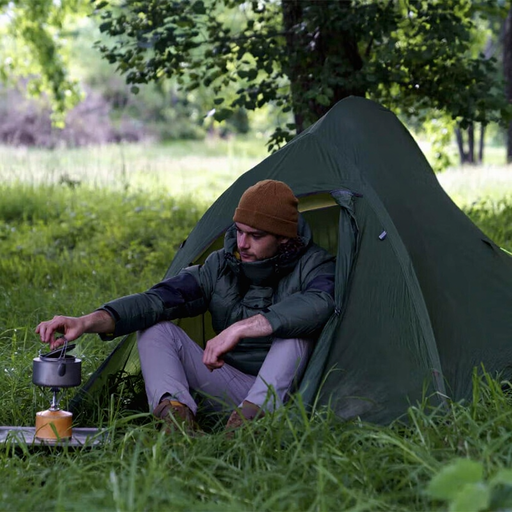
The profile : Ideal for the trekker on a multi-day solo trip who seeks the perfect balance between manageable weight, good livability, and reliable 3-season protection.
It doesn't sacrifice robustness on the altar of weight. With its 7001 aluminium poles and 20D silnylon fabric, it offers superior durability compared to overly fragile "ultra-ultralight" options. Its 4000 mm waterproof rating with sealed seams is a real guarantee, not just a number.
Very practical freestanding dome structure for easy setup on any terrain. Excellent weight-to-performance ratio with a packed weight of around 1.5 kg.
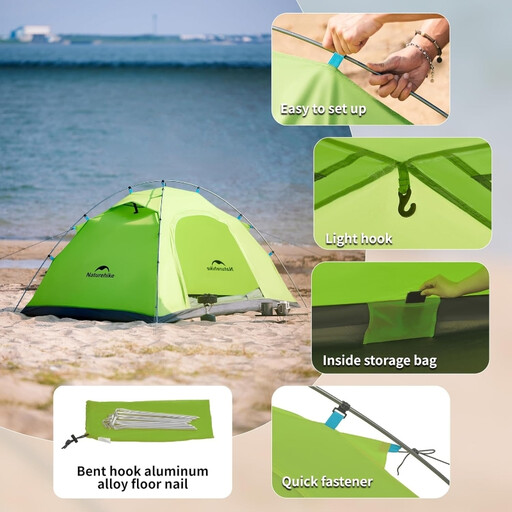
The profile : For the solo hiker who wants to make no compromises on comfort. Ideal for storing gear inside, stretching out comfortably, or for long treks where comfort at camp is a priority.
It proves that an ultralight hiking shelter doesn't have to be cramped. For a weight of 1.65 kg, barely more than a 1-person tent, it offers a much more generous interior volume. It's a smart choice that avoids the "featherweight" trap at the expense of comfort.
Very comfortable interior space for one person and their gear. Its 4-season design makes it more versatile for early or late season trips with cooler conditions.
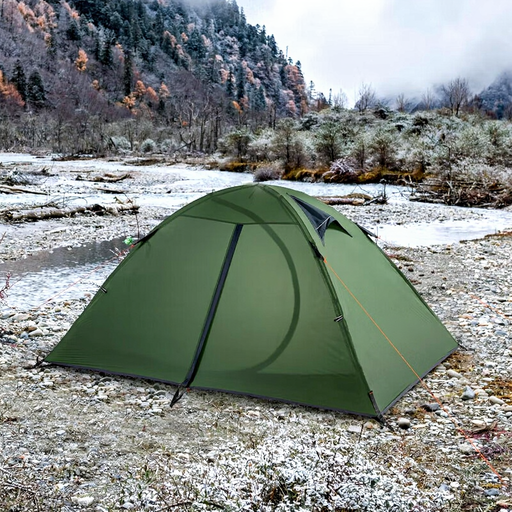
The profile : Designed for those for whom every gram and every centimetre counts. Perfect for bikepacking or fastpacking, where quick setup/teardown and minimal packed size are top priorities.
It focuses on the essentials, with no frills. By optimising the shape and materials for minimal weight, it avoids the trap of superfluous features that add unnecessary weight to the pack. Its design aims for maximum efficiency with reduced weight and volume.
Weight and packed size are optimised for transport on a bike or in a small pack. Its simple design allows for very quick setup, a major asset after a long day of effort.
We've compiled a complete and up-to-date list of products that meet these strict selection criteria and current quality standards.
The longevity of a 1-person bivouac tent depends primarily on its care. Ultralight fabrics are more sensitive to UV rays and abrasion. To preserve it, always make sure it is completely dry before storing it to prevent mildew. Clean it by hand with a soft sponge and water, never in a machine. By storing it in a dry place away from sunlight, a quality tent can last for many years.
Yes, in the vast majority of cases. A lightweight 3-season tent is designed to withstand the rain and wind of spring, summer, and autumn. It is suitable for most European mountain ranges, including for high-altitude bivouacs in summer. Its limit is reached in harsh winter conditions, such as heavy snowfall (the weight of the snow can damage the structure) or extreme winds.
Check the interior length, especially if you are over 1.80?m (6 ft) tall, to avoid touching the walls with your head or feet. The size of the vestibule (the outer awning) is also a criterion not to be overlooked. A sufficiently large vestibule will allow you to store your backpack and shoes sheltered from the elements, freeing up vital living space inside the tent chamber.