
Livraison le jour même ou le lendemain

Qualité garantie

Débloquez vos offres de bienvenue: Livraison GRATUITE | Jusqu'à -80 % | 30 jours d'essai gratuits à JoyPlus
Téléchargez l'application
Fixing a mirror, a letterbox or a shelf without a nail or screw sounds simple. Yet a poorly chosen ultra-strong double-sided tape can peel off, leave residue or damage the surface. The advertised hold depends on the material, the surface, the temperature and how the tape is applied.
Before you place an order, here are the main pitfalls to avoid.
A capacity stated in kilograms doesn't apply in every situation. It can depend on the length of tape used, how the weight is distributed and the nature of the surface. Fixing something vertically on a painted wall is not the same as applying it to smooth metal.
To fix a heavy object, always check:
Also avoid using adhesive to fix an object that could fall on someone, damage a fragile appliance or obstruct a walkway.
An adhesive tape designed for outdoors must withstand temperature changes, humidity, rain and ultraviolet rays. Conversely, a wall-mounting tape intended for a dry room won't necessarily suit a terrace, a letterbox or a car body.
For an outdoor installation, look for specific mentions such as weather-resistant, UV-resistant and outdoor use. These don't replace the need to follow the application instructions or to check compatibility with the surface.
Extra-strong, permanent adhesive tapes can leave residue or pull off a layer of paint when removed. A repositionable or washable adhesive tape will be more suitable in a rented property, but its load capacity and hold may differ.
Test it on a small, inconspicuous area first, especially on old paint, wallpaper, varnished wood or soft plastic.
The right format depends above all on the intended use.
A multi-purpose adhesive tape is handy for small jobs, but it won't replace a dedicated solution when the load, moisture or vibration levels are high.
Product descriptions often distinguish between porous and non-porous surfaces. Glass, metal and some plastics are smooth and non-absorbent. Plaster, brick, raw wood and certain stones are porous.
Before applying:
Some adhesives are incompatible with PE, PP, PTFE, copper, brass or soft PVC. The mention "multi-surface" should therefore be checked in detail.
A wider strip generally offers a larger contact area, but it will never compensate for a dusty or crumbly surface. To achieve an even fix, measure the object and distribute the pieces of tape evenly.
Thickness also matters: a gel tape will conform more easily to small irregularities, while a thinner model will slide more easily under a skirting board or profile. Finally, the roll length determines how many fixes you can make and the cost per use.
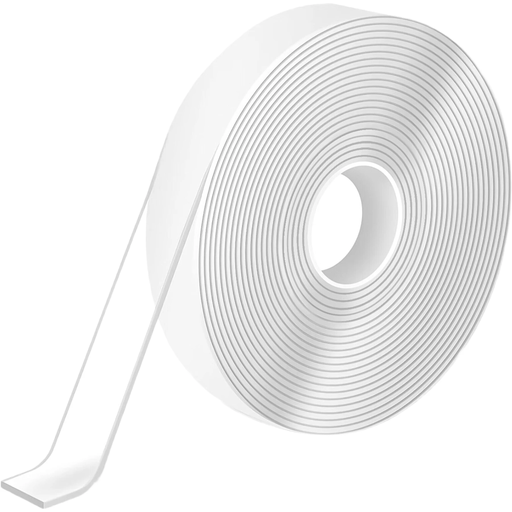
Why this choice suits this profile: With its 3-metre length, this tape is ideal for small decorating, organising or light fixing projects at home, in the office or in the car.
Its washable, reusable gel reduces the risk of residue on small installations, subject to compatibility with the surface.
3-metre roll, 1.3 cm width, washable and described as reusable.
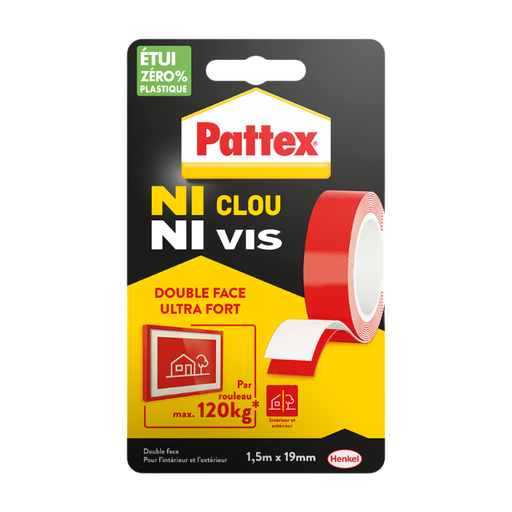
Why this choice suits this profile: This fixing tape is designed for demanding installations on glass, metal, wood, stone and certain plastics, indoors and outdoors.
The product page distinguishes between several materials and surface types. This lets you check compatibility before applying, rather than relying on a general promise.
1.5 m x 19 mm roll; advertised capacity up to 120 kg per roll, depending on the conditions specified by the manufacturer.
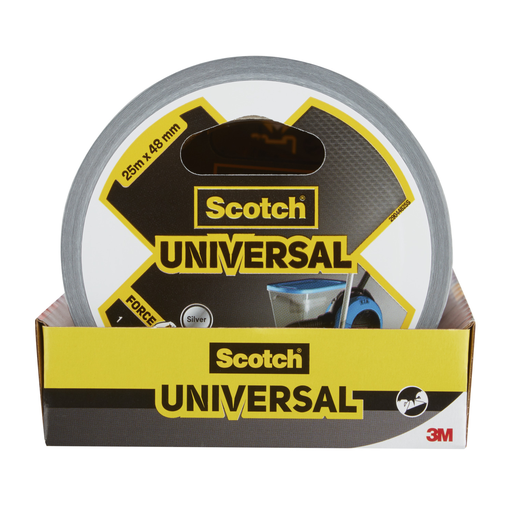
Why this choice suits this profile: Its long roll is ideal for repeated repairs, bundling, protecting or reinforcing, at home or in a workshop.
This is a single-sided repair tape, not a double-sided mounting tape: this distinction helps avoid misuse.
50 metres long, 48 mm wide and tearable by hand according to the product page.
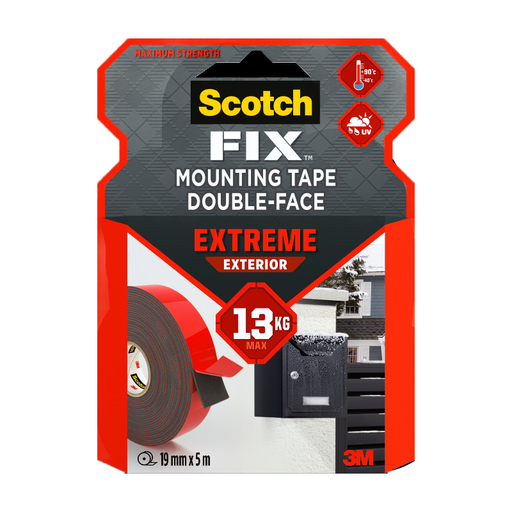
Why this choice suits this profile: This format is designed for outdoor installations that need a permanent fix for decorations, signs or accessories on a suitable surface.
The product page specifies outdoor use, weather and UV resistance, and an advertised load of up to 13 kg; these figures should be considered against the actual surface.
5-metre roll, 19 mm wide, designed to fix an item outdoors without tools or drilling.
We've put together a comprehensive, real-time updated list of products that fully meet these strict selection criteria and European safety regulations.
A no-drill fix depends as much on preparation as on the product you choose. Cut suitable strips, avoid touching the adhesive surface and press evenly over the whole area. For a heavy object, spread several strips rather than concentrating the load on a single point.
Also respect the waiting time stated before moving or loading the object. A tape may stick immediately yet still need more time to reach its full holding strength. Do not use it in a constantly submerged area if the instructions exclude this.
Choose a mounting tape suited to the weight of the object, the wall covering and the environment. On a delicate surface or in a rented property, opt for repositionable solutions and test them first in a discreet spot. For a permanent installation, check the advertised capacity and compatibility with the materials involved.
Some models are designed to withstand rain, UV and temperature changes. This does not mean they can handle continuous immersion or that they can be applied to a damp surface. Clean and dry the surface, then check the limits stated on the product page.
Removal depends on the formula used, the paint and how long the tape has been in place. Do not pull sharply. If the instructions allow it, warm the adhesive gently, remove it gradually and use a product compatible with the surface. A permanent adhesive may still pull off a fragile finish: it's best to test it first.