
Livraison le jour même ou le lendemain

Qualité garantie

Débloquez vos offres de bienvenue: Livraison GRATUITE | Jusqu'à -80 % | 30 jours d'essai gratuits à JoyPlus
Téléchargez l'application
Sports cars and lowered vehicles are a joy to drive, but routine maintenance can quickly become a headache. Changing a tyre or checking underneath the chassis becomes mission impossible when a standard jack won't slide under the body. The ultra-low profile hydraulic jack is no longer a luxury, but an essential tool for effective vehicle lifting without risking damage to your side skirts.
This guide is here to help you choose the right equipment. We'll break down the essential technical criteria and present a selection of proven models, whether you're a weekend mechanic or a track day enthusiast.
To make the right choice, let's review the key technical specifications that make all the difference in safety and ease of use.
The load capacity, expressed in tonnes, shouldn't just match your vehicle's weight. To work with peace of mind, build in a safety margin: choose a jack with a capacity at least 25% greater than your car's weight. For example, for a 2-tonne car, a 3-tonne jack is a sensible choice.
Lifting height is another crucial point. There are two measurements to check:
sports car, it should be as low as possible, ideally under 100 mm.The material directly impacts your jack's durability and portability.
lightweight aluminium jack is much easier to handle and transport. It's the top choice for track days or for those who need to store their equipment after each use.Safety is non-negotiable. A CE-certified jack that complies with the EN 1494 standard is a guarantee of quality and reliability. This certification ensures the product has been tested according to rigorous European standards.
The golden rule: a jack, even the sturdiest one, is for lifting, not for supporting. Once the car is lifted, it is imperative to secure it with safety jack stands before performing any work. Never work under a car supported only by a jack.
Here are a few models that stand out for their performance and adherence to safety standards.
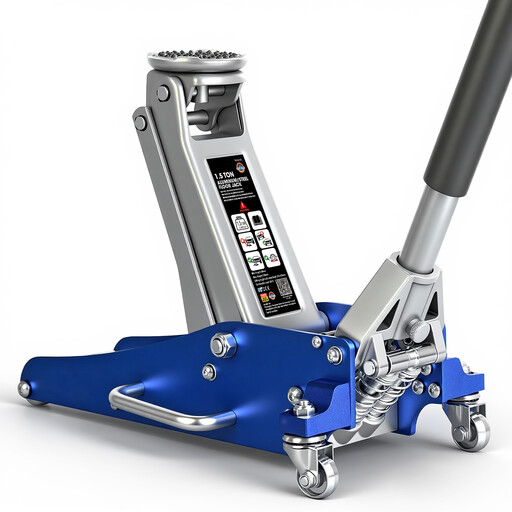
Why it stands out: Its light weight and portability make it the ideal companion for on-the-go repairs. Its dual-pump system ensures a rapid lift, a significant advantage on the track or for an emergency tyre change.
Advantages:
Who is it for? Track day enthusiasts and anyone looking for a jack that's easy to transport and store.
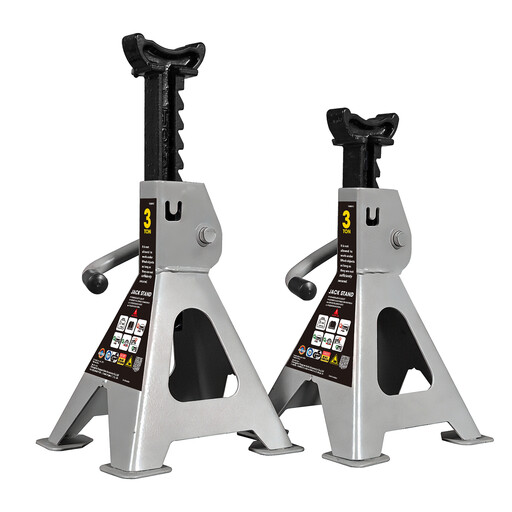
Why they stand out: These jack stands are a non-negotiable safety accessory. Their heavy-duty steel construction and wide, welded base inspire confidence and guarantee rock-solid stability.
Advantages:
Who is it for? For any mechanic, amateur or pro, who takes safety seriously. The essential companion to any floor jack.
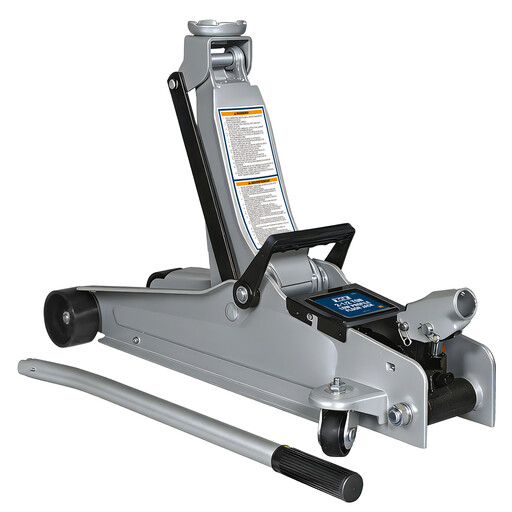
Why it stands out: With an entry height of just 85 mm, this jack is designed for the lowest vehicles, including supercars. Its steel structure makes it a reliable pillar for the workshop.
Advantages:
Who is it for? Owners of very low cars and DIY mechanics looking for a versatile and durable jack for their garage.
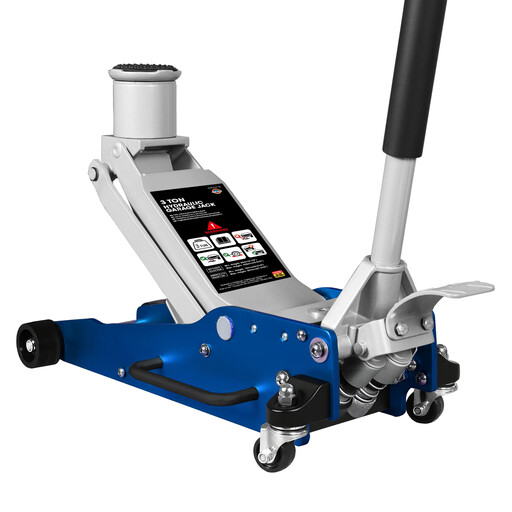
Why it stands out: This model is a true Swiss Army knife: it combines a very low entry height, a high load capacity, and unique versatility thanks to its removable saddle extender.
Advantages:
Who is it for? Demanding drivers who work on multiple vehicle types (e.g., a sports car and an SUV) and want a single tool to do it all.
Our selection focuses on vehicles with low ground clearance, but the world of automotive tools is much broader. For other needs or simply out of curiosity, feel free to explore our full catalogue.
Discover our complete range of sports equipment and accessories to find the right tool for your project.
The floor jack (or trolley jack) is on wheels, with a long lever arm and a wide base that gives it great stability, but it is also more cumbersome. The bottle jack, on the other hand, is vertical and very compact, but it has a smaller support base and requires more ground clearance to be positioned. For low-profile cars, the floor jack is almost always the best choice.
Absolutely not! A hydraulic jack is not foolproof: a leak or an operational error can happen quickly. For your safety, always use safety jack stands, properly positioned on the chassis's reinforced lifting points, before getting under a vehicle.
The "CE" mark should be visible on the product's label or engraved on its chassis. Compliance with the EN 1494 standard is another excellent indicator of quality and safety for mobile jacks. In short: always prioritise products that clearly display these certifications.