
Livraison le jour même ou le lendemain

Qualité garantie

Débloquez vos offres de bienvenue: Livraison GRATUITE | Jusqu'à -80 % | 30 jours d'essai gratuits à JoyPlus
Téléchargez l'application
An ultra-low profile car jack can be essential for changing a wheel, inspecting the underside of your car, or dealing with a puncture in a car park. But relying solely on the price or the stated lifting capacity can lead to nasty surprises. A minimum height that’s too high, an unstable base, or a misunderstood load rating can make lifting difficult, or even dangerous.
A one-tonne jack isn’t automatically suitable for a car that weighs less than one tonne. You need to consider the gross vehicle weight rating (GVWR), the actual load on the axle, and the manufacturer’s recommendations. For an SUV, an MPV, or a heavy saloon, a 2.5-tonne jack generally offers a more comfortable safety margin, provided the vehicle and its lifting points are compatible.
A sports car or a lowered vehicle may only leave a few centimetres between the ground and the underside of the body. A jack for a low car must therefore have a measured minimum height, not just a marketing promise. An entry height of 85 to 88 mm might suit some vehicles with low ground clearance, but this figure must be compared directly with the height of the lifting point.
A scissor jack is compact and easy to slide into the boot, but its manual operation requires more time and effort. A hydraulic car jack is quicker to use, though it’s often bulkier and heavier. In both cases, the quality of the base, the screw or hydraulic system, and compatibility with your vehicle matter far more than the appearance.
Safety reminder: A jack is for lifting a vehicle, not for holding it up alone during prolonged work. Always use appropriate axle stands, apply the handbrake, place wheel chocks, and work on a flat, solid surface.
For a jack intended for wheel changes, start by measuring the gap between the ground and the lifting point recommended by the manufacturer. Then compare this measurement with the minimum height stated on the product specification. The maximum height must also be sufficient to lift the wheel clear, especially when the vehicle is loaded or the tyre is severely deflated.
The models featured here offer ranges of 85 to 380 mm or 88 to 380 mm. These figures are useful for comparing sizes, but they don’t replace checking your car’s manual.
A one-tonne jack may be suitable for some small city cars or light saloons, provided the permitted load and lifting points allow it. For an SUV or a heavier family vehicle, it’s better to look at models with a capacity of 2 to 2.5 tonnes. Never exceed the rated load, and don’t rely on a stated capacity without consulting the full technical specification.
The EN 1494 standard covers mobile or movable lifting equipment for vehicles. The CE marking indicates a declaration of conformity with applicable European requirements; it doesn’t guarantee the jack is suitable for all cars, and it doesn’t mean it can replace an axle stand.
Before you buy, also check:
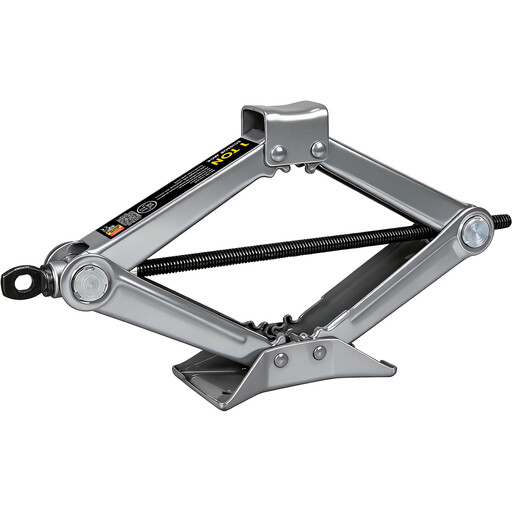
Why this choice suits this profile: This foldable scissor jack is aimed at motorists who want a compact tool in their boot for occasional wheel changes.
Its stated minimum height of 88 mm and foldable design address issues of storage space and compatibility with some low cars.
Forged steel construction, widened base described as non-slip, lifting range of 88 to 380 mm, and a stated rated load of 1,000 kg.
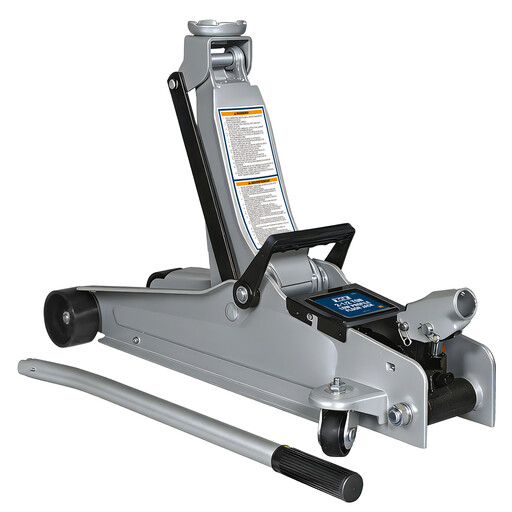
Why this choice suits this profile: This horizontal hydraulic model is aimed at owners of saloons, SUVs, MPVs, or sports cars who want more convenient lifting in the garage.
Its stated minimum height of 85 mm reduces the risk of not being able to slide the jack under a car with low ground clearance.
Stated capacity of 2.5 tonnes, lifting range of 85 to 380 mm, steel construction, and EN 1494 and CE references mentioned in the technical specification.
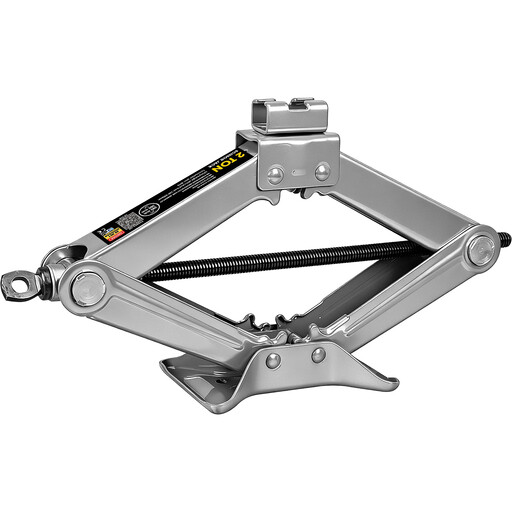
Why this choice suits this profile: This manual model is suitable for those looking for a backup tool for a low car, occasional inspections, or home use, without a hydraulic pump.
Its foldable design and stated entry height of 88 mm make it easy to store and position under low vehicles.
Worm screw described as precise, widened base, and lifting range of 88 to 380 mm. However, check the exact capacity in the technical specification and manual before use.
Measure the available space up to the lifting point recommended by the manufacturer. A model stated as 85 or 88 mm may suit some sports or lowered cars, but only the actual measurement of your vehicle can give you a definitive answer.
A hydraulic jack is generally faster and more comfortable for regular use in the garage. A foldable scissor jack is easier to store and is better suited as a backup jack for emergencies. The choice therefore depends on the space you have, how often you’ll use it, and the weight of your vehicle.
A jack can stay in the boot, provided it’s protected from moisture and properly secured. Regularly check for corrosion, the operation of the screw or hydraulic circuit, and the condition of the base. Before each use, make sure it isn’t bent or leaking, and always use appropriate support equipment.