
Livraison le jour même ou le lendemain

Qualité garantie

Débloquez vos offres de bienvenue: Livraison GRATUITE | Jusqu'à -80 % | 30 jours d'essai gratuits à JoyPlus
Téléchargez l'application
After sterilisation, feeding an adult cat may require a little more attention. An overly generous portion, reduced activity or a bag that does not suit your routine can quickly push up costs and make it harder to monitor your cat’s weight. ULTIMA dry food for sterilised cats comes in several recipes and formats, but they are not all suited to the same needs.
Claims such as “weight control”, “digestion” or “urinary health” do not replace checking the label. Look at the fat content, fibre and protein levels, as well as the additives listed per kilogram. A recipe marketed as light may still be too high in calories if the daily portion is not measured correctly.
The ULTIMA sterilised cat 12 kg format may suit a household with several cats or a high, regular level of consumption. For a single cat, a 1.5 kg bag lets you try the recipe before storing a large quantity. Once opened, the bag should be kept somewhere dry, away from light and moisture, ideally in an airtight container.
Even a complete food intended for sterilised adult cats may not be well tolerated if changed abruptly. For several ULTIMA products, the recommendations call for a gradual transition over 7 to 10 days, slowly increasing the proportion of the new dry food.
The ULTIMA recipes featured here generally contain 12 to 12.5% fat and around 35% crude protein. These figures alone are not enough to determine the ideal portion for your cat. They are mainly useful for comparing different products. A less active indoor cat will not necessarily have the same needs as a cat that gets more exercise.
The portion shown on the packaging should be adjusted according to your cat’s weight, age, activity level and body condition. Using kitchen scales helps you avoid serving portions “by eye”, particularly when dry food designed for weight control is fed on its own.
Beet pulp, pea fibre and cellulose are included in several recipes. They can form part of a diet intended to support regular digestion. The ULTIMA trout recipe contains 3% crude fibre, while the chicken, salmon and beef recipes list 4%.
These figures remain nutritional information and do not guarantee the same result for every cat. If digestive problems persist, it is best to ask a vet for advice.
Some products contain 5 g/kg of ammonium chloride, a zootechnical additive described on the product page as helping to maintain an appropriate urinary pH. This is particularly the case with the chicken, salmon and beef recipes intended for sterilised cats.
This dry food for cats, focused on urinary health, is designed for the daily feeding of a healthy sterilised adult cat. It is not a substitute for veterinary food prescribed for a urinary condition. Constant access to clean, fresh water remains essential.
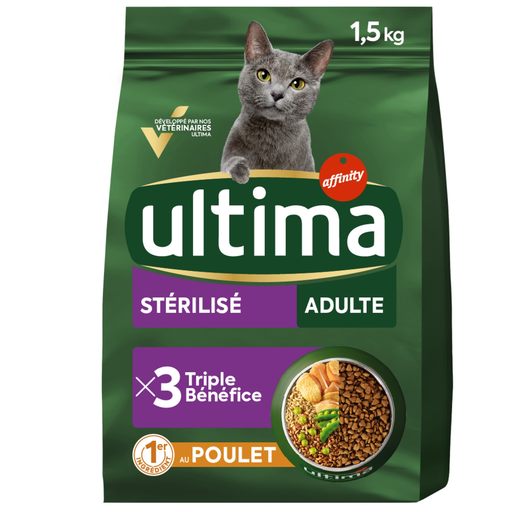
Why this choice suits this profile : This small format lets you try a chicken recipe without tying up a substantial budget or storing a large quantity of dry food.
The 1.5 kg format reduces the risk of buying a large bag before finding out whether your cat enjoys the recipe.
Chicken at 17%, crude protein at 35%, fat at 12% and taurine at 1 100 mg/kg.
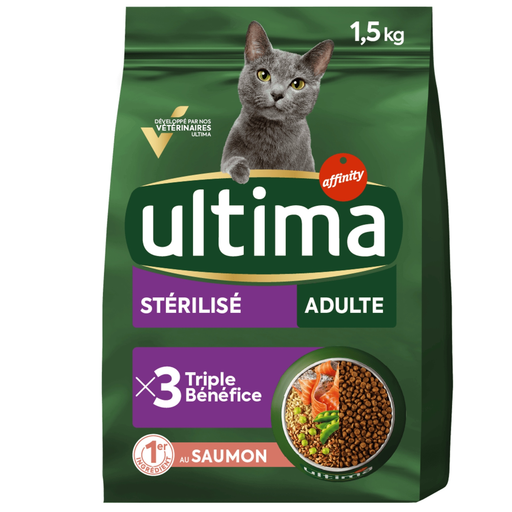
Why this choice suits this profile : This recipe is aimed at owners who want to vary their cat’s protein sources with salmon dry food.
The ingredients clearly state 15% salmon, rather than relying solely on a flavour-based name.
Crude protein at 35%, crude fibre at 4%, fat at 12% and ammonium chloride at 5 g/kg.
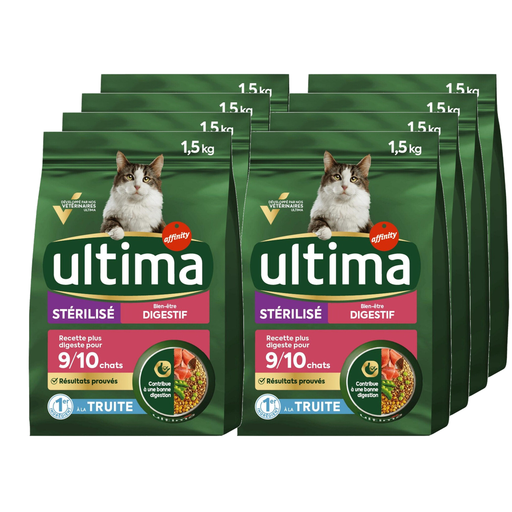
Why this choice suits this profile : This large format is ideal for households that serve a trout recipe every day and want to space out their repeat purchases.
The recipe is clearly intended for sterilised adult cats, not kittens or pregnant or nursing females.
Trout at 16%, crude protein at 35%, fibre at 3% and a 12 kg format.
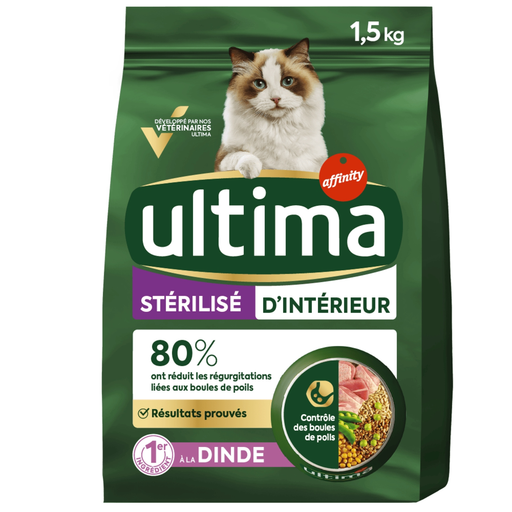
Why this choice suits this profile : This recipe is intended for sterilised adult cats living mainly indoors, with particular attention paid to portion control.
The product information specifies that it is suitable for sterilised cats living indoors, rather than offering an adult recipe that takes no account of lifestyle.
Turkey at 15%, plant fibres, inulin at 0.7% and a convenient 1.5 kg format.
We have compiled a complete, real-time updated list of products that meet these demanding selection criteria and European safety regulations.
As a guide, ULTIMA product information recommends around 25 to 40 g per day for a 2 to 3 kg cat, then 40 to 50 g for a 3 to 4 kg cat. These amounts should be adjusted according to your cat’s activity level, age and body condition. The portion shown on the packaging remains the main reference to follow.
The 1.5 kg format is suitable for trying a recipe, for a single cat or when storage space is limited. The 12 kg format can be more practical when consumption is high, provided the dry food is kept fresh after opening.
Some products intended for sterilised cats contain ammonium chloride and are presented as helping to support urinary health. They are not, however, therapeutic food. If your cat has a diagnosed urinary disorder or is being monitored for one, ask your vet for advice before changing its diet.