
Livraison le jour même ou le lendemain

Qualité garantie

Débloquez vos offres de bienvenue: Livraison GRATUITE | Jusqu'à -80 % | 30 jours d'essai gratuits à JoyPlus
Téléchargez l'application
An ULANZI mini camera flash can transform a dark scene, an indoor portrait or a video filmed while travelling, without turning your bag into hand luggage. But not all compact flashes are created equal. Between the stated power, hot-shoe compatibility and video-specific features, certain details can make a model frustrating to use from the very first shots.
Here are the criteria to examine before buying, followed by a selection of models suited to different uses with Nikon, Sony, Canon or Fujifilm cameras.
A guide number, such as GN8 at ISO 100, refers to power measured under specific conditions. It does not guarantee the same range in every situation. Distance, ISO sensitivity, aperture, the presence of a diffuser and even the colour of the walls all have a direct impact on the result.
A GN8 speedlite flash is mainly suited to close-up photography, portraits, objects and everyday scenes. To light a large room or photograph a distant subject, it is better to adjust your expectations or choose a more powerful model.
A flash equipped with a single-contact accessory shoe works according to a very simple manual principle. It should not be confused with a TTL flash, which can communicate automatically with the camera to adjust exposure.
Before placing your order, check that your camera accepts a manual flash with a centre contact and that the shoe is mechanically compatible. The ULANZI models featured here can be used with various Nikon, Sony, Canon and Fujifilm cameras, but compatibility depends on the exact model, the Sony shoe being used and any accessories already fitted.
A flash produces a burst of light primarily intended for photography. When continuous light is included, it is more suitable for framing, vlogging or a short video sequence. It does not necessarily replace a proper LED panel.
If you are looking for portable video lighting, check the stated continuous output, colour temperature and battery life separately. Flash power alone cannot be used to assess video performance.
The four power levels — 1/8, 1/4, 1/2 and 1/1 — allow you to adapt the lighting to the distance of the subject. Lower settings support a faster shooting rate and limit the amount of light emitted. At full power, brightness increases, but the recycle time may be longer.
Manual adjustment requires a few test shots while changing the aperture and ISO sensitivity. In return, operation becomes completely predictable once you have found the right setting.
A 6500 K camera flash produces light similar to cool outdoor lighting. This value is sometimes stated with a tolerance, while ambient light can alter how the final result is perceived.
To achieve a consistent image, you can adjust the camera’s white balance according to the light source being used. However, if the scene contains warm bulbs, a difference in tone may still be visible between the subject lit by the flash and the background.
Weighing approximately 33 to 36 g, depending on the reference, a mini flash slips easily into a small camera bag. USB-C charging generally means you can reuse your phone or camera charger, provided you follow the charging specifications stated by the manufacturer.
Also check the recharge time and the stated number of flashes. These figures vary according to the selected power level. An integrated battery means you do not need to carry spare batteries, but you will need to remember to charge it before a long outing.
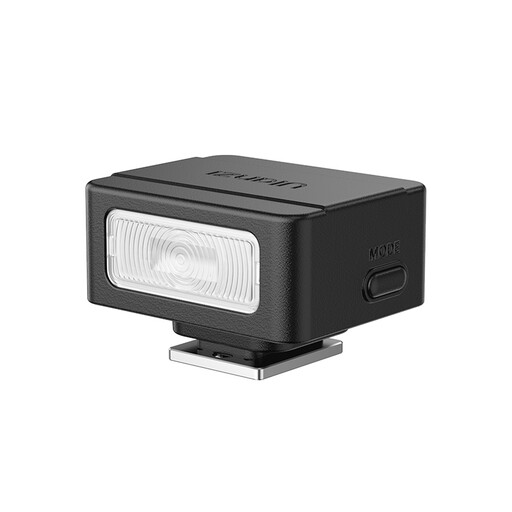
Why this choice suits this profile : Weighing approximately 33 g and offering four manual power levels, this model is an accessible introduction to compact external flash photography. It is well suited to urban trips, close-up portraits and holiday photos.
The GN8 power rating and single contact are clearly stated: you know that this is a manual flash designed for nearby subjects, not a long-range TTL system.
Four power levels, from 1/8 to 1/1, a stated temperature of 6500 K, an integrated battery and USB-C charging.
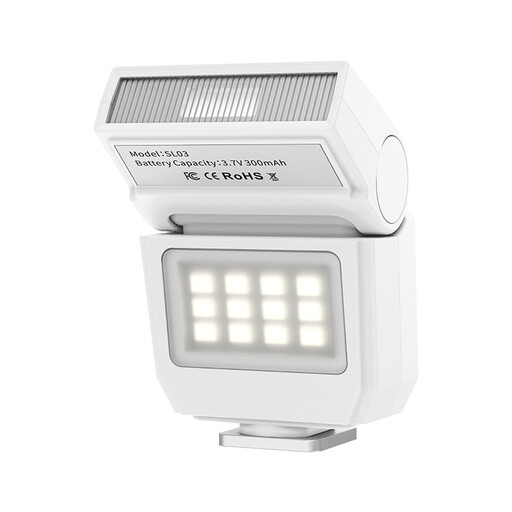
Why this choice suits this profile : This model adds a head that tilts through 90° and continuous light for video. It gives creators who switch between photography and online content greater flexibility.
The adjustable head lets you bounce the light off a light-coloured ceiling instead of always directing the flash straight at the face. The video function remains separate from flash operation.
Head adjustable up to 90°, GN8, 6500 K colour temperature and four power levels with an accessory shoe.
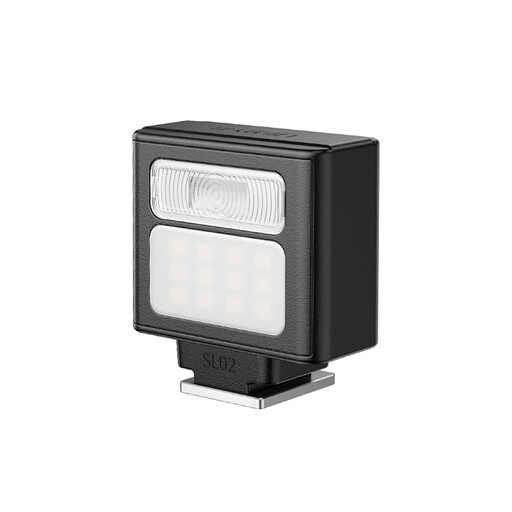
Why this choice suits this profile : The detailed information about recycling and battery life makes it easier to prepare for a photo session, a short shoot or a day on the move with a minimum of accessories.
The stated recycle times vary according to power: continuous flashes at 1/8, around 2 seconds at 1/4, 3 seconds at 1/2 and 5 seconds at full power. This gives you a better idea of the actual shooting rate.
GN8, a stated flash temperature of 6500 K, continuous light at 5600 K and USB-C charging.
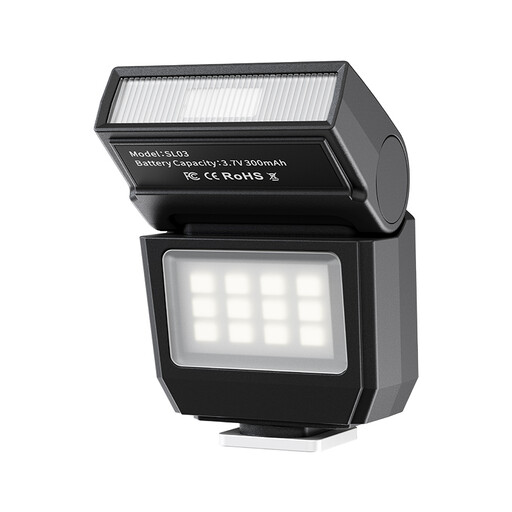
Why this choice suits this profile : Its compact design is aimed at users who want to travel light, whether for vlogging, travel photography or spontaneous shots.
The product details specify that this is a manual flash with a single contact, not an automatic TTL model. Its limitations are therefore easy to understand before pairing it with a compatible camera body.
Head adjustable up to 90°, four power levels, GN8 and a compact design made for portability.
We have put together a complete, real-time updated list of products that meet these strict selection criteria, as well as European safety requirements.
Before your first shot, follow these steps:
Avoid exposing eyes directly to the flash at close range, using the flash in a damp environment or placing it near flammable materials. When not in use, store it in a dry place at room temperature.
No. Compatibility depends on the camera’s shoe and whether it supports manual flash mode with a single contact. Check the specifications for your camera and chosen model before buying. Sony cameras may use different shoes depending on the generation.
GN8 is a value measured at ISO 100 under reference conditions. In practice, range depends on the aperture, ISO sensitivity, distance and ambient light. This type of flash is therefore more comfortable with nearby subjects than with large scenes.
The models featured generally state a recharge time of approximately one hour, depending on the charger used and the battery’s condition. The time between flashes also varies according to the power setting: lower settings generally allow a faster shooting rate than operation at full power.